
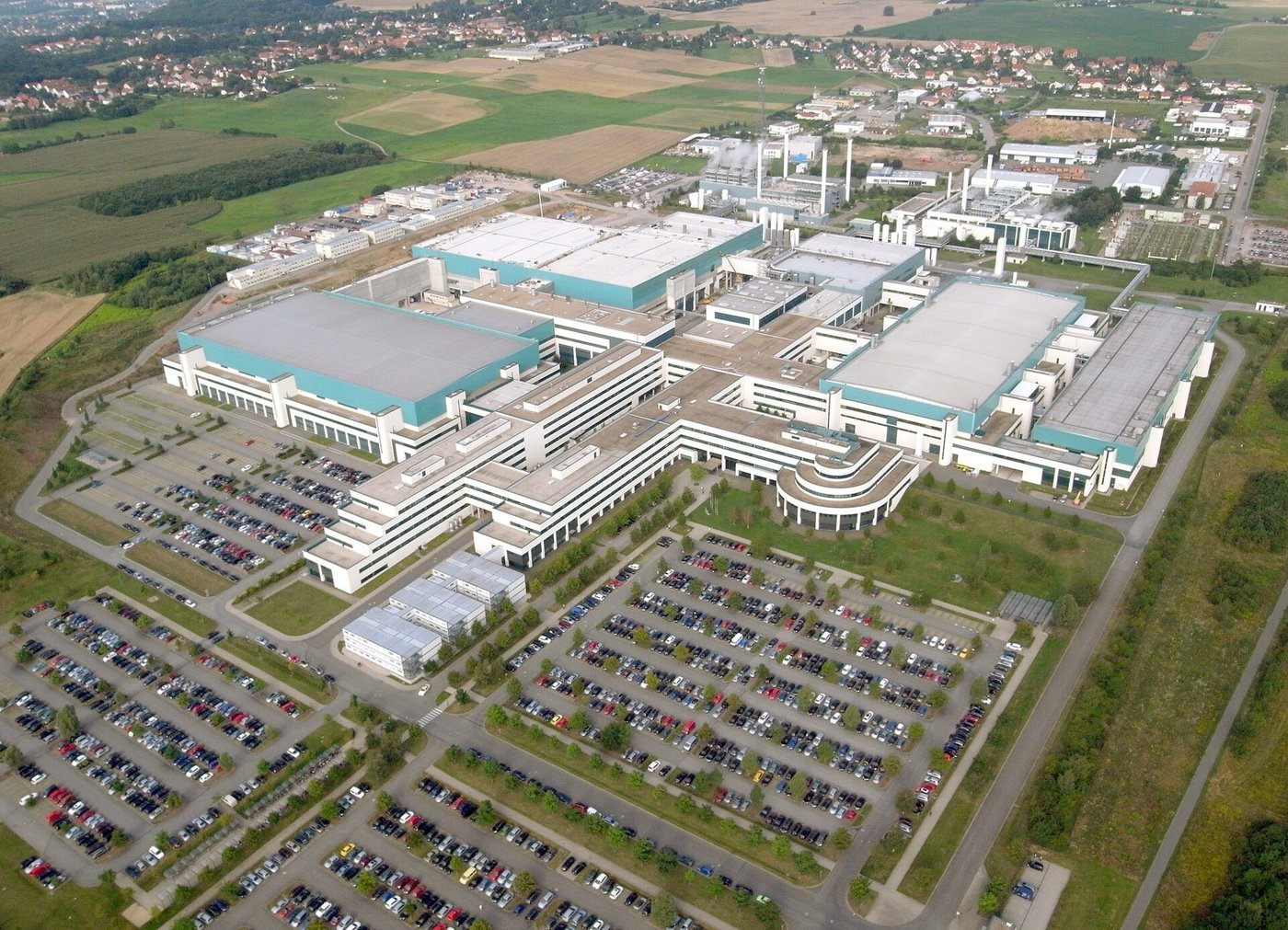
The part is small, flat and unglamorous, a thin slice of silicon that no consumer ever sees. It is also one of the reasons the world’s AI accelerators cannot be made fast enough. On October 8, GlobalFoundries said it had signed a multi-year deal with Taiwan Semiconductor Manufacturing Co. to produce silicon interposers for TSMC’s CoWoS advanced packaging at its plant in Malta, New York, moving a critical link in the AI supply chain onto American soil.
The agreement runs an initial five years and is valued at $2 billion. GlobalFoundries expects mass production to begin in the first half of 2028, with room reserved to expand later. The interposers, which connect an AI accelerator chip to the high-bandwidth memory stacked beside it, have until now been supplied mainly from Asia.
The announcement matters because of where CoWoS sits in the AI boom. The packaging step is where Nvidia’s most powerful chips are assembled, and it has been a recurring bottleneck in the supply chain. Demand for the accelerators that drive large AI models has repeatedly outstripped the packaging capacity needed to finish them, and TSMC has spent years trying to keep up.
By placing interposer production in New York, TSMC is spreading a concentrated supply chain across two continents. The company is already building an advanced packaging plant in Arizona, and its U.S. foundry line there is not expected to come online until 2028 or 2029. The GlobalFoundries deal gives TSMC American packaging capacity sooner than its own domestic facilities can provide.
For GlobalFoundries, the contract is a validation of a long pivot. The company, once a rival to TSMC in leading-edge chip manufacturing, walked away from the most advanced process nodes in 2018 and refocused on the specialty and mature chips that power cars, phones and defense systems. The Malta fab is one of its largest, and the interposer work gives it a direct line into the fastest-growing corner of the semiconductor industry.
The deal also fits a broader push to rebuild U.S. chip capability. Washington has spent billions trying to lure semiconductor manufacturing back to American shores, and the interposer represents a piece of the puzzle that had remained stubbornly offshore. GlobalFoundries said the agreement marks the first time this link in the packaging chain will be produced in the United States.
Silicon interposers sound obscure, but their role is straightforward. Modern AI accelerators pair a compute die with several stacks of high-bandwidth memory, and those pieces must be wired together precisely. The interposer is the substrate that carries those connections. As chips have grown larger and memory faster, the interposer has become a genuine engineering challenge rather than an afterthought.
The timing aligns with TSMC’s own capacity needs. The company has been expanding CoWoS output aggressively, and it has told investors that advanced packaging demand will keep outpacing supply into next year and beyond. A second source of interposers, on a second continent, gives TSMC room to keep expanding without concentrating every new line in Taiwan.
Customers in the AI chain have pushed for geographic diversity as well. The chips that matter most to them are produced in a small number of facilities, and a disruption in any one place ripples through the entire industry. American policymakers have made the same argument with more force, tying billions in subsidies to domestic production.
The $2 billion figure is a starting point, not an endpoint. GlobalFoundries said the deal reserves capacity for future expansion, a signal that both companies expect the relationship to grow if demand holds. Neither firm disclosed the volume of interposers covered by the initial term.
For Malta, New York, the agreement means more than a new product line. The plant already employs thousands, and the interposer work brings advanced packaging, one of the industry’s most sought-after skills, into the local workforce. The state has courted chip investment for years, and this contract extends its stake in the AI economy.
The deal does not resolve the industry’s wider bottlenecks. CoWoS capacity will remain tight even with American interposers, and the memory chips that stack beside the accelerators are produced almost entirely in Asia. But it shifts one important link in the chain, and it does so at a moment when every link is under strain.
Whether the timeline holds is the open question. Semiconductor projects slip, and 2028 is a long way off in an industry that moves this fast. For now, the agreement is a concrete step: a key part of the AI supply chain, long made overseas, is now scheduled to be built in an upstate New York fab.
The deal also reflects a quieter shift in how the chip industry thinks about risk. For years, the accepted logic was to concentrate the most advanced manufacturing in a few places and accept the efficiency that came with it. The AI boom has changed that calculus, as companies and governments alike have concluded that a supply chain stretched across two continents is worth the extra cost if it means a single disruption cannot halt the entire industry.



