
For nearly a year, the company that makes the world’s most famous robots had no permanent leader. Robert Playter, who ran Boston Dynamics for six years and spent three decades at the firm, stepped down in February, leaving chief financial officer Amanda McMaster to hold the role on an interim basis. On October 7, the wait ended: the Hyundai-owned company named Rohit Prasad, the Amazon executive who built Alexa, as its chief executive.
Prasad spent twelve years at Amazon, most recently as senior vice president and head scientist for Alexa and artificial general intelligence, where he led the team that turned the voice assistant into a product used in hundreds of millions of homes and, more recently, oversaw the Nova family of foundation models. Before Amazon, he spent nearly fourteen years at Raytheon BBN Technologies. His job now is to do for robots what he did for a talking speaker: take a remarkable technology and make it sell.
The choice says something precise about where Boston Dynamics is headed. For decades the company was famous for videos: a dog-like robot opening doors, a humanoid doing backflips. Under Hyundai, which took control in 2021 and later bought out the remaining SoftBank stake, the priority has shifted from demonstration to production.
The gap itself was telling. McMaster, a chief financial officer by training, kept the company running for about seven months while the board searched, and several other senior executives departed in the same span. The leadership churn left a company with the field’s best-known brand waiting for someone who could sell what it built.
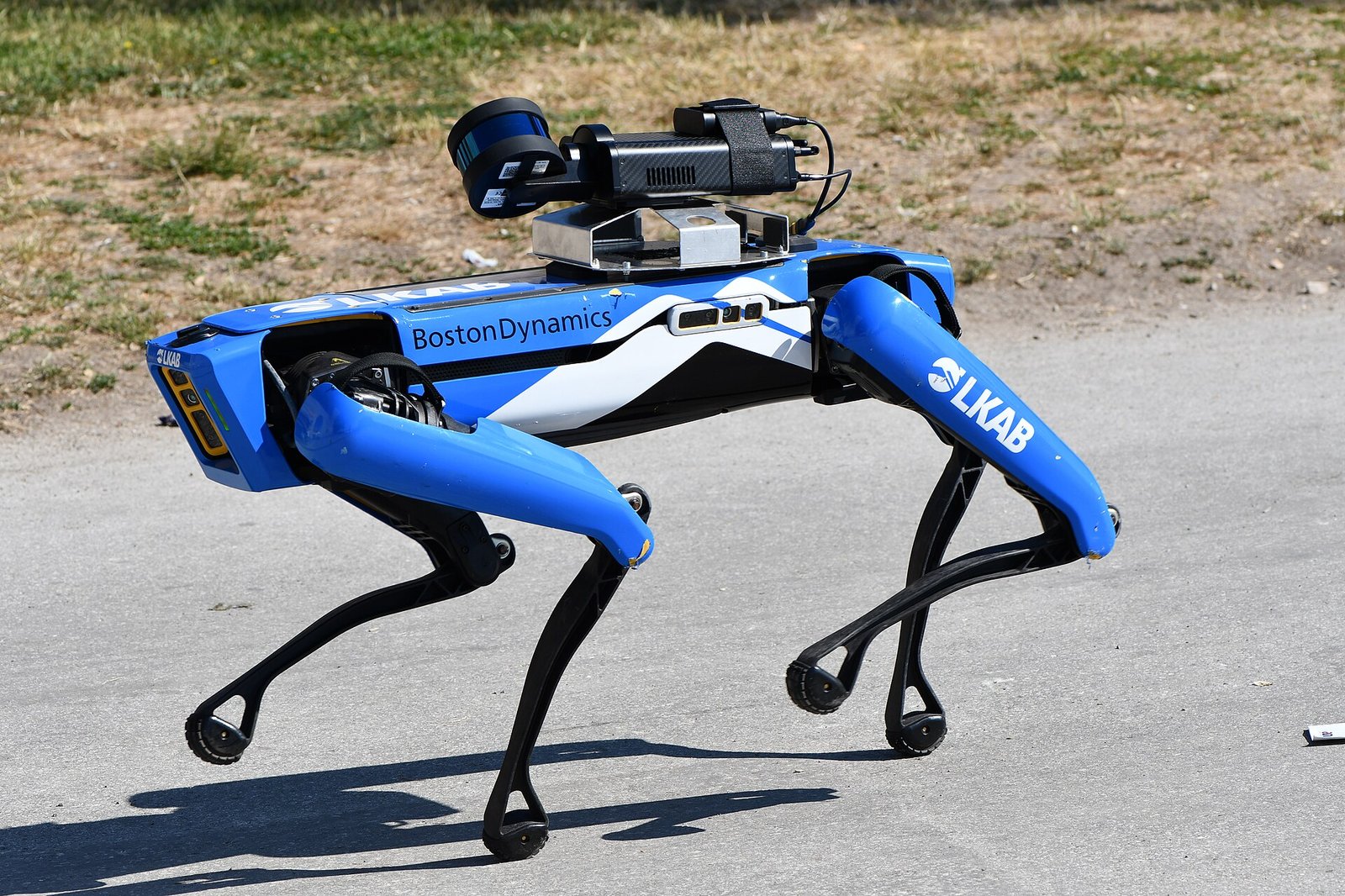
The company’s history tilts against the task. Founded in 1992 and long run as a research house, Boston Dynamics spent most of its life making machines that impressed rather than sold. Spot began shipping as a commercial product only in 2019, and revenue has never matched the brand’s fame. The pieces of the shift are now moving. Spot, the quadruped, inspects factories and keeps people out of harm’s way. Stretch moves boxes in warehouses, taking over the unloading work once done by the retired Handle robot. Atlas, the electric humanoid, is being trained for the factory floor, with Hyundai supplying parts, manufacturing scale and the real-world settings where the robot will have to perform.
That training happens at a facility called the Robotics Metaplant Application Center, known as RMAC, which opened this year at Hyundai’s Metaplant America in Georgia. Atlas is being taught parts sequencing and material handling there, work it is scheduled to begin doing in Hyundai’s American plants in 2028, with assembly tasks to follow by 2030. Hyundai has said it plans to deploy 25,000 Atlas robots across its global plants and build the capacity to make 30,000 humanoids a year.
The robot’s brain is being developed with outside help. Hyundai and Boston Dynamics have partnerships with Google DeepMind, and the company has worked with Nvidia as well, to develop the intelligence Atlas will need to do useful work rather than perform stunts. That is where Prasad’s background matters. Physical AI, as the industry now calls it, is a software problem as much as a hardware one, and Boston Dynamics has just put a software product leader in charge.
Jaehoon Chang, the Hyundai Motor Group vice chairman who chairs Boston Dynamics’ board, framed the hiring around commercialization, saying Prasad’s record of turning AI into products at global scale, combined with Hyundai’s manufacturing and logistics, gives the company a foundation to build and sell intelligent machines.
The stakes for Prasad are higher than Alexa ever posed. A robot that moves through a factory next to human workers has to be safe, reliable and cheap enough to justify its cost. The company’s goal, stated plainly, is to drive down the cost of humanoid robots until they make economic sense on an assembly line. That is a hardware-and-manufacturing problem Amazon never had to solve.
Prasad becomes the company’s third chief executive since its founding in 1992 as a spin-off of the Massachusetts Institute of Technology Leg Lab. He takes over at a moment when the humanoid race is crowded: Figure, Tesla, Agility Robotics and a string of Chinese firms are all pushing bipedal robots toward factories. Boston Dynamics still carries the strongest brand in the field, but brand has not yet translated into the volumes Hyundai expects.
What is left unresolved is whether the machines can actually earn their keep. The videos made Boston Dynamics famous; the next test is whether Atlas can hold up a shift on a real line, week after week, at a price a manufacturer will pay. Prasad’s hiring is a bet that the answer depends less on the robot’s legs than on what it knows how to do.



