
For most of a decade, anyone who wanted to write a program for an IBM quantum computer wrote it in Python. That was the working assumption built into Qiskit, the company’s open-source software kit, and it held even as the machines themselves grew from a handful of noisy qubits toward the fault-tolerant systems IBM hopes to ship by 2029. This week the company began dismantling the assumption.
The change arrived on October 10 in the form of native C API bindings, a header file called qiskit.h that connects the Rust core of Qiskit v2.0 directly to Fortran, C++, and Julia. IBM also introduced what it calls a directed execution model and an Executor primitive, tools that move error mitigation onto the researcher’s own machine rather than the cloud.
The point is to meet high-performance computing where it lives. Error correction, the discipline that will decide whether quantum machines ever become useful, is heavy numerical work, and the people who do it tend to write in Fortran, C++, and Julia, not Python. Forcing them through a Python layer meant writing wrappers and paying a performance tax on every circuit. The C bindings open a direct route from a supercomputer’s native languages into the quantum stack.
Quantum computers are error-prone by nature. A qubit holds its state for a fraction of a second, and every gate applied to it introduces noise. The field’s working answer is to spread one logical qubit across many physical ones and correct the errors as they happen, an approach that turns a quantum machine into a signal-processing problem as much as a physics one. That is why the software matters as much as the hardware, and why IBM wants the people who already do this kind of computation to write it in languages they know.
The directed execution model is the more consequential half of the announcement, according to people in the quantum computing industry. It shifts control of error mitigation to the client side, so a researcher’s circuits run exactly as directed rather than through a cloud service’s defaults. IBM frames it as the foundation of its error-correction stack, and it ships in version 0.50.0 of the qiskit-ibm-runtime package.
The software push lines up with a hardware step forward announced days earlier. On October 7, IBM said it had advanced to Stage C of the Quantum Benchmarking Initiative, the multi-phase program run by the Defense Advanced Research Projects Agency to assess approaches to building a fault-tolerant quantum computer. Stage C moves IBM beyond planning and into hands-on verification of its approach, under DARPA’s scrutiny.
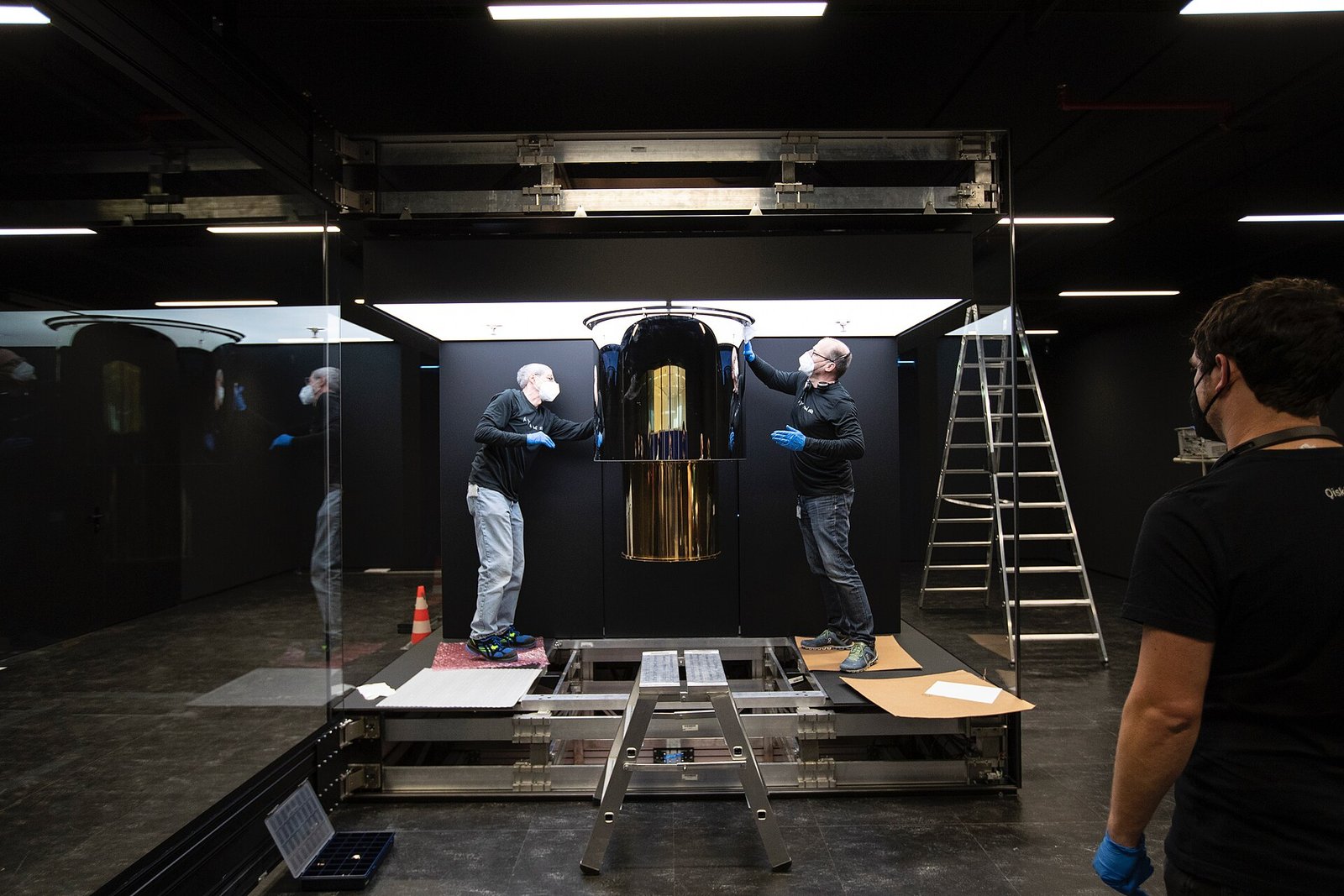
The hardware at the center of that effort carries the code name Starling, and IBM has set 2029 as its delivery target. Getting into Stage C matters because DARPA’s program is the most rigorous public evaluation of whether fault tolerance is actually achievable on any vendor’s roadmap, and surviving to the later stages is itself a signal to the agencies and labs that might one day buy such machines.
IBM is not alone in the race. Google, Microsoft, and a cluster of startups are all pushing toward fault-tolerant systems, and each is building a software stack to match. IBM’s bet is that winning the software layer, making quantum code as natural to a Fortran programmer as to a Python one, will pull supercomputing workloads toward its hardware when the machines mature.
Qiskit has become the most widely used quantum programming tool since its 2017 release, with the company describing a developer base in the hundreds of thousands. The framework began as a Python wrapper around IBM’s hardware and grew into an open standard that rival machines also support. Version 2.0 rebuilt the core in Rust for speed, and the C bindings are the next layer of the same effort.
The strategy has a quiet logic. The first customers for a fault-tolerant quantum computer will almost certainly be national labs and high-performance computing centers, the same institutions that already run weather models and molecular simulations in Fortran and C++. If those institutions have to rewrite their workflows in Python to use quantum hardware, adoption will stall. IBM is trying to remove that friction years before the hardware arrives.
A fault-tolerant machine, if anyone builds one, would change the economics of the whole field. Useful quantum chemistry, materials design, and optimization all depend on running far more operations than today’s noisy machines can complete before the errors pile up. Every vendor’s roadmap is a bet on when that threshold arrives, and DARPA’s staged review is the closest thing to an outside referee the industry has.
Whether it works depends on more than bindings. A C API is a doorway, not a destination; researchers will need compilers, libraries, and documentation built around it before Fortran quantum programs become routine. IBM has shipped the door. The question is whether the high-performance computing world walks through it, and whether Starling delivers a machine worth programming by 2029.



