
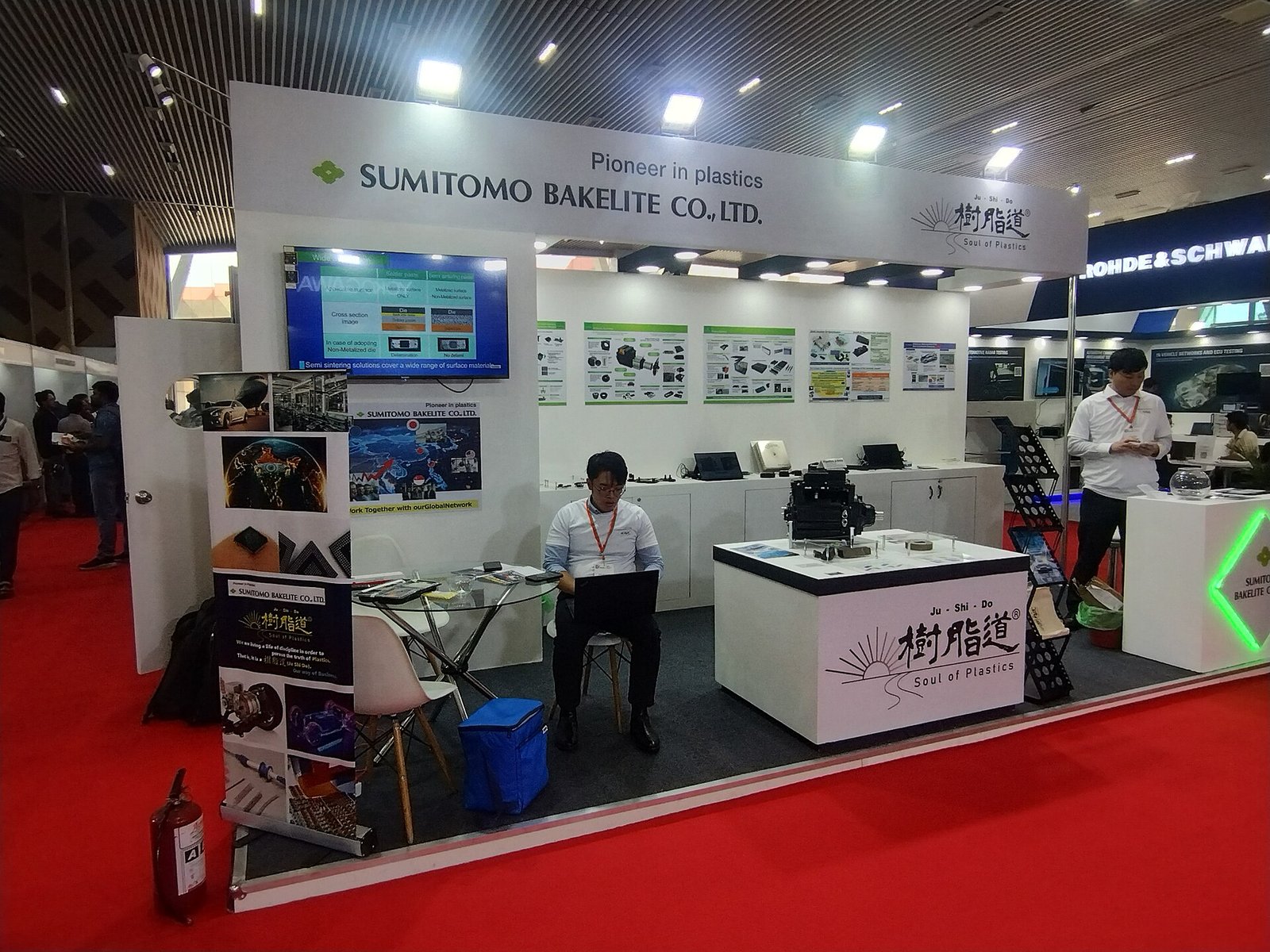
Sumitomo Bakelite, the Japanese materials maker, said on October 11 that it would acquire a chemical business from Kyocera for about $190 million, folding the unit’s formulations and production capacity into its own semiconductor packaging-materials operations.
The purchase is aimed squarely at the hottest part of the chip industry. Sumitomo Bakelite holds roughly 40% of the global market for epoxy molding compounds, the resin materials that encapsulate and protect semiconductor chips, and demand for those materials is climbing as artificial-intelligence servers and high-bandwidth memory push manufacturers toward advanced packaging.
The deal is small by the standards of an industry that measures some acquisitions in the tens of billions of dollars. Its significance lies in what it signals about where the pressure in the chip supply chain now sits. For years, attention fell on the most advanced chips themselves — the processors and memory at the cutting edge of process technology. Now the scarcity is spreading to the materials that wrap around them.
Epoxy molding compounds are easy to overlook. They are the dark resin blocks that seal a chip against moisture, heat, and mechanical stress once it has been mounted in a package. Without them, a finished chip cannot survive the temperatures and forces of real-world use. Their quality determines how reliably a device runs, and their supply is concentrated in a handful of Japanese and Korean producers.
Sumitomo Bakelite is the largest of those producers. The company, a century-old maker of resins and plastics headquartered in Tokyo, has turned its semiconductor materials into its most strategic business, and it has been investing to keep pace with the packaging technologies that artificial intelligence has accelerated.
Advanced packaging has become the industry’s newest battleground. As the gains from shrinking transistors have slowed, chipmakers have begun stacking and connecting multiple chips in a single package, a technique used in the high-bandwidth memory that feeds AI accelerators. Those packages demand molding compounds that can fill tighter gaps, tolerate higher heat, and hold their shape across larger surface areas — a harder set of requirements than the commodity compounds of a decade ago.
The Kyocera unit brings Sumitomo Bakelite additional formulations and capacity precisely where those requirements are biting. By absorbing the business, the company gains production that can be turned toward the advanced grades in short supply, rather than waiting years to build new plants of its own.
Kyocera’s decision to sell is its own statement about portfolio discipline. The conglomerate, known for ceramics and electronic components, has been pruning businesses that sit outside its core, and the chemicals unit was a candidate to be more valuable in the hands of a materials specialist that can run it at scale.
Neither company disclosed the unit’s revenue or profitability, and the roughly $190 million price, reported in the announcement, has not been broken down further. The small size relative to Sumitomo Bakelite’s own sales suggests a targeted addition rather than a transformative one.
The backdrop is a semiconductor materials market stretched by AI demand. Makers of molding compounds, substrates, and other packaging materials have been running near capacity, and several have announced price increases to match rising costs and tight supply. In that environment, buying capacity outright is often faster and cheaper than building it.
The buyers of these materials are a concentrated group as well. The companies that assemble and test chips — known in the industry as OSATs — and the foundries that package their own chips buy the compounds in bulk, and they qualify new materials through a slow process of testing and certification. A supplier that can offer more of the right grade, quickly, holds an edge that money spent on new plants cannot match in the short term.
What remains to be seen is how quickly the acquired capacity can be redirected. Integrating a chemical business means harmonizing formulations, qualifying materials with chip customers, and aligning quality systems — work that can take quarters even after the deal closes. The demand Sumitomo Bakelite is chasing is moving fast, and the question is whether the new capacity arrives in time to catch it.
The demand behind the deal is concrete rather than speculative. High-bandwidth memory, which stacks DRAM chips vertically and is essential to AI accelerators, consumes more advanced packaging material per unit than conventional memory, and every new AI server pulls more of it through the supply chain. For a materials supplier, that translates into orders that outrun existing lines, and capacity that has to be added somewhere fast.
The company has said little beyond the announcement, and it has not laid out a timetable for integrating the unit. The deal is a modest step, but it lands on a clear fault line: as artificial intelligence keeps demanding more from every layer of the chip, the materials that hold the whole thing together have become a strategic resource in their own right.



