For more than four years Qualcomm has been trying to prove that Arm Holdings, whose designs sit inside nearly every smartphone sold, broke the contracts that bind them. That argument now rests with a jury in Wilmington, Delaware, which deliberated for about four hours on Friday and went home without a verdict.
The panel heard five days of testimony in U.S. District Court for the District of Delaware. The court was closed on Monday for the federal holiday, so deliberations resume on October 13 at the earliest. People familiar with the matter told Seeking Alpha that a decision is expected this week.
Qualcomm’s complaint, first filed in April 2024 and amended twice since, carries three claims. It says Arm withheld software patches and chip-testing tools owed under the companies’ architecture license agreement, the top tier of Arm’s licensing structure that lets customers such as Qualcomm, Apple and Amazon design custom processor cores. It says Arm leaked to Bloomberg a 2024 letter accusing Qualcomm of breach, damaging negotiations with Meta Platforms over a custom chip. And it says Arm broke a promise that Qualcomm would pay within 10% of the lowest price Arm charged for comparable designs.
Those testing tools are not a courtesy in this business. Without validation software a chip design cannot be certified for volume production, so withholding them stalls a customer’s pipeline without formally cancelling a license. Qualcomm’s lawyer, Karen Dunn, told jurors that Meta grew worried Qualcomm would lose its license and that the value of the deal had fallen by $170 million by the time it closed. “Delay is costly,” she said. Arm’s lawyer, Gregg LoCascio, told the jury that Meta had moved away from virtual-reality headsets toward AI glasses and wanted new financial terms, and that Qualcomm was not harmed in the least.
The largest number in the case is the one Qualcomm wants the judge to endorse. A clause in its contracts, the company argues, lets it stop paying Arm royalties for five years if a breach is proven. Analysts estimate those payments at roughly $300 million a year, which would make a five-year pause worth about $1.5 billion. Judge Maryellen Noreika is weighing separately whether to strike the clause, a ruling that would leave Qualcomm seeking ordinary damages instead.
The money matters far more to Arm than to Qualcomm. Arm’s annual report says Qualcomm accounted for 9% of its $4.92 billion of revenue in the fiscal year ended March 31, 2026, about $443 million, a figure that includes license fees as well as royalties. Arm’s operating income that year was $908 million, so the payments equal roughly half of it. Qualcomm earned $10.43 billion of operating income over the last twelve months, which puts the same sum near 4%.
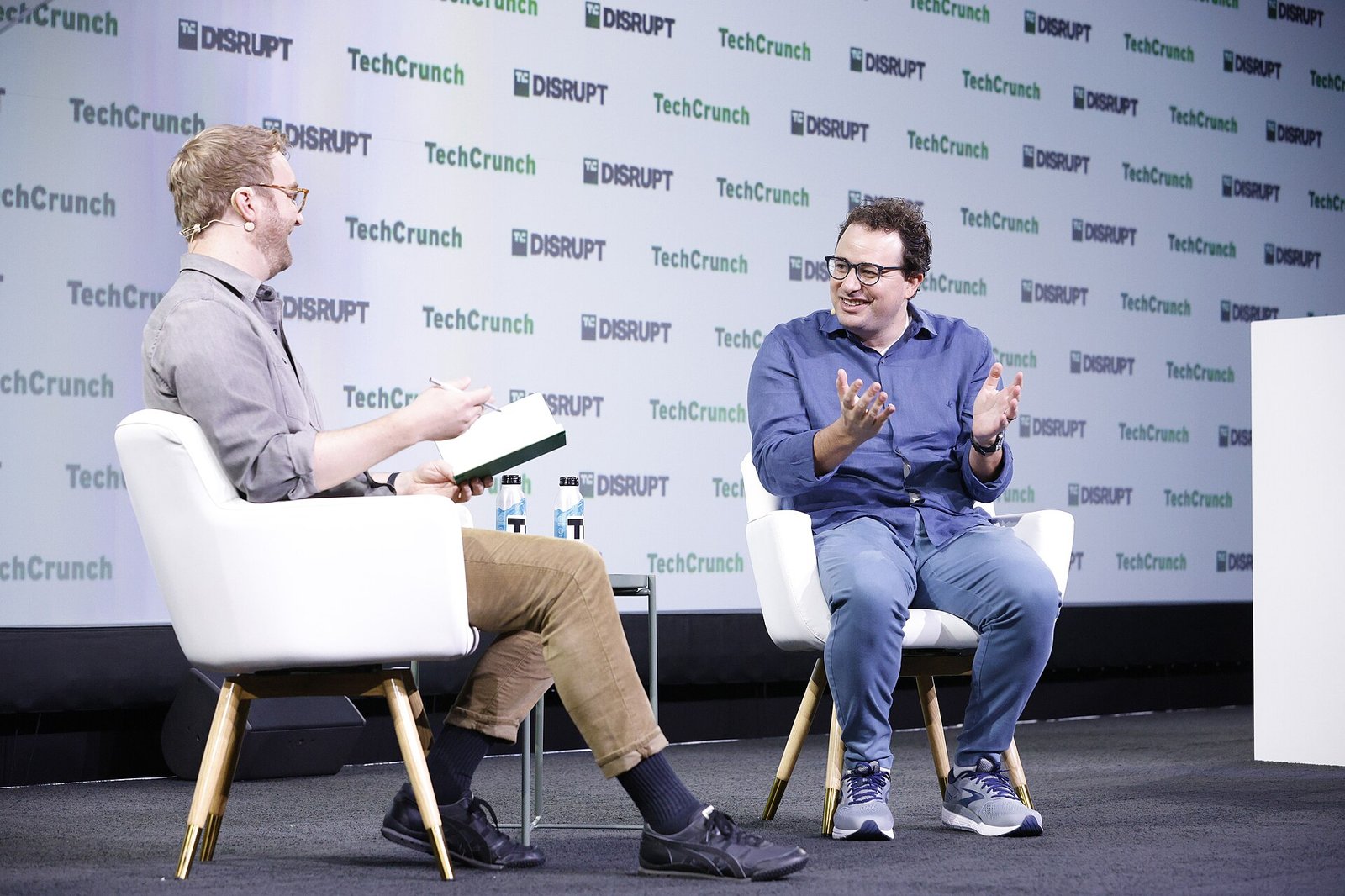
A quieter proceeding ran alongside the jury trial. Judge Noreika heard arguments over whether Arm negotiated in good faith with Qualcomm on pricing for its next generation of chip designs. Qualcomm’s attorney returned to a chart showing that Arm sought an increase of 18,500% in royalty payments between version 9 and version 10 of its architecture. Arm’s counsel cross-examined Qualcomm chief executive Cristiano Amon over a 2013 agreement that caps royalties at $1.88 per chip for any chip with at least five processor cores, a price set long before data center chips carried 288 cores. Asked whether Qualcomm was paying for five cores and getting the other 283 for free, Mr. Amon replied, “I don’t see it that way.”
Pricing is where the exposure sits. Qualcomm’s agreement with Arm runs through 2033, and a finding of breach would weaken Arm’s hand when the two sides negotiate what follows. The terms that come next will cover server and accelerator cores, the parts of the market where royalties per chip are highest and where Arm has been gaining share among cloud operators.
The dispute is the second act of a longer fight. Arm sued Qualcomm in 2022 over its $1.4 billion purchase of the chip startup Nuvia, arguing the deal let Qualcomm use Nuvia’s Arm licenses without paying again. A December 2024 jury deadlocked on whether Nuvia breached its agreement while finding Qualcomm’s own processors properly licensed. In 2025 the judge handed Qualcomm a complete victory on Arm’s remaining claims, and Arm said it would appeal.
Regulators are watching. In May 2026 the Federal Trade Commission opened an investigation into whether Arm is using its licensing position to monopolize parts of the semiconductor market, a probe that followed complaints Qualcomm filed with the commission and with competition authorities in Europe and South Korea.
Neither company can easily walk away. Arm’s instruction set underpins the phone business that pays Qualcomm’s bills, and Qualcomm is among the largest customers Arm has. Each side has described the other’s conduct as a threat to a relationship neither wants to end, which is why the case has taken four years to reach a jury and why the verdict may not be the last word.
The jury is deciding questions of contract, not of technology. Even a clean win for Qualcomm would leave the industry’s larger argument unresolved: how a company that charges by the chip prices its designs when the chips have outgrown the assumptions the price was built on. Arm says the old terms are underpriced for a market of 288-core server processors. Qualcomm says a deal is a deal.
That question will be answered in negotiations, not in court, and the outcome of this case will shape how much room Arm has when those talks begin.