
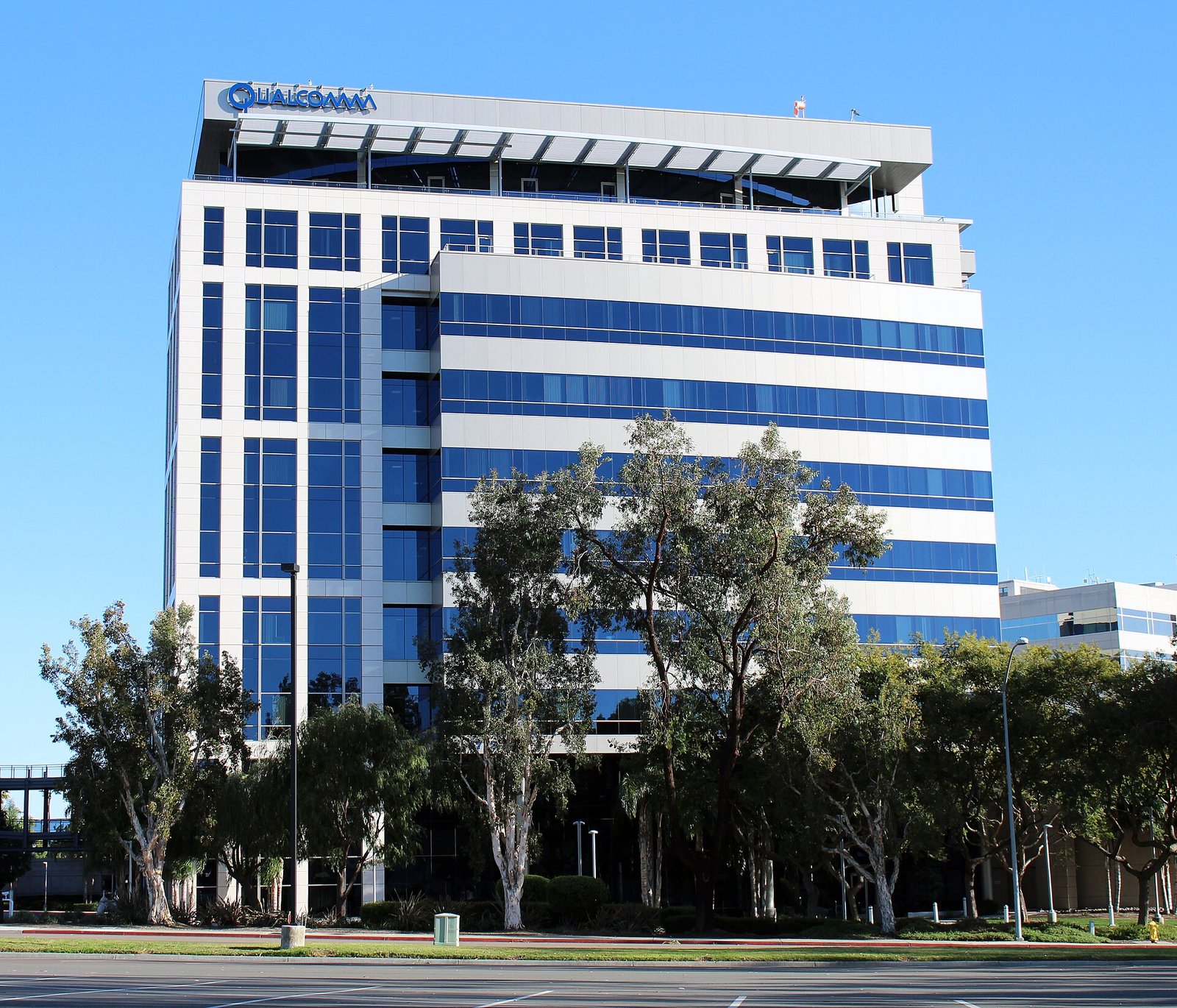
The jury in Wilmington deliberated for five days, stalled at one point, and returned Tuesday with a split verdict and an unusual number attached to it. Arm Holdings breached its architectural license agreement with Qualcomm, the jurors found, and interfered with Qualcomm’s business relationship with Meta Platforms. The damages came to $2, one dollar on each of two claims.
Arm shares fell about 1%. Qualcomm rose about 1%, giving back part of an earlier gain of about 2.4%. Both companies then claimed the result.
“We are pleased with jury’s decision today finding for Arm on four claims and awarding only one dollar in damages on each of Qualcomm’s other two claims,” Arm said in a statement, adding that the verdict confirms the company operated in good faith under its technology license agreement. Qualcomm said in a statement that the outcome was a win for innovation and competition.
The judgment, entered the same day, spells out what each side won. Arm Holdings and Arm Limited breached Section 5 of the architecture license by withholding software patches and development tools before and after Jan. 8, 2023, according to the filing. A Qualcomm unit, Qualcomm Technologies, proved both intentional and negligent interference with its economic relationship with Meta. Arm prevailed on specified claims under the technology license agreement involving cores named Hunter, Hayes and Yamin, and on a claim that it failed to make a reasonable offer for three other designs.
The two companies were partners for most of the past decade and have been litigating for the last three years. SoftBank Group acquired Arm in 2016 and, as the relationship with licensees evolved, Arm moved beyond selling instruction sets and core designs into building its own products. Qualcomm bought the chip startup Nuvia in 2021 to build laptop processors on Arm’s architecture, a transaction that Arm argued exceeded the terms of the license Nuvia had signed.
A first trial in December 2024 ended in a mistrial. Jurors there found that Qualcomm’s central processors were properly licensed under its own agreement with Arm but deadlocked on whether the Nuvia acquisition breached Nuvia’s license. The retrial that produced Tuesday’s verdict focused on narrower ground, with Qualcomm accusing Arm of withholding testing tools and patches that the contract required it to supply.
The Meta claim is where the testimony turned personal. Qualcomm said it was close to securing a business agreement with Meta in 2024 when Arm shared information with Bloomberg News suggesting Qualcomm had violated its licensing terms, and that the disclosure delayed the deal. Jurors sided with Qualcomm on the interference claim, though the award for it was a dollar.
Nominal damages of that size are routine when a plaintiff proves a wrong but cannot show the money it cost. They are also a finding rather than a remedy, and the findings are what carry into the next phase of the case. U.S. District Judge Maryellen Noreika must now decide whether Arm’s breach allows Qualcomm to suspend royalty payments for five years, a remedy worth billions of dollars, or whether the provision in the contract is unenforceable as Arm contends. She will also take up claims about whether Arm negotiated in good faith over licenses for its next-generation technology.
Qualcomm’s customers sit on both sides of that dispute. The company supplies the processors in Meta’s headsets, which makes the Meta relationship worth defending in court rather than in a negotiation, and it sells chips for phones, cars and data-center inference, markets where licensing costs flow straight into product margins. Arm, meanwhile, earns royalties on nearly every smartphone shipped and has to protect a licensing model that its largest customers watch closely.
There is a wider audience for the verdict. Arm’s architecture licenses sit under the processors in most phones and a growing share of laptops and servers, and terms tested in a Delaware courtroom set expectations for every company that signs one. A supplier that can tilt a customer’s negotiations is a different counterparty from one that collects a royalty and stays out of the way.
Analysts said the dollar figure matters less than the map it draws. A finding that Arm interfered with a customer relationship is a precedent that other licensees can cite, even if this one yields no payment, and a finding that the license was breached keeps Qualcomm’s royalty argument alive in front of a judge who has already seen the contract tested at trial. Arm’s stock moved about 1%, which suggests investors read the split as closer to a draw.
Appeals are likely from either side, and the royalty question will not be resolved quickly. The outcome also lands during a broader shift in the chip industry, as Arm pushes into selling complete designs and its customers invest in architectures of their own to reduce dependence on a single supplier.
For now, the ledger shows $2, a frozen delivery of software patches, and a relationship with Meta that both companies will describe differently in the filings that follow. What the jury settled is narrow. What the judge decides about five years of royalties is the part that will show up in the earnings of both companies.



