
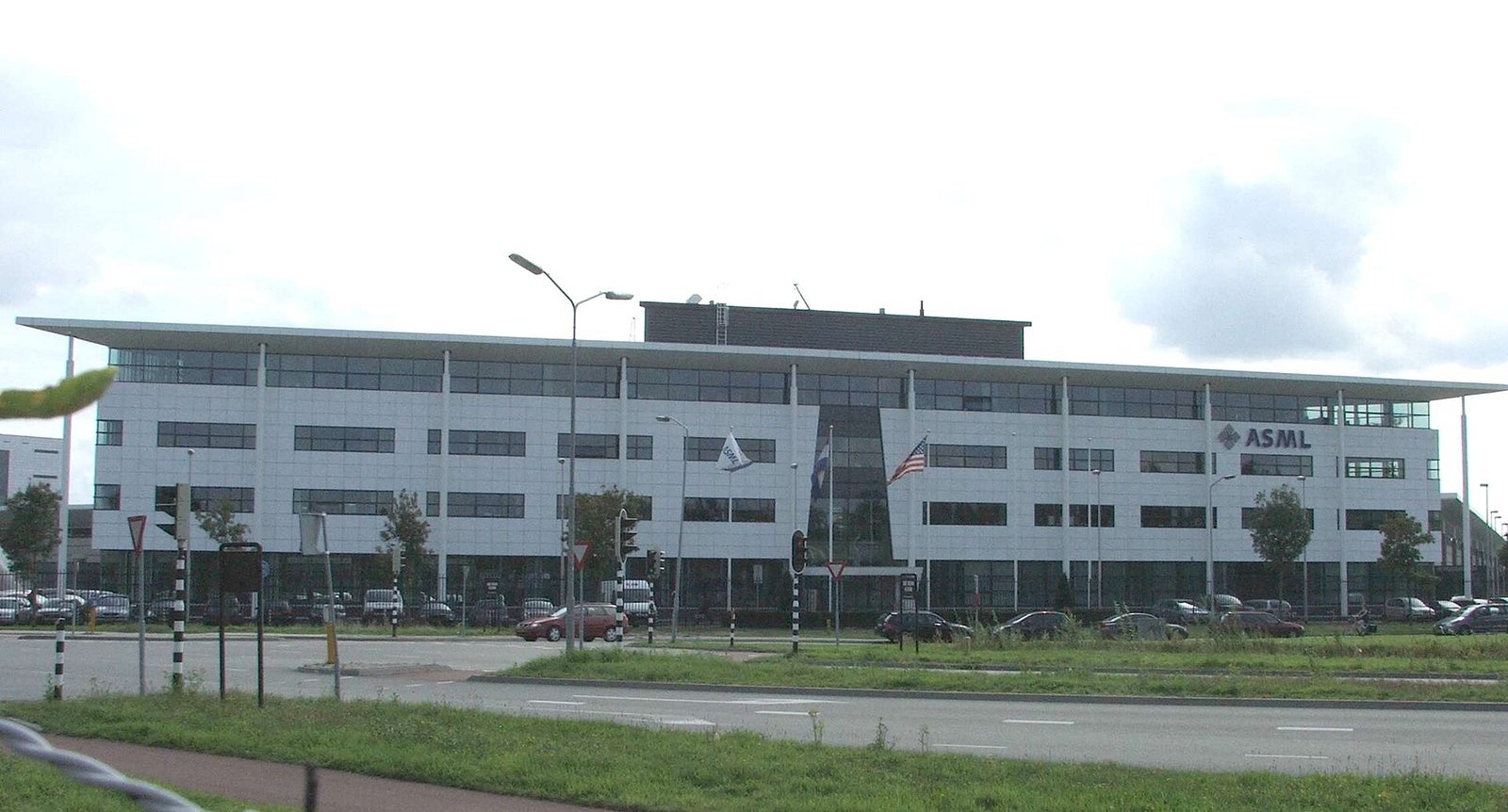
Christophe Fouquet runs the company that makes the machines that make advanced chips, and on Wednesday he told investors that his customers have started asking about delivery slots for 2029 and 2030. Those years were not part of the planning conversation a year ago.
That question carries more than the quarter it arrived with. ASML reported third-quarter net sales of EUR 11.066 billion, up 55% from a year earlier, or about $13.07 billion, slightly below the $13.12 billion analysts had expected. Net income rose to EUR 4.96 billion from EUR 2.13 billion. Earnings per share of $14.51 came in well above the $12.05 analysts expected.
The company raised and narrowed its full-year 2026 sales guidance to EUR 44 billion to EUR 45 billion from EUR 43 billion to EUR 45 billion, the third increase this year, and lifted its gross margin outlook to about 56%. The shares still fell about 3% in premarket trading and pulled other chip names down with them, with Micron, SanDisk and Intel lower.
The gap between the two readings is not hard to explain. A revenue figure describes orders that have already been booked; guidance describes orders the company now expects to book. Investors have spent this year testing every AI spending number for evidence that the buildout has outrun demand, and a strong quarter on its own no longer settles that argument.
What Fouquet described was a supply problem rather than a demand problem. Customers, he said, keep raising their own equipment requirements for the near and medium term, and some have asked about 2029 and 2030. Supply planned for 2027 and 2028 will not meet demand, and the company is weighing whether to expand capacity for 2028 by more than the 30% increase it had already set for low-NA EUV tools heading into 2027.
ASML holds a position no other supplier in the industry does. It is the only maker of extreme ultraviolet lithography systems, machines that cost more than $200 million each and that TSMC, Samsung, Intel and the leading memory makers need to print their most advanced logic and memory chips. When that supplier says it cannot build quickly enough, the constraint it describes is factory space and engineering time.
The demand traces back to data centers. Each generation of AI accelerator needs more silicon and more advanced memory, and the memory makers supplying high-bandwidth DRAM have become a larger share of the order book. A tool order is also difficult to unwind. The machines take months to assemble and test, and a chipmaker planning capacity three years out cannot cancel the way a cloud customer can walk away from a computing contract.
Skeptics of the spending wave have been making the opposite case. On Oct. 12, Broadcom Chief Executive Hock Tan said at a conference in Singapore that many of the people funding the AI boom have no clue what they are investing in, and argued that access to capital, rather than chips or electricity, may now be the binding constraint on how far the buildout runs.
Analysts said both readings can hold at once. A lithography order reflects demand that has already passed an underwriting test inside a chipmaker’s planning committee, while speculation is thicker further up the stack, in software and in the applications that depend on rented computing. ASML sells the first layer, where buyers commit years early and rarely commit by accident.
The company’s own numbers support that division. Alongside new tool sales it runs an installed-base business that sells upgrades and service to fabs already in production, and that business has carried a growing share of revenue as customers push existing machines harder instead of waiting for new ones. Guidance for the fourth quarter implies a further step up in sales to a range of EUR 14.2 billion to EUR 15.2 billion, which management attributed to customer plans rather than to any single order.
For a company that raises guidance three times in a year, the interesting disclosure is the one about limits. ASML has said it would lift low-NA EUV capacity by 30% into 2027 and now says that will not be sufficient. Deciding to build for 2028 is a wager that demand visible in customer forecasts survives two more budget cycles, and the machines it would order are the same ones its own suppliers must build first.
There is a second reading of the third guidance increase. Each raise has been justified by customers lifting their own demand plans, and those plans are drawn during the largest capital expansion the industry has attempted. If the expansion slows, the first signal will not be a cancelled order, because these orders are too expensive and too slow to cancel casually. It will be a quieter revision in a forecast, and a smaller number attached to 2029.
Fouquet was asked about years that his company has not planned for and answered without hedging. The next test is whether the capacity decision follows the same confidence, and whether the customers asking about 2030 machinery are still asking when the board meets.



