
The filing reached EDGAR at 9:18 a.m. Eastern on Wednesday. By mid-morning, the shares it described had traveled much further than the money involved.
Bending Spoons said Berkshire Hathaway agreed to buy 10 million ordinary shares at $33 apiece, or roughly $330 million, in a private placement that lifts the conglomerate’s stake in the Milan-based software company to 4%. Shares of Bending Spoons, which trades on Nasdaq under the ticker BSP, jumped about 35% on the news, after closing Tuesday at $37.86.
The price deserves a second reading. Berkshire is paying nearly 13% below Tuesday’s close, a discount a buyer of its size can ask for and a public market seldom grants. The 10 million shares are newly issued, so existing holders surrender a slice of the company to bring the money in.
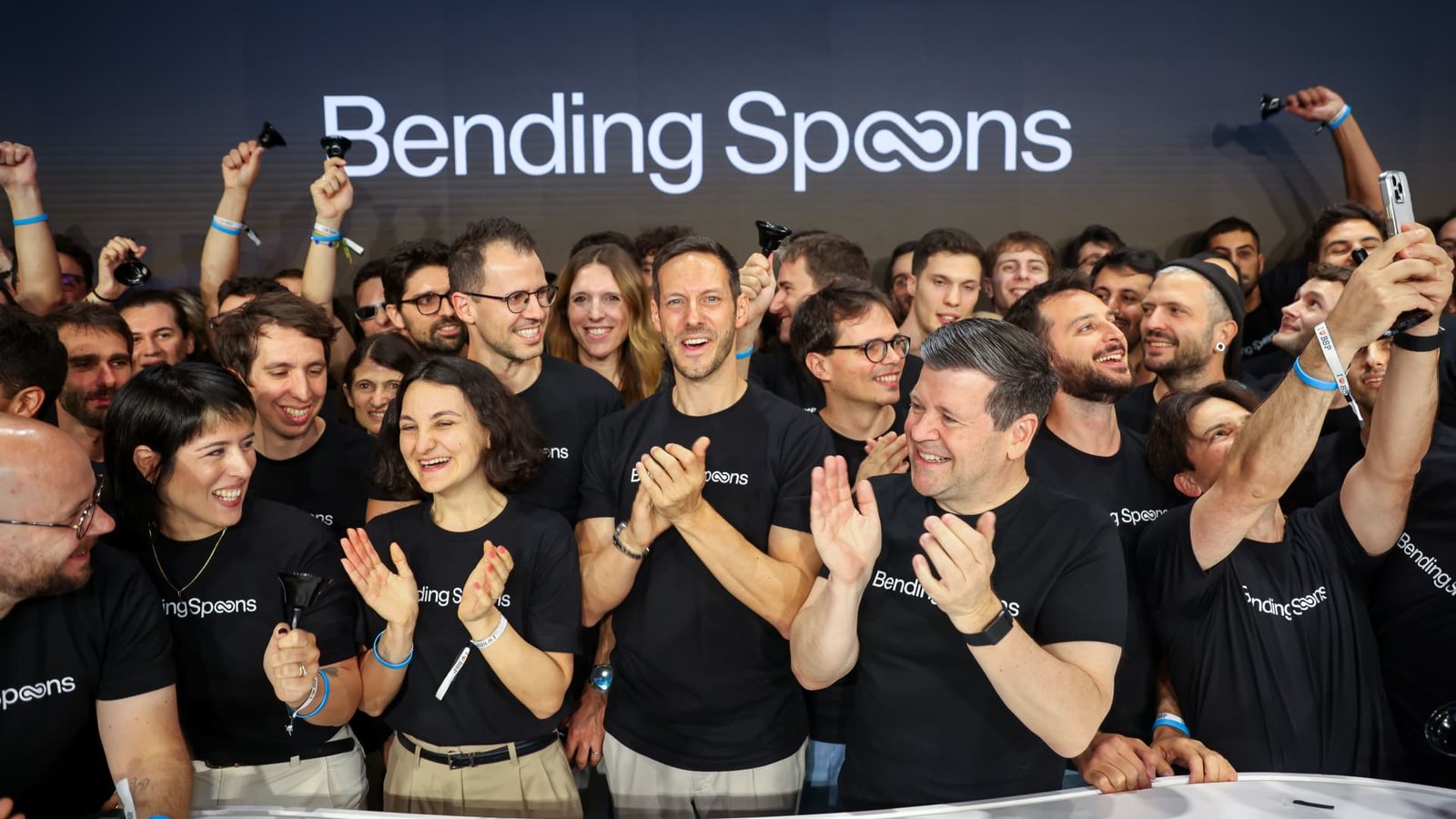
It is the second check in three months. Berkshire committed $600 million to Bending Spoons at its July 1 initial public offering, which priced at $29 a share, above the marketed range, raised $1.68 billion and valued the company at about $18.4 billion, one of the largest European listings of the year.
Bending Spoons, founded in 2013 by Luca Ferrari and three co-founders, does one thing repeatedly. It buys software businesses whose best years appear to be behind them, cuts costs, rebuilds the products, raises prices and uses the cash to buy something else. The portfolio includes AOL, Evernote, Vimeo, WeTransfer, Brightcove, Eventbrite, Tractive and, as of September, Airtable, acquired in a deal that valued the workplace software company at an enterprise value of $1.285 billion. Miro followed later that month, according to Bloomberg, at a valuation of $1.36 billion.
The method has produced both growth and complaint. Fortune reported in August that revenue had risen 95% year over year, and the company spent about $3 billion on acquisitions in 2025 alone, including the ticketing platform Eventbrite. Users of several acquired products have objected to price increases that followed their rebuilds, and former employees of the targets have described deep cuts to headcount. The company’s own description of its method is unapologetic about the scale of the change.
The company said the proceeds will fund “general corporate purposes” and new acquisitions, and that the placement should close in the fourth quarter. Mr. Ferrari, the chief executive, called Berkshire “among the finest and most respected capital allocators in the world” and said he was delighted to reinforce a partnership that began at the listing. Francesco Patarnello, the co-founder who runs business acquisitions, said the company “continuously evaluates M&A opportunities” and that its pipeline “remains strong.”
What Berkshire sees in a business that earns money by shrinking other businesses is the question the filing does not answer. The placement was negotiated privately, according to people familiar with the matter, and Berkshire does not discuss individual positions.
The larger context is a conglomerate spending money again. Berkshire’s cash and Treasury holdings stood at $365.5 billion at midyear, down from a record $397.4 billion in March, under Greg Abel, who took over as chief executive on Jan. 1 while Warren Buffett remained chairman. The company put $10 billion into Alphabet through a private placement in June and $6.8 billion into homebuilder Taylor Morrison. Subscription software is newer ground for a portfolio led for years by Apple, American Express and Coca-Cola.
Since its listing at $29, the stock has traded well above the offer price, closing Tuesday at $37.86, roughly 31% higher. Berkshire’s new entry price sits between the two, which is one reason the discount drew as much attention as the total. The shares being sold are unregistered, and the filing gives Berkshire registration rights, a structure that points toward a longer holding period than a trading position.
Analysts said the discount, not the headline sum, carries the information. A seller issuing stock below the market price to a single buyer is buying speed and certainty rather than the best possible price, and the market read the arrival of Berkshire as validation strong enough to ignore the terms.
The industry backdrop cuts the other way. Mature consumer software is the corner of the market most exposed to artificial intelligence, which can rebuild the features of a note-taking app or a file-transfer service at low cost. Bending Spoons’ answer is that the same technology is the tool it uses to rebuild what it buys; its own description of the method puts AI at the center of both the ambition and the work. Whether that offsets the risk of buying franchises whose users can leave is untested at this scale.
The mechanics of the model carry risk of their own. Growth depends on a steady supply of targets large enough to move earnings, and the company has completed more than 50 acquisitions since its founding without selling a material business. A 4% holder with a below-market entry price has room to wait through a dry spell. A company that has told investors it will compound through acquisitions does not.
Berkshire has made no commitment about the size or duration of its holding, and Bending Spoons has not disclosed what it expects the fresh capital to buy. Three months after listing, the company has a marquee shareholder, a stock that moves violently on news, and a strategy that requires it to keep finding businesses the market has given up on before the price of those businesses rises to meet it.



