IBM will deploy India’s first quantum computer at a technology park in Amaravati, in the southern state of Andhra Pradesh, with the machine scheduled to arrive in early 2027, the company said Tuesday.
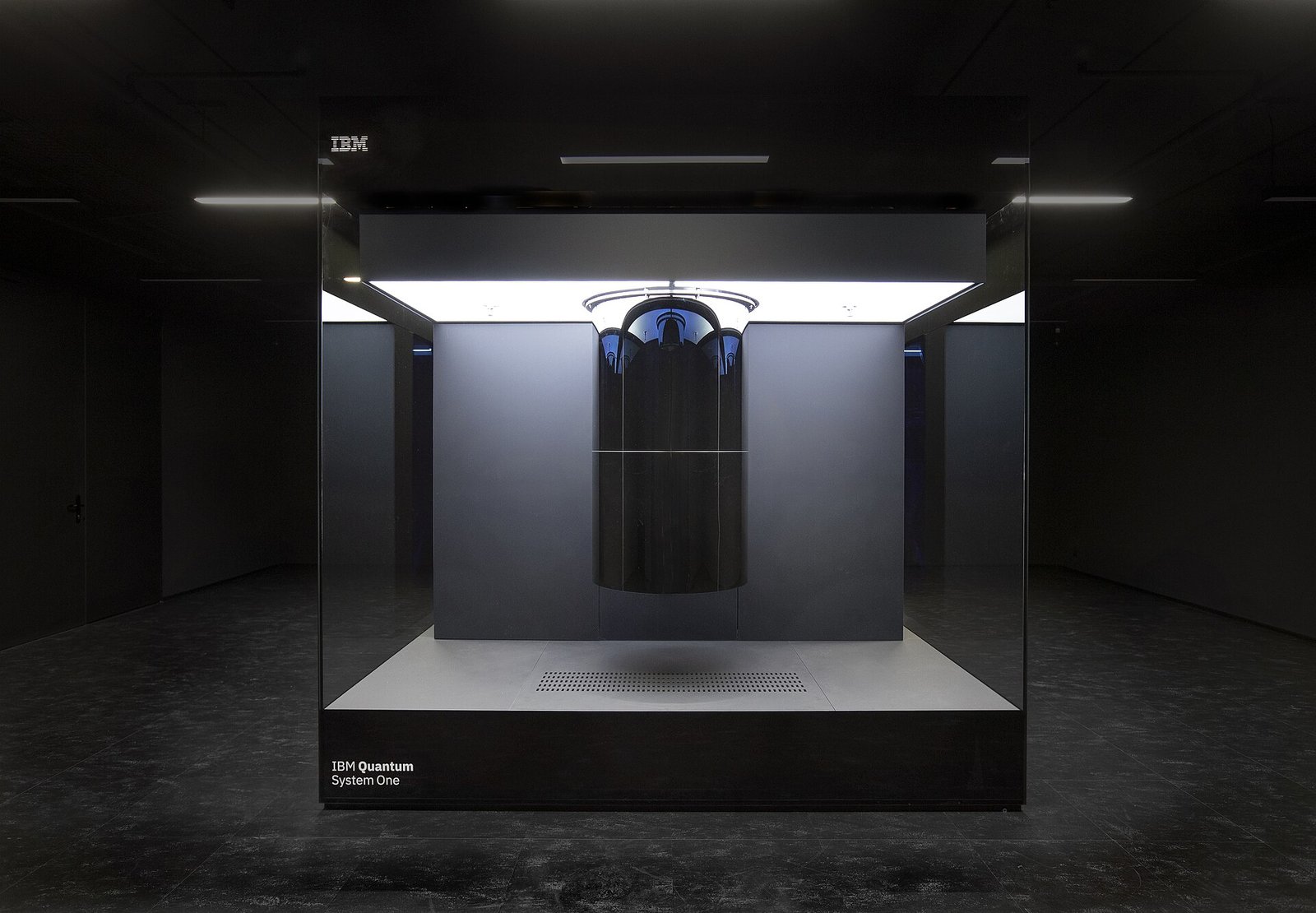
Sandip Patel, IBM’s managing director for India and South Asia, said the site is nearly ready for the installation, which will be anchored by an IBM Quantum System Two powered by a 156-qubit Heron processor. The system is being built with Tata Consultancy Services and the government of Andhra Pradesh inside the state’s Quantum Valley Tech Park.
The Amaravati machine gives India a physical asset in a field where it has mostly consumed other countries’ hardware. IBM has installed comparable systems in Germany, Japan, South Korea and Canada in recent years, part of a strategy of placing machines with national research programs and paying customers rather than concentrating computing capacity in a handful of data centers.
What IBM intends to sell is less the processor than the application work around it. Patel has said the facility will focus on developing practical uses for the hardware and preparing Indian companies for post-quantum cryptography, the class of algorithms meant to withstand attacks by machines that do not yet exist but are being built. The park is also meant to open the system to deep-technology startups.
That application focus reflects the state of the technology. Quantum computers today solve a narrow set of problems, and commercially useful deployments remain years off. Patel has put mainstream use three to five years away, even as vendors publish roadmaps promising fault-tolerant machines by the end of the decade. IBM’s own plan calls for demonstrating quantum advantage, meaning a problem that a classical computer cannot practically crack, with high-performance systems before its first large fault-tolerant machine arrives in 2029.
The political and financial context is larger than one machine. India’s cabinet approved a National Quantum Mission in April 2023 with an outlay of 6,003.65 crore rupees, roughly $700 million, over eight years to 2030-31, aimed at building research capacity at home rather than importing it. IBM signed memorandums of understanding with three entities tied to the Ministry of Electronics and Information Technology in 2023 covering quantum computing, artificial intelligence and semiconductors, and the Amaravati installation is meant to connect to that work.
The talent question may prove harder than the hardware. NITI Aayog, the government’s policy planning body, has estimated that India will need to train about 100,000 quantum developers to be competitive in the 2030s. Indian engineering schools graduate large numbers of software specialists each year, but quantum work draws on physics, cryogenics and error correction that few institutions teach at scale.
For Andhra Pradesh, the installation fits a broader effort to attract technology investment to a capital that has been under construction for years. Amaravati was planned from scratch as the state’s administrative center, and the Quantum Valley park, along with an affiliated university, has become the state’s bid to create an industry cluster rather than wait for one to appear.
IBM’s approach carries commercial logic alongside development goals. Placing systems with governments and research institutions generates demand for cloud access, software and services before the hardware market matures, and it produces a pool of engineers familiar with the company’s toolchain. IBM has said customers and park members can reach its quantum machines over the cloud while construction continues, which keeps the relationship active during the build.
Skeptics of national quantum programs point to the gap between installation and output. A single machine, however capable, is a small instrument for a country of India’s size, and access to it will be rationed among institutions, startups and government labs with different needs. Analysts said the measure of the project will be how full the machine’s calendar looks two years after it switches on, and whether Indian teams publish and patent work that uses it.
There is a more practical reason for governments to pay for hardware they cannot yet use commercially. Data encrypted with today’s public-key standards can be recorded now and decrypted later if a machine capable of breaking those standards is ever built, a risk that banking and telecommunications regulators have begun to take seriously. Building a domestic base of engineers who understand the problem is cheaper before the problem arrives than after.
The facility will also face the ordinary tests that meet any flagship installation. Imported systems depend on cryogenic supply chains, specialized staff and steady electricity, and a machine in Amaravati must be kept running to justify its cost. India has run this play before with supercomputers, where the hardware arrived first and the applications followed slowly.
IBM has not disclosed the machine’s price or the terms of the state agreement, and Andhra Pradesh has not said how much of the park’s cost it will carry. Those figures will determine whether the project reads as a research investment or an industrial policy bet.
For now, the announcement settles one question that Indian researchers have asked for years: where the country’s first quantum computer would sit. The harder question, what it will be used for, is the one the next two years will answer.