
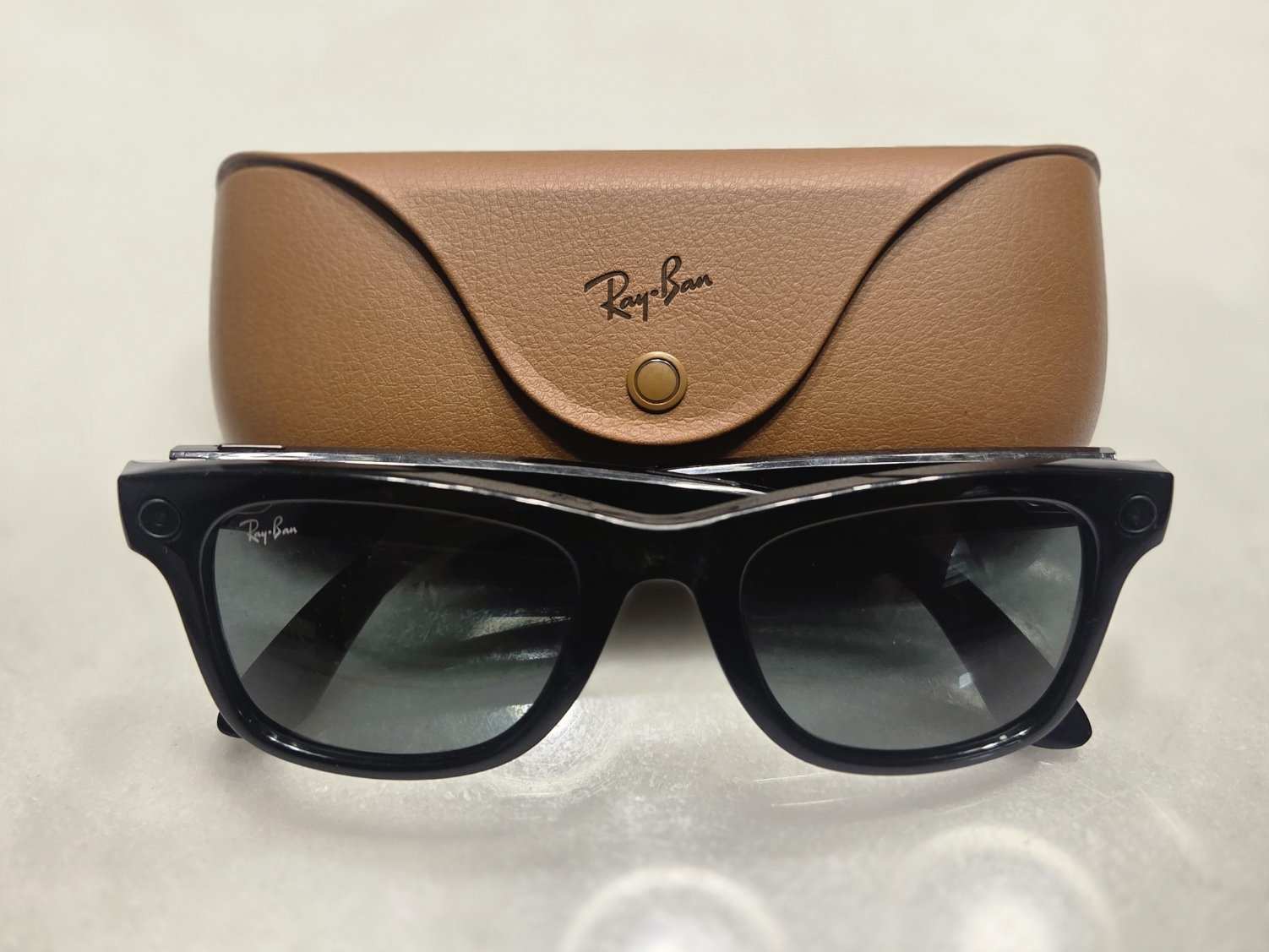
Two Dutch privacy groups went to court on Oct. 13 asking a judge to stop Meta Platforms from selling its Ray-Ban glasses in the Netherlands, arguing that a device built to film whatever its wearer looks at breaks laws meant to protect people from being photographed without consent.
Offlimits, which campaigns against online abuse, and The Firewall Foundation filed for an injunction after Meta let pass a two-week deadline set in a formal notice demanding that the glasses be withdrawn from sale, the groups’ lawyers wrote. They asked the court to schedule a hearing by the end of the week.
“We are drawing a line,” Robbert Hoving, managing director of Offlimits, said. “Hiding a camera in an everyday accessory encourages online behaviour that breaches personal boundaries. Victims of these glasses are already contacting our helpline.”
Meta’s head of wearables, Alex Himel, has said the company does not intend to pull the product, and the company says every pair with a camera has a light on the front that blinks while it records. A Meta spokesperson said the company is continuing to develop the glasses.
The dispute has been building for a month. Hans Anders, one of the largest optical chains in the country, suspended sales of the glasses in the Netherlands and Belgium on Oct. 2, citing the public and political debate around them, and the online retailer Wehkamp followed. The Dutch data protection authority, known as the AP, has warned that recordings showing identifiable people raise questions under privacy rules.
The organisations point to smaller incidents that have hardened opinion. Several music venues in the country have barred the devices after a man was caught filming women near the toilets at a festival in August. The lawyers argue that the LED indicator is not always visible and can be covered, and that footage is stored by Meta and used to train its artificial intelligence systems, including images of people who never agreed to appear in them.
The stakes are commercial as much as legal. Eyewear has become Meta’s main hardware bet since it shut down most of its other device programs, and the glasses are made with EssilorLuxottica, the Paris-based owner of Ray-Ban. EssilorLuxottica reported selling seven million pairs last year, shipments rose more than 250% in the first half of 2026, and Citi has estimated that annual sales of AI glasses could reach $40 billion by 2030.
Several thousand pairs have been bought in the Netherlands alone since opticians began stocking them a year ago. That a court could take the product off shelves in one European market has drawn attention from regulators elsewhere, analysts said, because the Dutch complaint targets the design of the device rather than the conduct of individual users.
The same week brought a second front. In New Mexico, a jury found on Sept. 25 that Facebook made false or misleading statements about privacy, in a verdict that counted 43,899,725 violations of the state’s Unfair Practices Act. At a hearing on Oct. 1, the state’s special prosecutor, Randi McGinn, asked Judge Francis Mathew of the First Judicial District Court to impose penalties of $35 billion to $40 billion, at up to $5,000 per violation.
Meta’s lawyers asked the judge to hold the penalty to $3.45 billion, and on Oct. 14 the company filed a further response contesting the state’s arithmetic. If the judge accepts the state’s figure, it would be the largest civil penalty ordered in a case brought by a single U.S. state.
The state has won once already. A jury in March found that Meta violated state law by misleading users about safety on Facebook, Instagram and WhatsApp and by enabling child sexual exploitation on the platforms, leading to a judgment of $942 million that includes five years of mitigation measures ordered by the court, according to a briefing prepared for state legislators. Meta recorded $2.40 billion in legal charges in its fiscal second quarter, a figure that suggests the company is already provisioning for part of the bill.
The two cases test different things. New Mexico asks how much a state can charge per misleading statement at a scale of tens of millions of statements. The Dutch action asks whether a product can be sold at all when a regulator’s concern is not that some users behave badly but that the hardware makes covert recording easy.
Neither case is close to an ending. The Dutch organisations were waiting for a hearing date, and a ruling in New Mexico is expected this month, with appeals likely from whichever side loses. Meta declines to say what it would do if the penalty lands near the top of the state’s range, and it has not said whether it would keep selling the glasses in a market where a retailer has already walked away.
What the wearables business cannot do is treat the two fights as separate. The same camera that makes the glasses useful is the feature being challenged in court, and the marketing that made them popular is the evidence being counted in New Mexico. For a company that has argued its products comply with the law, the next few weeks will be decided by two judges applying very different statutes to the same business model.



