
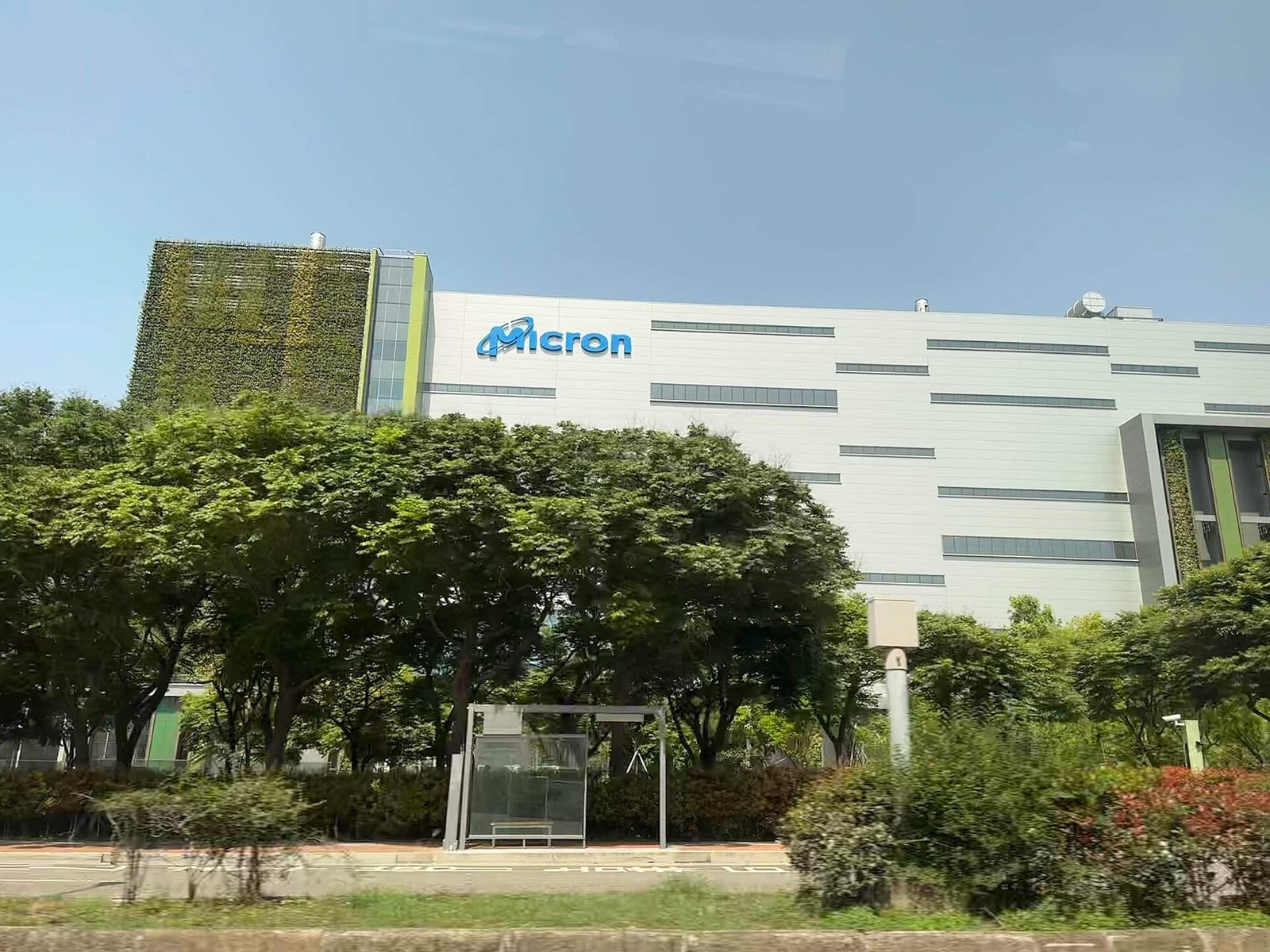
The post arrived at 5:52 p.m. Eastern on Oct. 13, a reply from Elon Musk to an investor summarizing a JPMorgan note about the memory chip market. In two sentences, the chief executive of Tesla and SpaceX took a side in the industry’s pricing fight and named exactly one company he approved of.
“Micron has been reasonable regarding future memory prices, while others have been extortionate, which is something today’s customers won’t forget,” Musk wrote on X, his social platform. He added that Micron was making the smart move for long-term customer loyalty. He named no other supplier, and he disclosed no prices, volumes or contract terms.
The market barely moved on the comment. Micron shares closed the regular session at $953.19, down 3.6%, and added 0.3% after hours. The larger move came earlier: the stock has fallen 12.4% over four sessions from $1,088, and sits 24% below its high of $1,255, even after a gain of 234% this year that lifted its market value to about $1.08 trillion.
What the praise attached to is a company that spent two years selling its output far in advance. Micron holds 26 long-term supply agreements covering more than 35% of revenue through 2030, a contracted backlog of about $150 billion, $32 billion in committed customer cash, and commitments for more than 75% of next year’s production, according to the JPMorgan note that the post responded to and to comments the company made on its Sept. 30 earnings call.
Those contracts explain both halves of Musk’s remark. Selling forward converts a commodity business into something closer to a subscription, and it caps how much a supplier can charge when a shortage arrives. The agreements carry price floors and ceilings. Micron’s finance chief has said that even at floor prices, margins would sit meaningfully above any prior peak, which is a supplier’s way of saying the cycle now cuts in one direction.
Supply is where the argument sharpens. JPMorgan estimates the memory shortfall at about 20% this year, 19% in 2027 and 15% in 2028, and projects that the high-bandwidth memory used in artificial intelligence servers will grow more than fourfold to $280 billion by 2028 from roughly $64 billion this year. TrendForce has revised its 2027 outlook upward, forecasting that blended prices for that class of memory will rise 121% from a year earlier. Samsung has been negotiating 2027 supply of its newest memory at $4 to $5 per gigabit, against about $1.50 for the current generation, according to South Korean press reports.
Micron reported an 87% gross margin, on an adjusted basis, in the quarter that ended in August, and guided investors to revenue of $61.5 billion, give or take $1.5 billion, with margins near 86% in the current period. Those are the figures a seller reaches when buyers have no alternative.
Musk’s companies are among those buyers. Tesla builds computing capacity for autonomous driving and robotics, and SpaceX has become a large purchaser of chips. When a customer that size publicly thanks one supplier for restraint, the remark is also a negotiating position, and the manufacturers left unnamed, in a market dominated by Samsung, SK hynix and Micron, read it that way. Analysts at several brokerages said the criticism appeared aimed at the two Korean suppliers, though Musk did not identify them.
The pressure is not confined to data centers. Higher prices for mainstream memory have raised component costs for makers of smartphones and personal computers, which pass along what they can to retail buyers. Anyone purchasing a laptop next spring will absorb part of the shortage whether or not they own a single server.
The risk on the other side of the trade is supply. Before Musk posted, a Chinese manufacturer disclosed a denser memory design, a development that goes at the scarcity argument behind current prices. Micron is also holding price discipline with customers who signed two years ago while raising it for the ones who did not, which is a stable arrangement only as long as no rival undercuts it.
For Musk the calculation is simpler than it is for investors. He buys memory by the acre, and he would rather have a supplier that treats a long contract as a relationship than one that reprices at every peak and trough. Whether Micron keeps that reputation depends on a shortage its own contracts were written to exploit, and on competitors who have watched a public compliment turn into a marketing advantage they do not share.
Micron’s next earnings report has to land inside the range the company guided to, at roughly the margin it promised, for the compliment to look prescient rather than generous. Nothing in the post changes a contract already signed. What it changes, for now, is the account customers will give of who behaved well during a shortage, and shortages are when that account gets written.
The question the post leaves open is what happens at the next negotiation, when the shortage eases and buyers remember who charged what. Musk said customers would not forget. He did not say what they would do about it.



