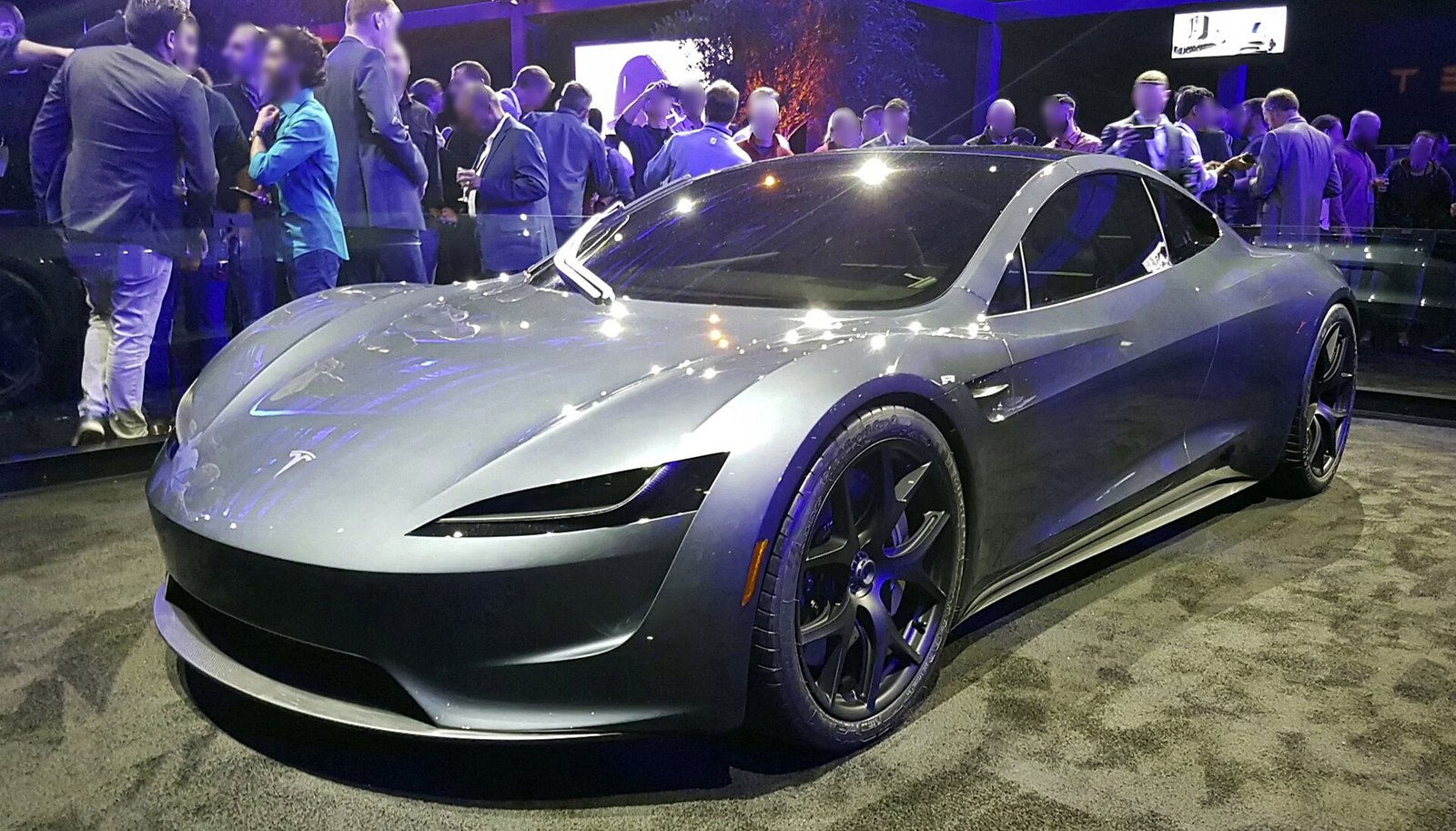
The field outside Waco, Texas, will be dark and the aircraft restricted when Tesla unveils the next-generation Roadster at 8:55 p.m. Eastern time on Oct. 15, a date the company moved twice and a setting it says the demonstration requires: an outdoor site near SpaceX’s test facility in McGregor, with room for a live audience and clear skies above it.
Tesla had scheduled the event for Oct. 1. Elon Musk postponed it two weeks, writing on X that high winds made the demonstration impossible. Federal regulators closed a stretch of airspace over the test site ahead of the original date, barring aircraft and drones up to 10,000 feet.
The car has been coming for nine years. Musk showed a Roadster prototype in November 2017 and promised a 0-to-60 time of 1.9 seconds, a top speed above 250 miles an hour, a quarter-mile in 8.9 seconds and 620 miles of range from a 200-kilowatt-hour battery, at $200,000 for the base model and $250,000 for a Founder’s Series. No customer has received one. Reservations, which reopened this year at a refundable $50,000 deposit, are the only part of the 2017 plan that has been delivered on time.
The demonstration is expected to lean on hardware borrowed from the rocket business. Tesla has teased thruster plumes from the car’s rear, and Musk has said an optional cold-gas thruster package from SpaceX could cut the 0-to-60 time to about a second. Patent filings describe battery-powered fans that pull air from under the body to increase downforce at low speed, and a steer-by-wire system. Musk has told guests the event will be unforgettable, and he has said he wants a live crowd because a recorded video would invite doubts about whether the stunt was real.
Production is planned for Giga Texas. Pricing, which has not been updated since the 2017 announcement, is expected to be confirmed at the event.
Analysts who cover the company say the Roadster is unlikely to move the financial picture much on its own. It is a low-volume halo product in a lineup that depends on the Model Y for volume, and Tesla’s valuation rests on autonomy and robotics rather than on supercars. The demonstrations that matter to investors are taking place in Austin, where the company has begun operating a robotaxi service, and in the factories building the Optimus humanoid.
The same week offered a better clue to what the company is actually selling. Tesla began pushing software version 2026.38.5.1 to older Model S and Model X vehicles built with Intel processors, a fleet on hardware generation three that has been waiting for the latest driver-assistance features. The update brings FSD v14.3 Lite to those cars, while vehicles on the newer hardware receive v14.3.12, which adds automatic collision evasion. The effect is that a car bought in 2017 can now run a reduced version of the software the company charges for today, a small reprieve for owners who paid for features long before they arrived.
That matters because Tesla’s margins have been squeezed by price cuts and by competition from Chinese manufacturers that have moved faster on cheaper electric vehicles. Software is the part of the business with the best economics, and the installed base of older cars is the part of it that has generated the most complaints. Pushing a lite version of the system to hardware three does not resolve those complaints, but it keeps paying customers inside the update cycle.
The numbers due on Oct. 21 will show how the core business is holding up. Analysts expect earnings of about 43 cents a share, on revenue near $28 billion, according to consensus estimates compiled before the report. Attention is likely to fall less on the quarter than on what executives say about the robotaxi rollout and about Optimus, the two projects Musk has told investors will be worth more than the car business.
Wall Street has learned to discount dates from this company. The Roadster was promised for 2020, then 2021, then later years, and the April date announced for this year slipped to May, then to summer, then to Oct. 1, then again. A car that has been a decade in the making is an unusual thing to launch when the company’s market value depends on software it has not fully shipped and on factories for a robot nobody owns yet.
So the questions after Thursday are simple and unanswered: what the car costs, when buyers get it, and whether the thruster demonstration is a production feature or a stunt. Tesla has not said how many units it intends to build, and it has not said whether the thruster package will be legal on public roads. The Roadster’s value to Tesla may be less as a product than as proof that the company can still finish something it started, which is a harder case to make in a field near Waco than on a balance sheet.