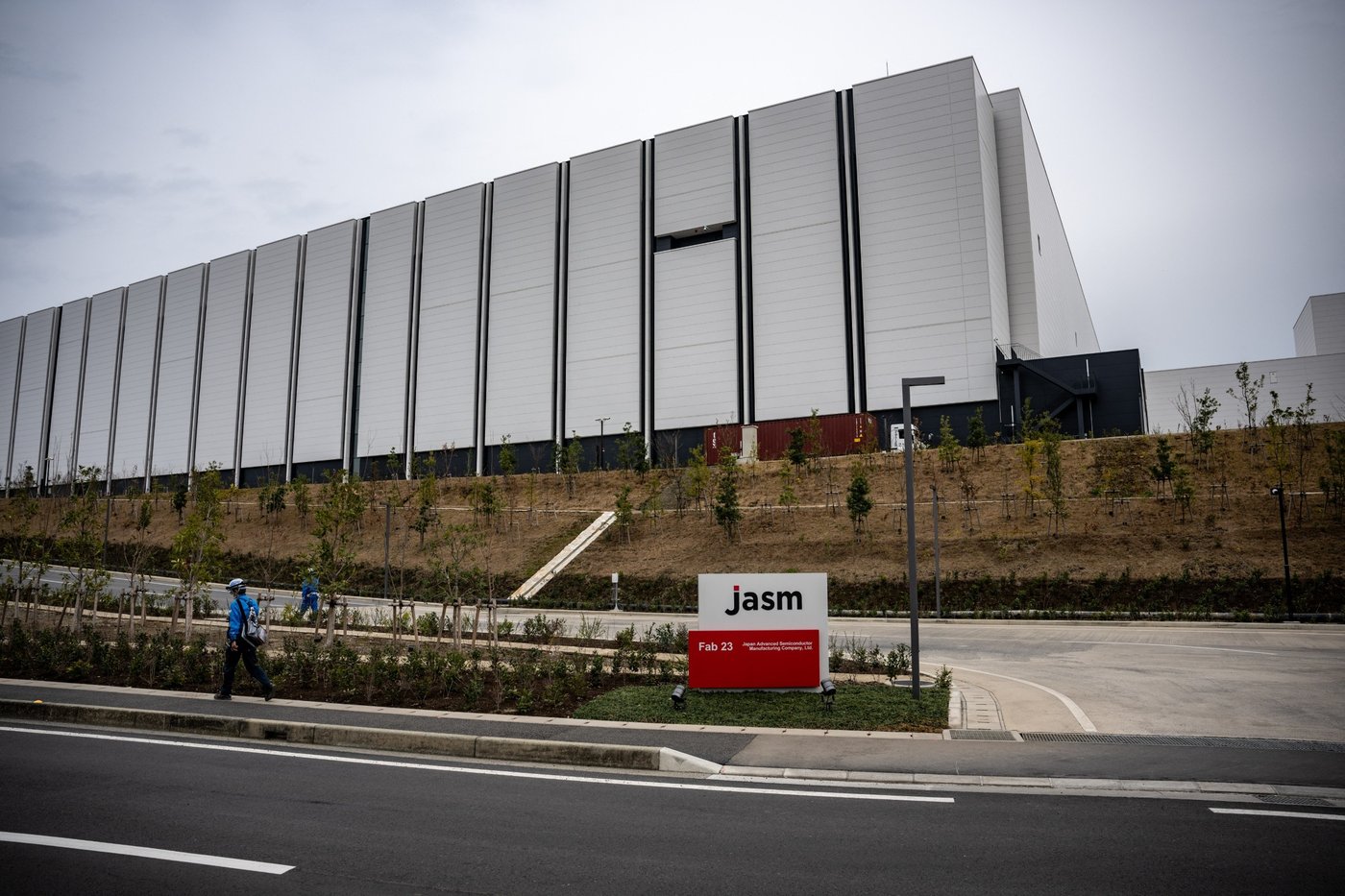
The signing took place on Monday at a promotion center for the chip cluster in Yongin, south of Seoul, on ground where SK hynix is building fabs that will not run wafers for years. The agreement formalized there commits the company, the Ministry of Trade, Industry and Energy, four commercial banks and a state insurer to a program worth 2 trillion won, about 1.4 billion dollars, aimed at the smaller firms that supply the materials, parts and equipment the cluster will need.
The structure separates the money from the credit. SK hynix and the banks, Kookmin, Shinhan, Hana and Woori, contribute a combined 100 billion won to run the program. The Korea Trade Insurance Corporation, known as K-SURE, provides up to 2 trillion won of guarantees behind the loans. Suppliers recommended by SK hynix get higher borrowing limits, interest rates cut by as much as 2.5 percentage points, and guarantee terms extended from one year to three.
The reason a memory maker is arranging credit for its vendors is that the cash cycle runs the wrong way in a boom. A supplier of precursors, polishing pads, deposition parts or test equipment pays for capacity before it is paid for output, and the qualification process that lets it sell into a fab can take a year or more. When the customer is simultaneously building three fabs and converting lines to high-bandwidth memory, the order book grows faster than the working capital that supports it.
The guarantee does not move money to the supplier. It moves the lender’s risk to the state, which is why the interest rate falls. A bank lending against a K-SURE guarantee is underwriting the Republic of Korea rather than a 40-person machining shop in Cheonan, and it prices the loan accordingly. What SK hynix contributes is not capital but its judgment about which suppliers are worth recommending, a list only it can compile.
That list is also where the pressure sits. A supplier that depends on one customer for most of its revenue has little room in a price negotiation and no room at all in a bad year. The program does not change the concentration. It makes the concentration survivable, which is a different thing and, from the government’s side, a cheaper one than watching a qualified vendor fail during a capacity race.
The program is one piece of a larger push. The government previously pledged 2.4 trillion won of guarantees for automotive, shipbuilding and steel suppliers. Industry Minister Kim Jung-kwan said on Monday that support for chips would rise above 5 trillion won, and that the model would extend to defense, nuclear power and biotechnology, taking the total to roughly 10 trillion won by the end of the year.
SK hynix Chief Executive Kwak Noh-jung framed the agreement around competitiveness rather than financing, describing a strong domestic supply chain as the condition for holding position against competitors in the United States, Japan and China. That is the standard formulation, and it is also accurate: the equipment and materials ecosystem around a memory cluster is a moat that takes a decade to dig and a single bad year to fill in.
The risk sits in the contingent liability. Guarantees are not recorded as spending, which makes them attractive to a government working against a fiscal calendar, but they become spending if enough borrowers default at once. A program designed for a downcycle is, by construction, most likely to be called in a downcycle, and the chip industry’s downcycles arrive without warning and end without notice.
There is a moral hazard question underneath, and the program answers it with selection rather than with pricing. Because SK hynix nominates the borrowers, the state is relying on a company with its own interest in the outcome to screen them. That aligns incentives well enough in an expansion. It would align them less well if the industry turned and the customer’s own balance sheet came under pressure.
For the suppliers, the arithmetic is simple. A rate cut of 2.5 percentage points on a working capital line, with the guarantee running three years instead of one, is the difference between taking an order and declining it. In a year when memory capacity is being added at a pace nobody forecast, declining an order means losing the qualification and, eventually, the account.
What to watch is take-up rather than the headline. Two trillion won of guarantee capacity is not two trillion won of loans, and the program’s value depends on how many suppliers clear the screen, what rate they actually pay and how quickly the banks process claims that the customer has endorsed. Those numbers will appear in K-SURE’s disclosures long before they appear in a press release.
For the government, the program is also a template. If guarantees can hold a supply chain together through a capex surge in chips, the same instrument can be sold for shipbuilders, for defense contractors and for the nuclear industry, and the budget office will note that none of it shows up as expenditure until something goes wrong.