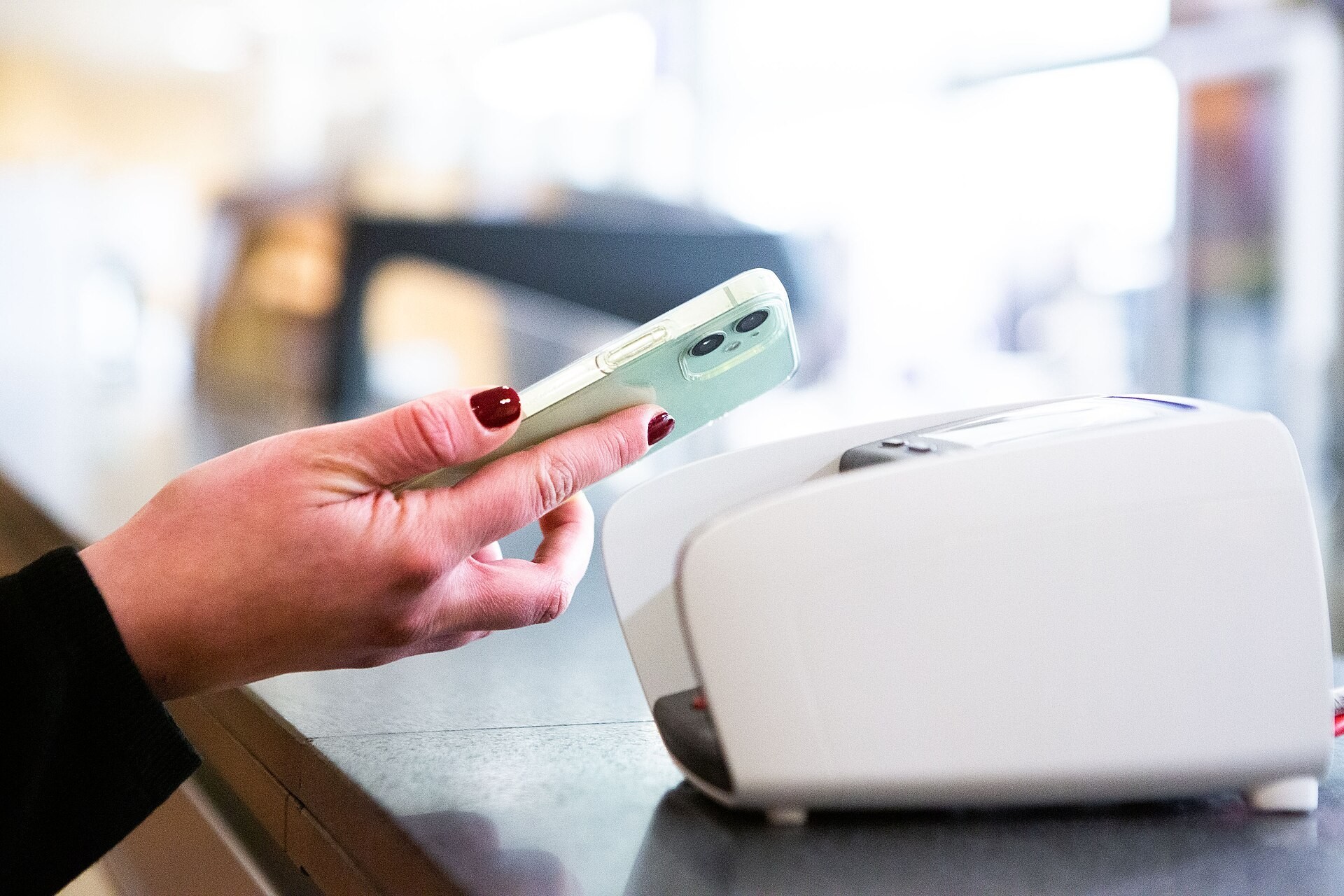
For a decade the only way to pay for a coffee with an iPhone in Britain has been Apple’s own wallet, because the chip that talks to the terminal answers to Apple and to nobody else. On Tuesday the Competition and Markets Authority published proposals to change that, opening a consultation that runs until November 17.
The draft conduct requirement would oblige Apple to grant third-party wallet providers access to the near-field communication hardware and software in iPhones, and to do so through the main contactless standards used internationally rather than through a proprietary route. The regulator also proposed principles for how access should be priced, stopping short of setting a rate itself, and said it expected charges to be substantially lower than what Apple collects now. Technical restrictions that make competing products harder to build would go.
“Businesses have told us that high fees, strict terms, and technical restrictions are making it too difficult for them to innovate and compete,” Sarah Cardell, the authority’s chief executive, said in a statement. The regulator’s case rests on a market fact it can measure: contactless payments now account for 39 percent of all payments in Britain, against 3 percent a decade ago, and more than 60 percent of adults use a digital wallet, with Apple Wallet the most popular.
The comparison the authority keeps making is with Europe. Apple opened NFC access in the European Union in 2024 to settle a competition case, and within six months Vipps launched the first alternative payment app, followed by PayPal, Klarna, Curve and BBVA. Not one firm has launched a comparable wallet product in Britain. The CMA’s reading is that access on paper is not access in practice, and that the fees and conditions attached to the European settlement were set at a level that kept the economics unattractive.
That argument has some support in the technical detail. An iPhone’s NFC antenna is wired to a secure element, a separate chip that holds tokenized card credentials, and Apple has controlled which applications may reach it. A bank that wants its own tap-to-pay flow has had to route the transaction through Apple Pay, which means the issuer pays Apple a fee per transaction and cedes the customer relationship at the moment of payment. Banks have complained about that fee for years and have never been able to discover precisely how it is calculated.
Apple’s defense has been security and privacy, and it is not a frivolous one. The secure element exists to keep card numbers away from the operating system and from applications that might be compromised, and Apple has argued that opening it widens the surface for fraud. The authority said its evidence suggests neither of the two international standards raises inherent security concerns, which is a finding Apple will contest in its submission.
The stakes go past payment fees. A wallet is the interface through which a phone becomes a passport, a transit ticket, a car key and, increasingly, a route to account-to-account transfer that bypasses card networks altogether. The company that controls the interface sees which services a customer uses, sets the terms on which rivals appear and captures the moment of conversion. That is why the fight has been more persistent than the size of the fee would suggest.
Britain’s interest is stated in industrial terms. The fintech sector generates about 214 billion pounds of turnover and supports more than 360,000 jobs, and the government has made competition in digital markets part of its growth argument. The authority has had powers to impose conduct requirements on firms designated with strategic market status since the Digital Markets, Competition and Consumers Act took effect, and it opened investigations into Apple’s and Google’s mobile ecosystems in January 2025. Penalties for breach can reach 10 percent of global turnover, which is the number that gives a conduct requirement weight.
There is a diplomatic dimension the authority does not discuss. The proposals land while the British government is courting American investment, and Apple is one of the largest American investors in the country. A requirement that applies only to a single foreign company’s hardware designs will be characterized in Washington as a tax on a successful product, and Apple has the resources to make that argument in public and in private.
What the consultation will not settle is the price. The authority proposed principles instead of a number, which means the level will be negotiated case by case or fixed later, and the level is what decides whether a challenger can build a business. Access at a fee close to what Apple charges today changes nothing but the paperwork. Access at a marginal cost opens the market to companies whose entire business is a better checkout.
The timeline is slow by the standards of the industry. A consultation closing in mid-November, a final decision after that, and an implementation period would push real competition into 2027 at the earliest, by which point the wallet market in Britain will have been closed for a decade. The authority knows this, and the reason it published principles rather than a rule is that it wants the remedy to survive an appeal.
For Apple, the calculation is narrower than the principle. Its services revenue depends on the wallet being the default, and its defense of the secure element is genuine as well as commercial. For the British banks and fintechs that pushed for this, the question was never whether a rival wallet could be made to work technically. It was whether the economics would let one survive, and that is the question the consultation is really asking.