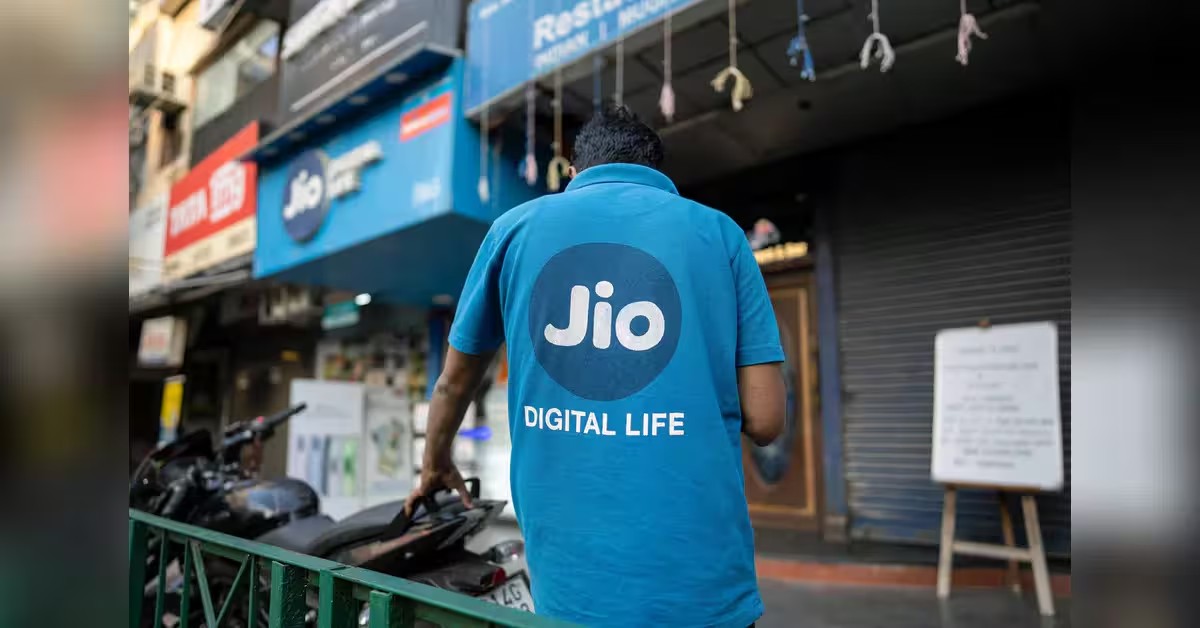
The smallest cheque a retail investor can write for Jio Platforms this week is 13,428 rupees, about $141, for a lot of twelve shares at the top of the price band. Multiplied across the country’s demat accounts, those small cheques are what Reliance Industries is relying on between Wednesday, when the public portion of the sale opens, and Friday, when it closes.
The issue is 30,213 crore rupees, roughly $3.2 billion, and all of it is new capital: 27 crore fresh shares at 1,065 to 1,119 rupees each. At the top of the band, Jio Platforms is valued at about 10.3 trillion rupees, or $108.3 billion. Listing is set for October 28 on the National Stock Exchange and the BSE. Measured in rupees it is the largest share sale the country has attempted, and the first initial public offering from the Reliance group since 2006.
What is being sold is a network most Indian adults already use. Reliance Jio Infocomm reports 533.3 million subscribers, 284.9 million of them on 5G, and carries about 60 percent of the country’s wireless data traffic. It operates 360,537 towers and more than a million route kilometres of fibre, and runs 1,059 Jio Centres with 6,322 smaller Jio Points. Data traffic rose from 148.5 billion gigabytes in the year through March 2024 to 241.4 billion two years later.
Institutional investors have already answered. The anchor book drew more than $25 billion of bids, according to people involved in the transaction, a figure that says more about scarcity than about Jio. India has few listed technology companies of scale, and index providers will have to include the stock once it trades. Retail applicants are expected to account for about a third of the issue.
Six years ago the same business was sold in private, and cheaply. In 2020, with primary markets frozen, Reliance placed a third of Jio Platforms in a matter of weeks. Meta paid 43,574 crore rupees for 9.99 percent. Google paid 33,737 crore for 7.73 percent. BlackRock, KKR, Silver Lake, General Atlantic and a line of sovereign funds took the rest, at an equity value of 4.91 trillion rupees. Neither Meta nor Google is selling into this offering, which leaves the two American companies as the largest outside shareholders.
The structure of the sale matters more than the headline size. A fresh issue puts the 30,213 crore rupees on Jio’s own balance sheet instead of into the parent’s treasury, and the stated uses are the unglamorous ones: 5G coverage, fibre, enterprise connectivity and the computing that supports JioBrain, the group’s artificial intelligence unit. None of it retires debt at Reliance, which is carrying the capital spending of a retail and energy conglomerate.
The syndicate assembled for the sale is unusually wide. Kotak Mahindra Capital, Morgan Stanley, BofA Securities, Axis Capital, BNP Paribas, Citigroup, CLSA, Goldman Sachs, HSBC, ICICI Securities, Jefferies, J.P. Morgan, SBI Capital Markets and UBS are among the banks on the cover. A list that long describes a distribution problem rather than a valuation argument: the shares have to reach millions of accounts, not a few dozen funds.
The valuation argument will decide the first month of trading anyway. Jio’s consolidated earnings multiple sits somewhere between Bharti Airtel’s and the multiple the market pays for software businesses, and which comparison applies depends on whether the digital services are valued separately from the network. Analysts who have published on the issue say the consolidated number looks full without a tariff increase.
Tariffs are where the case becomes concrete. Indian wireless rates remain among the cheapest in the world per gigabyte, and Jio’s revenue per user is a fraction of what American or European operators collect. The company added subscribers for a decade by pricing below competitors. Growing revenue from here requires raising prices without losing the customers who make the network worth owning, and the market has three private operators, one of them financially fragile.
Then there is the supply question. India’s primary market is in the middle of its busiest stretch on record, and a sale of this size absorbs demand that would otherwise go to smaller issuers. Domestic mutual funds have been taking in record sums through monthly investment plans and need large, liquid holdings; a hundred-billion-dollar company is easier to buy than twenty small ones. That flow has supported every large offering this year.
For the retail applicant, the arithmetic is less about the business than about the queue. A third of a $3.2 billion issue is roughly a billion dollars of individual money, which in practice means several million applications for the minimum lot. If the portion is oversubscribed, allotment is proportional and most applicants receive a fraction of what they asked for. That has been the pattern in every large Indian offering since 2021, and it is why the grey market premium quoted before listing says little about what a small investor will actually own.
The calendar now runs on its own. Subscription closes Friday, allotment is expected October 26, and trading begins October 28. Anchor investors are locked in for thirty days on half their allocation and ninety days on the other half, so the supply that meets the market in the first week comes from the public and non-institutional portions. The first real test arrives in late November, when the first lockup expires and the float grows.
Reliance has argued for six years that Jio is a consumer platform that happens to own spectrum rather than a telecom operator. A listing converts that claim into quarterly disclosure: subscribers, revenue per user, broadband additions, and the capital required to keep a network ahead of two rivals. The prospectus describes the ambition. The quarterly filings will describe whether it is being met.