The mediation session was on the calendar for Thursday. On Wednesday it was gone, replaced by a joint statement of four sentences that announced an agreement and disclosed none of its terms.
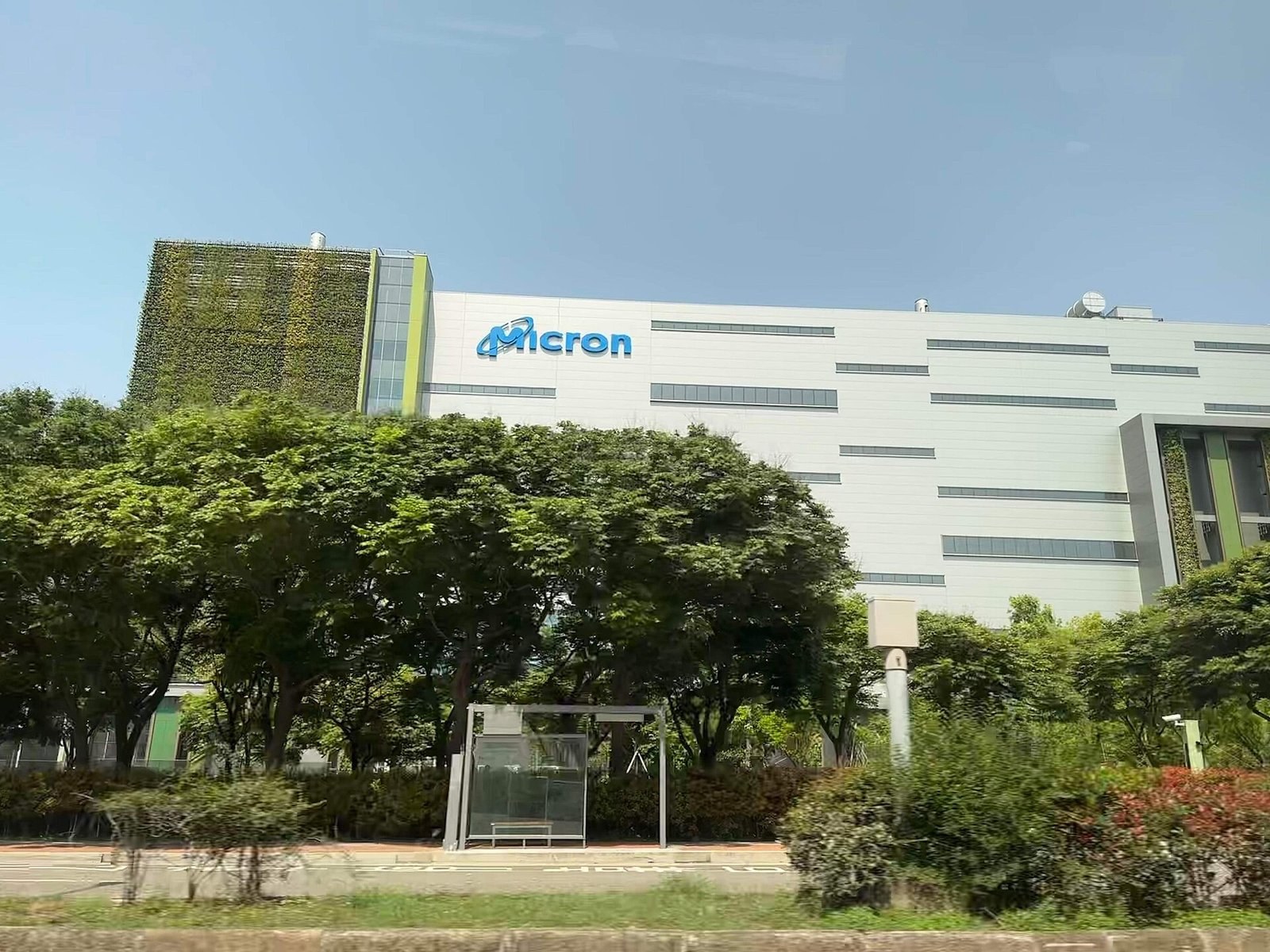
Micron Memory Taiwan and the union representing workers at its Taichung site said on October 21 that they had signed a labor agreement covering several issues after what both described as constructive negotiations. Both sides withdrew from the mediation scheduled for the next day. The statement said employees would be told the details separately in the coming days.
That is the whole public record. No wage figure, no profit-sharing formula, no timetable. What can be said is that a dispute which had produced a strike authorization vote, a presidential appeal and a planned walkout at a second site ended at one of the two plants without a single number being published.
The shape of the dispute is clearer than the settlement. Micron employs about 12,300 people in Taichung, of whom roughly 11,000 belong to the local union, and about 3,000 in Taoyuan, with about 2,400 organized. The unions had demanded a long-term mechanism under which 15% of the company’s operating profit would be distributed to employees, and had criticized the existing incentive plan for lacking transparency.
Taoyuan’s union voted to authorize a strike on October 7, with 1,994 of the 2,012 members who cast ballots in favor. Under Taiwan’s labor law, a union must complete a round of mediation and win approval from more than half of all its members before it can strike, which the vote satisfied. Chairman Jerry Lin said at the time that the union was considering a surprise strike and would not announce the date.
It held off until this week. On Monday, the Taoyuan union said it would stage a one-day strike on Thursday in solidarity with its counterpart in Taichung, then issued a second statement saying the action did not mean it was closing the door on talks or that relations with management had broken down. It asked the company for a profit-sharing proposal acceptable to all of its members.
Micron’s own statement pointed at that conversation without naming it. The company said it hoped “other ongoing labor-management issues” could be addressed in the same spirit of mutual support.
Why Taichung settled first is not mysterious. It is the larger site, it runs the more valuable lines, and it is the one whose output the company can least afford to interrupt. Micron’s Taiwan plants make DRAM and high-bandwidth memory used in AI servers, and the Taipei Times reported that any disruption could affect an already strained global supply. A company that intends to keep investing in Taiwan, as Micron has, needs the biggest plant quiet.
The investment record is part of the pressure on both sides. Micron has put more than NT$1.6 trillion, about $49.6 billion, into Taiwan, and opened an advanced packaging and testing facility in Taichung this month. President William Lai attended the opening on October 16 and used the occasion to call for sincere negotiation, an unusual intervention that put the government’s preference for a settlement on the record without putting any money behind it.
A deal at one site and not the other creates a problem the company will have to manage. If Taichung employees obtained terms that Taoyuan employees did not, the two workforces now have different pay structures for comparable jobs inside the same company in the same country. That is precisely the grievance that produced the 99% authorization vote in Taoyuan, and it becomes harder to answer if the Taichung terms are good.
The union side has the same problem in reverse. Taichung’s leadership can point to an agreement as proof that negotiation works. Taoyuan’s can point to the same agreement as proof that pressure works, and that the strike threat is what moved the company. Both readings are available, and both are being made.
For Micron, the sequence shows how much of its Taiwan exposure runs through labor rather than through tooling. Memory capacity is being added across the industry, high-bandwidth memory is the part of the market with the longest queues, and a one-day stoppage at a packaging site does not stop wafer starts but does stop shipments. Customers with allocation agreements notice.
Thursday will answer the remaining question. If the Taoyuan union walks out, the Taichung agreement becomes a floor for the next round of talks and the company’s Taiwan operations lose a day of output at the site that handles testing and packaging. If it calls the action off, the pattern is set: settle the big plant, then extend the same terms to the small one.
Micron has said nothing about what it conceded, which suggests the number is one it does not want used as a benchmark at Taoyuan. The union has said nothing for the same reason, inverted. In a dispute that was conducted in public for two months, the last act happened in a room with the door closed, and the only fact both sides agreed to publish was that Thursday’s meeting would not take place.