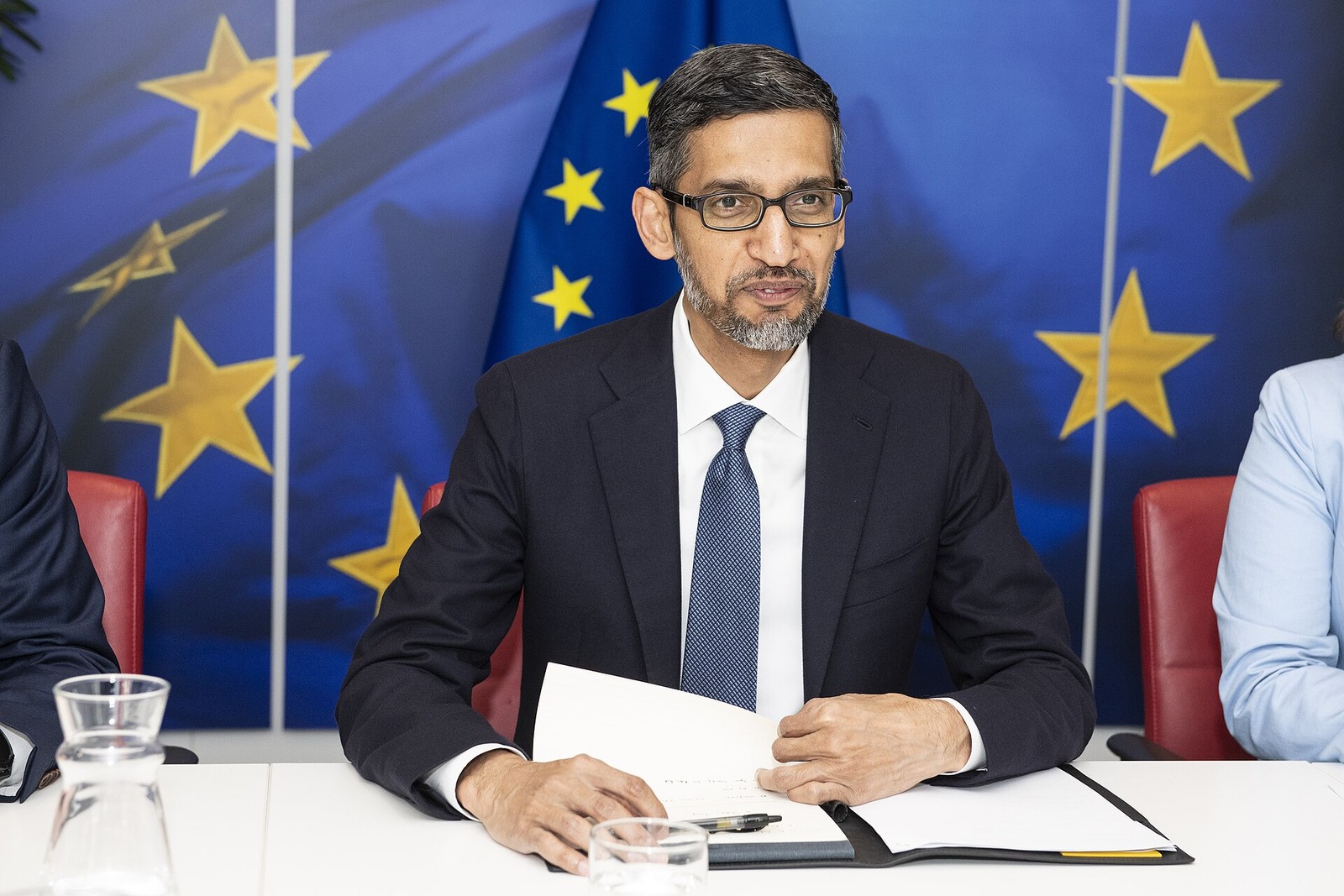
The question was narrow. Sundar Pichai was asked whether the arrangement under which Google supplies the model behind Apple’s Siri is expanding, contracting or holding steady. His answer, on Alex Kantrowitz’s Big Technology podcast recorded at Google’s headquarters in Mountain View and published on Wednesday, was that the partnership is going well and that Google wants more of it.
Pichai said the purpose of the arrangement, for both companies, was to convert artificial intelligence capability into a better experience for the person holding the phone. He said Apple had done the customization work well, adapting the model and integrating it deeply into Siri, and that the response from users had been strong. Google, he said, is committed to deepening the cooperation.
Pressed on whether that means additional deals between the two companies, he said there were no details he could disclose at the moment, and repeated that the relationship is working.
Those two sentences, taken together, describe a negotiation rather than a product update. A chief executive who says a partnership is going well and that he cannot discuss its expansion is usually a chief executive whose lawyers and counterparts are still working on the terms.
What exists today is a licensing arrangement of a kind Apple spent fifteen years avoiding. Apple built its own silicon, its own operating system and, from 2024, its own on-device models for summarization, transcription and photo editing. What it could not ship on schedule was a rebuilt Siri with the conversational range users expected after watching OpenAI and Google demonstrate it. People familiar with the talks said Apple would pay roughly $1 billion a year for a customized model to handle the queries its own systems could not.
For Google the value is distribution rather than revenue. A billion dollars is a rounding error against the search business and a small fraction of what Google spends on compute in a quarter. What it buys is placement on more than a billion active devices, and every Siri query answered by a Google model is a query that a rival’s model does not answer. It also gives Google a reference customer for the argument that its models are the ones other companies license when they need the best available, which is a sales pitch it makes to every handset maker outside California.
For Apple the calculation is control. Licensing a model from the company it competes with in search, browsers, maps and phones is uncomfortable, and the alternative was worse: shipping a voice assistant that compared badly in every demonstration. Apple has kept the interface, the customer relationship and the on-device processing for anything that does not need a frontier model. That division of labor is the part of the deal Apple can defend publicly.
The antitrust backdrop makes the arrangement more delicate than its economics suggest. A federal judge ruled in 2024 that Google’s distribution agreements in search were illegal, and the remedy phase left the payments to Apple intact while barring the exclusive contracts that went with them. A model licensing deal is a different transaction, priced for a different service, and lawyers on both sides will want it to look like a software supply agreement rather than a payment for default placement.
Pichai had other things to talk about, and the interview is worth reading for them. He was asked about the argument that Google had settled into a comfortable second place in frontier models, shipping smaller, cheaper systems while rivals chased capability. He rejected it, saying the company has no alternative but to compete at the frontier, and he acknowledged the cost: the compute that goes into frontier research is compute that Google Cloud could sell at a markup.
That trade-off is the same one Fink was describing in Berlin this week. Google is one of the few buyers large enough to sign for gigawatts, and it has been slower than Microsoft or Meta to announce them. Pichai’s explanation, that the company chooses to absorb the opportunity cost in cloud revenue, is a statement about internal capital allocation that shareholders will test against the cloud segment’s growth rate.
The interview also touched the model that will define the next round, Gemini 4 Argon, and the safety questions that go with a system that acts rather than answers. Pichai has been consistent on this point for two years: he argues that the risks are real, that deployment should be gradual, and that the alternative to leading is being governed by someone else’s standards.
None of that resolves the Apple question. A licensing arrangement that began as a stopgap for one delayed feature has a natural tendency to widen: the same model can serve the watch, the television, the headset and the Mac, and each new surface is a new negotiation. Apple, for its part, has continued hiring for its own model teams, which is what a company does when it intends to bring work back in house eventually.
The likely shape of the next year is unglamorous. The deal continues, the fee gets renegotiated against usage, and both companies avoid describing it as anything more than a supply relationship. What would change that is a public commitment, a disclosed contract, or an Apple announcement that its own models are ready for the assistant. Pichai gave none of those on Wednesday.
He did give one thing: an explicit statement that the reception has been good. For a partnership that was reported as a reluctant compromise, that is a meaningful upgrade in how the company is willing to talk about it.