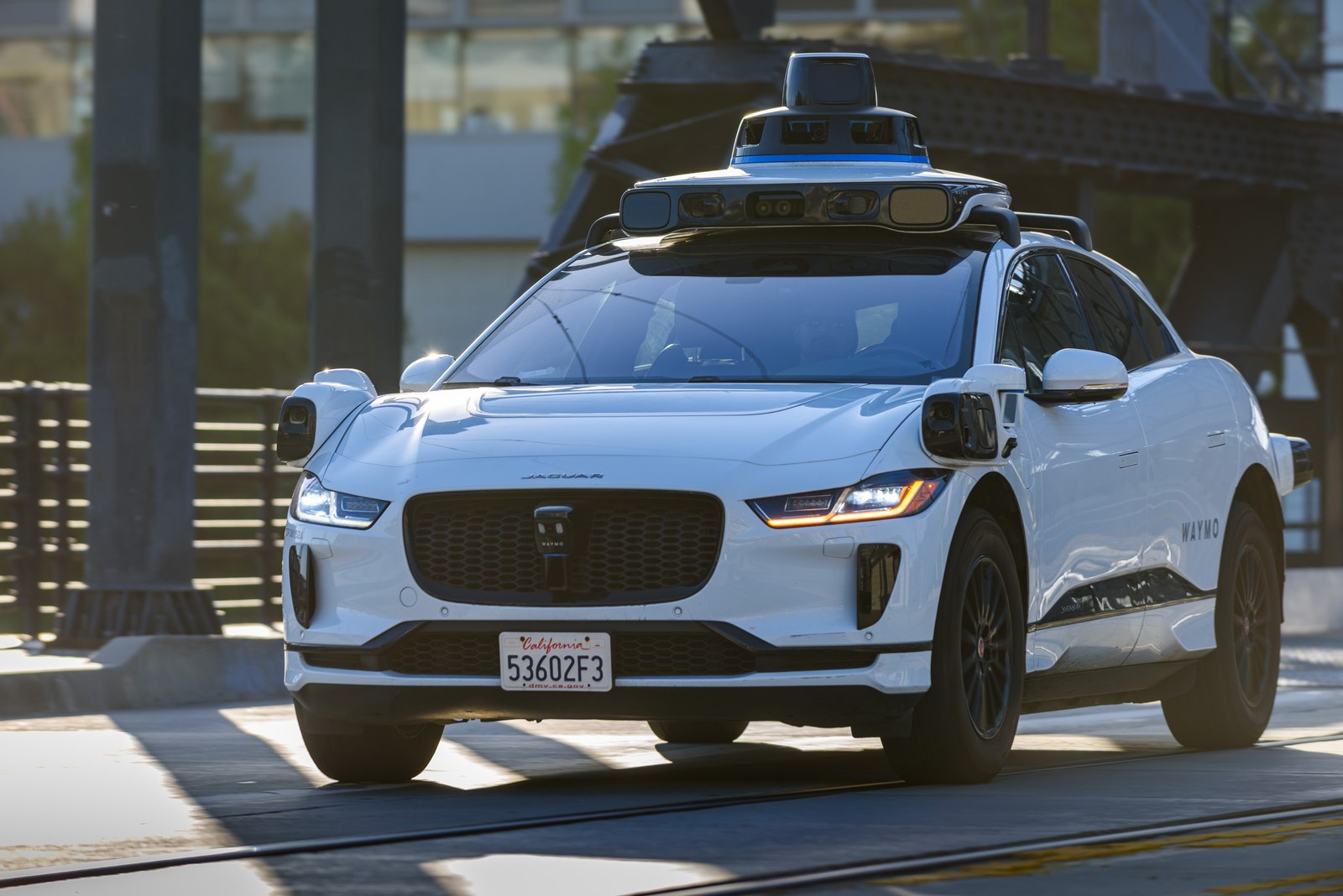
The first Waymo cars to appear on the streets of Madrid will have a person behind the wheel. The company says that is the point. Waymo, owned by Alphabet, said Tuesday that it will begin with manual driving in the Madrid region, move to supervised validation runs with trained local specialists, and only then ask Spanish regulators for permission to carry paying passengers. It aims to have its first riders in 2027.
Spain becomes the company’s second European market after London, where Waymo has been testing, and adds another name to a list of cities it has announced but not yet opened. Waymo has also run vehicles in Tokyo and has said it intends to launch commercial service in London, Tokyo and Toronto. Madrid would come first among those if the permitting schedule holds. The company did not say how many cars it will deploy or what a ride will cost.
“We aim to welcome our first riders in 2027,” Waymo said in a blog post, adding that it is “actively engaging with national, regional and local authorities.” Spain’s traffic authority and the Madrid regional government have authorized testing, according to local news reports.
The case Waymo makes rests on numbers it now repeats at every stop. The company says it has completed more than 20 million paid trips and serves hundreds of thousands of commercial rides a week. It says its vehicles have driven more than 400 million fully autonomous kilometers, and that its driver was involved in 95% fewer crashes involving serious injury or worse than human drivers in the cities where it operates. Those figures come from the company, not from an outside regulator.
“Madrid is an incredible capital of innovation and an integral part of our growing global presence,” said Tekedra Mawakana, one of Waymo’s two chief executives. She said the company shares the region’s interest in “safer, more accessible and zero-emission mobility.”
Spanish road safety groups welcomed the arrival with qualifications. Ignacio Lijarcio, president of the Spanish Road Safety Foundation, said autonomous driving could help “prevent mistakes, anticipate risks and save lives.” Mar Cogollos, director of the spinal cord injury association AESLEME, said the technology removes distraction, fatigue and alcohol from the driving task.
Madrid brings its own difficulties. The center is a web of narrow one-way streets, roundabouts and restricted zones, with heavy motorcycle traffic and delivery vans parked in bus lanes. Waymo’s method in every market has been to map first, drive manually, then hand control to the software in stages after local validation. The company says its driver adapts to local rules of the road, including how aggressively other drivers behave at junctions.
Behind the announcement sits a larger expansion plan. Waymo operates in 15 U.S. cities and passed 500,000 weekly paid rides in September, according to figures it has published. Semafor reported this week that the company is weighing growth from roughly 4,000 vehicles today to 8,000 by the end of 2026 and 20,000 by the end of 2027. It closed a $5 billion term loan this year to pay for vehicles, depots and the remote staff who watch over rides.
Europe is harder than the United States in ways that have little to do with software. Permits arrive city by city, and national law has only recently caught up in several countries. Germany amended its road traffic act in 2021 to allow limited autonomous operation inside defined areas. Britain passed a framework law in 2024 and is still writing the rules beneath it. Data protection officials in Brussels and national capitals have their own questions about cameras that record streets and the people on them.
Taxi and ride-hail unions have organized against robotaxi permits in several European cities, arguing that driverless fleets push fares and wages down. Waymo has met protests at home too, including incidents in San Francisco and Los Angeles in which its vehicles were vandalized.
The competitive field is more crowded than it was three years ago. Tesla is building a robotaxi business around its own cars and has said it will remove the safety monitor from some operations. Zoox, owned by Amazon, runs a purpose-built vehicle in Las Vegas. In China, Baidu’s Apollo Go, Pony.ai and WeRide sell paid rides in multiple cities at fares that undercut human drivers. Waymo’s advantage is time on the road and a safety record it can point to. Its disadvantage is cost: each vehicle carries a sensor suite that rivals the price of the car.
For Madrid, the practical questions are local. Whether the regional government grants commercial permits on the schedule Waymo hopes. Whether the city sets pick-up and drop-off zones that keep robotaxis out of bus lanes. Whether riders will accept a service that starts with a small fleet in a handful of neighborhoods.
Waymo says it will hire local operations staff and is talking to emergency services about how crews should handle a vehicle with nobody in it. Those conversations tend to take longer than the software work. The cars will be visible in Madrid within days. The service, on the company’s own timetable, is a 2027 question.