Waymo’s Landing at Harry Reid
The drive between the Las Vegas Strip and Harry Reid International Airport has long been one of the more dependable pieces of margin in American ride-hailing. Fares climb with every convention and every delayed red-eye, the trip is short enough to turn a car around quickly, and the customer is usually carrying a suitcase and a departure time. On Wednesday, Waymo began taking that fare.
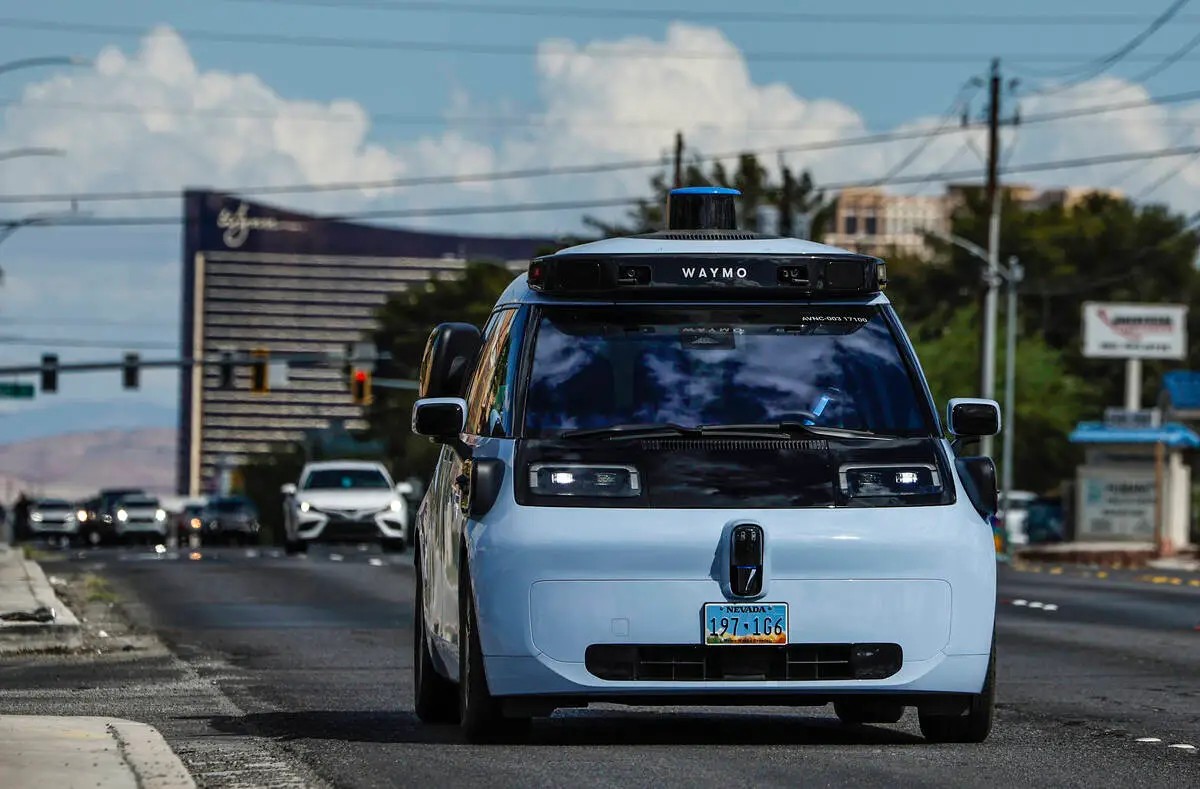
The Alphabet-owned robotaxi company said it started serving the airport on Oct. 21, with pickups and drop-offs at dedicated autonomous-vehicle zones outside Terminal 1 and Terminal 3, according to the company and airport officials. Access is limited at first to passengers who already ride with Waymo in Las Vegas. The company said it would add riders gradually before opening the service to anyone who downloads the app.
It is Waymo’s sixth airport. The company already operates at Phoenix Sky Harbor, Nashville International, San Antonio International, San Francisco International and Mineta San Jose International. Las Vegas is a newer market: Waymo opened to the public there in September and now covers 24 square miles, a footprint that reaches much of the resort corridor but, until this week, stopped short of the terminals.
Airports are difficult ground for driverless cars. Curbside space is scarce and closely policed, staging lots sit far from the doors, and a vehicle that cannot be waved forward by a traffic officer becomes an obstacle in a place built on improvisation. Waymo’s answer is the dedicated zone, a fixed stretch of curb where its cars load and unload on their own schedule rather than joining the taxi line.
The commercial logic runs opposite to the operational one. Airport runs concentrate demand into predictable peaks, chain one fare into the next, and carry passengers who are less sensitive to price because someone else is often paying. For a fleet that earns money only when a car is moving, a route with a built-in return trip is worth more than its meter suggests.
They also generate the kind of data Waymo prizes: dense traffic, lane closures, construction detours, pedestrians who misjudge a gap. The company has argued that each new market compounds what its cars have already learned. An airport, with its repeating geometry and its crowds, is a comparatively cheap place to collect hard cases.
Competition is already at the curb. Zoox, the robotaxi unit owned by Amazon, serves the Las Vegas airport. In August, Nevada regulators approved permits that will let Tesla and Uber put thousands of robotaxis on the city’s streets over the next year. The airport is one of the few places where all of them will be visible at once, competing for the same passenger with the same suitcase.
The stakes are larger than one terminal. Harry Reid handled nearly 55 million passengers in 2025, down from 58.4 million in 2024, and the decline has sharpened the fight for each trip. Airports have become the industry’s preferred proof point: a fixed origin, a fixed destination, a customer with an appointment, and a route that regulators can study. If robotaxis work here, the argument goes, they can work anywhere.
The constraint is not demand. It is the fleet itself — vehicles, depots, charging bays and the remote operators who step in when a car meets something it cannot parse. Every new city and every new pickup zone adds to that load. Waymo has expanded market by market rather than region by region, and its airport rollouts elsewhere have followed the same pattern of restricted access first and general availability later.
Then there is the problem every operator faces at an airport and nowhere else: the human at the curb. Skycaps, traffic officers and taxi dispatchers move hundreds of cars an hour by eye contact and hand signals. A robotaxi zone works only if it is separated from that choreography, and separation costs space that airports rarely have to spare.
Waymo has not said how many vehicles it will assign to the airport, what it will charge, or when the service will open to all riders. Airport officials said the zones are marked and set aside for autonomous vehicles. The company’s own announcement was notable for how little it promised beyond the fact of the service.
For Las Vegas, the arrival is another small test of whether autonomy can be folded into a city that sells novelty for a living. Tourism has softened, taxi and rideshare queues have shortened, and a driverless car at the curb is one more thing for a visitor to form an opinion about.
For Waymo, the test is narrower and harder. The airport is the most standardized trip in its network and the one where a single failure — a car stopped in a live lane, a passenger who cannot find the zone — is most visible. Reputation at an airport travels faster than any marketing budget.
Can a fleet that still needs its own curb, its own zone and its own rules win the segment where winning has always meant being first in line?