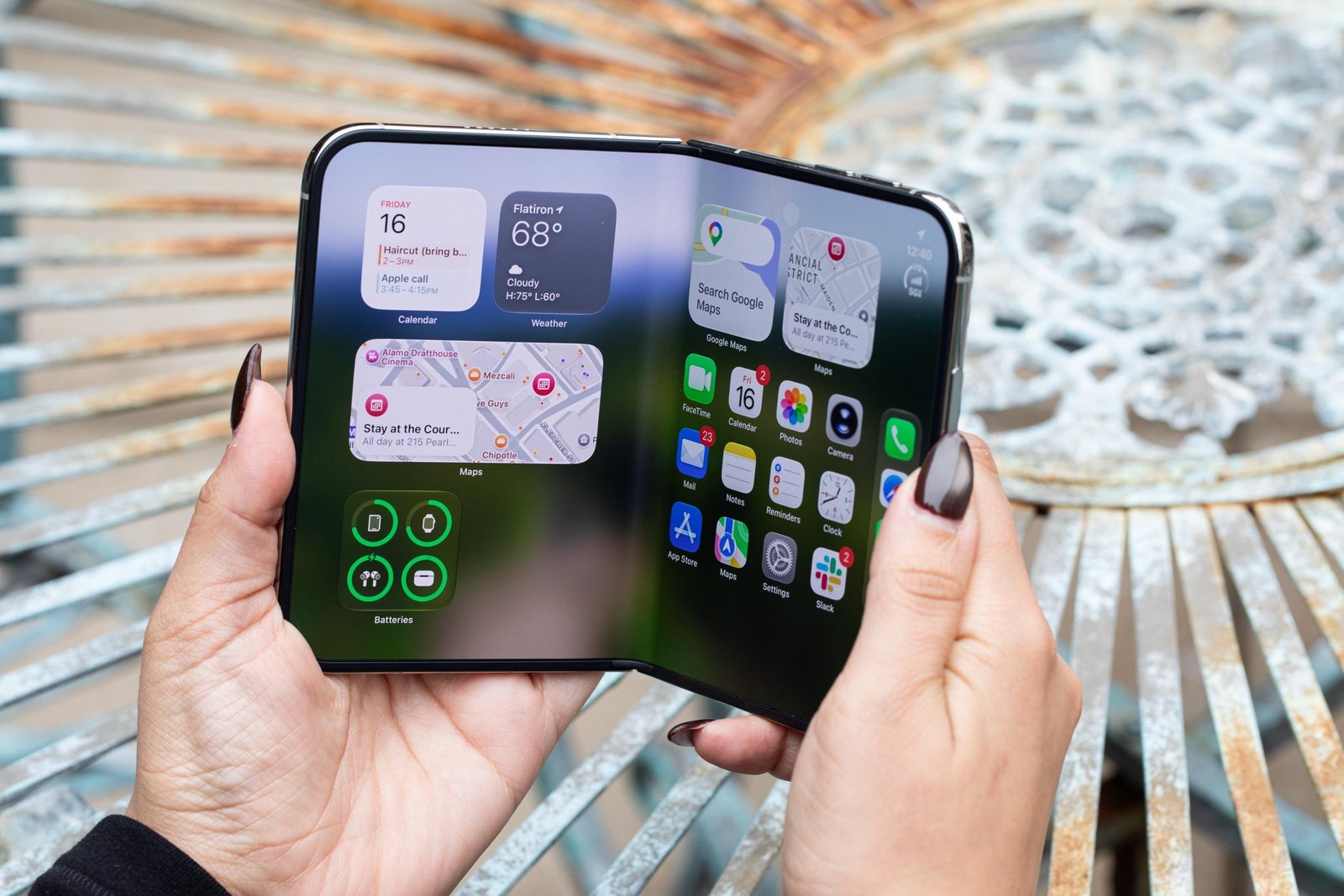
A trademark application is a thin document to hang a product cycle on. This one arrived with the product. Reports on Oct. 23 said Apple’s first foldable phone, the iPhone Duo, went on sale that day, and Chinese corporate records show Apple Inc. recently applied to register the words IPHONE DUO as a trademark.
The filing, according to the intellectual property database Tianyancha, sits in international class 9, the category that covers computers, phones, recorded software and the peripheral hardware sold alongside them. Its status is listed as awaiting substantive examination, which means the application has been accepted for processing and has not been examined on the merits. No registration has issued.
That is the normal state of a fresh filing, and it is also the point. Companies file before they launch, not after, because the cost of losing a name to a third-party applicant is measured in years and rebranding budgets. Apple’s Chinese filings matter more than most: China is where the phone is assembled and one of the two markets that decide whether a new form factor has a future.
The choice of words is doing work too. Duo means two, and the foldable proposition is built on twos: two panes of glass on one hinge, two apps side by side, a phone that becomes a small tablet when opened. Apple has spent a decade naming products by size and tier, Air for thin, Pro for capability, Max for scale. Duo describes a posture instead of a specification.
It also puts Apple’s marketing team in mildly crowded territory. Microsoft shipped a Surface Duo for several years, a dual-screen device that never found a mass audience, and the word has been used across consumer electronics for earbuds and laptops. Trademark rights are narrow and territorial, so coexistence is usually manageable. Still, the filing suggests Apple intends to own the term in the one category where it matters most.
The phone itself arrives into a market that has been waiting for it. Apple has been working on foldable designs for years, and supply-chain analysts have long described prototypes built around hinges supplied outside the company and ultra-thin cover glass that resists repeated folding. The engineering problem was never making a screen bend. It was making one bend a hundred thousand times without a visible crease down the middle.
That problem is expensive to solve, and the price reflects it. Foldables have sold at the top of the market since Samsung opened the category, and Apple’s entry is expected to sit above its largest Pro model rather than beside it. Analysts said the company is treating the device as a statement product first and a volume product second.
The timing is not accidental. Smartphone replacement cycles have stretched, and the premium segment has been the only part of the market showing real growth. A foldable gives Apple something to sell to the customer who already owns a good phone and sees no reason to replace it. It also gives carriers a reason to run trade-in promotions in a year when upgrade rates have been soft.
There is a China angle as well. Apple has lost ground in the world’s largest phone market to local rivals that ship foldables at several price points, and a folding iPhone answers a question Chinese buyers have been asking loudly. Whether it answers it at Apple’s price is a different matter.
Software may prove harder than hardware. A folding phone asks an operating system to do something Apple has reserved for the iPad: run two applications at once, resize them continuously, and hand a task from one pane to the other without losing state. Reports ahead of launch described multitasking work borrowed from the tablet line, which is a reasonable place to start and an awkward place to stop.
Supply will be tight at first. Foldable panels are harder to make in volume than flat ones, yields improve slowly, and every unit needs two displays instead of one. People familiar with the manufacturing plans have described initial production targets that are small by iPhone standards, a pattern that matches how Apple has entered new categories before.
The trademark filing hints at the sequel. Applications are usually drafted to cover a family of names rather than a single product, and a company that expects one foldable rarely expects only one. A smaller clamshell, a second generation with a thinner hinge, a cheaper variant with an older chip: all of them fit inside the same registration and none of them require a new filing.
For buyers, the immediate question is durability and repair cost, the two issues that have slowed foldables across the industry. A hinge is a moving part on a device that lives in a pocket, and a crease is a cosmetic flaw that shows up in every photograph taken at an angle. Apple’s reputation rests on not shipping those compromises, which is why the device took this long.
For the industry, the more interesting signal is the naming. Apple tends to settle a product’s identity in public long before the reviews land, and it rarely files for a name it does not intend to use across several generations. The iPhone Duo is now a registered intention, pending examination, and the paperwork is already ahead of the sales data that will decide what it becomes.