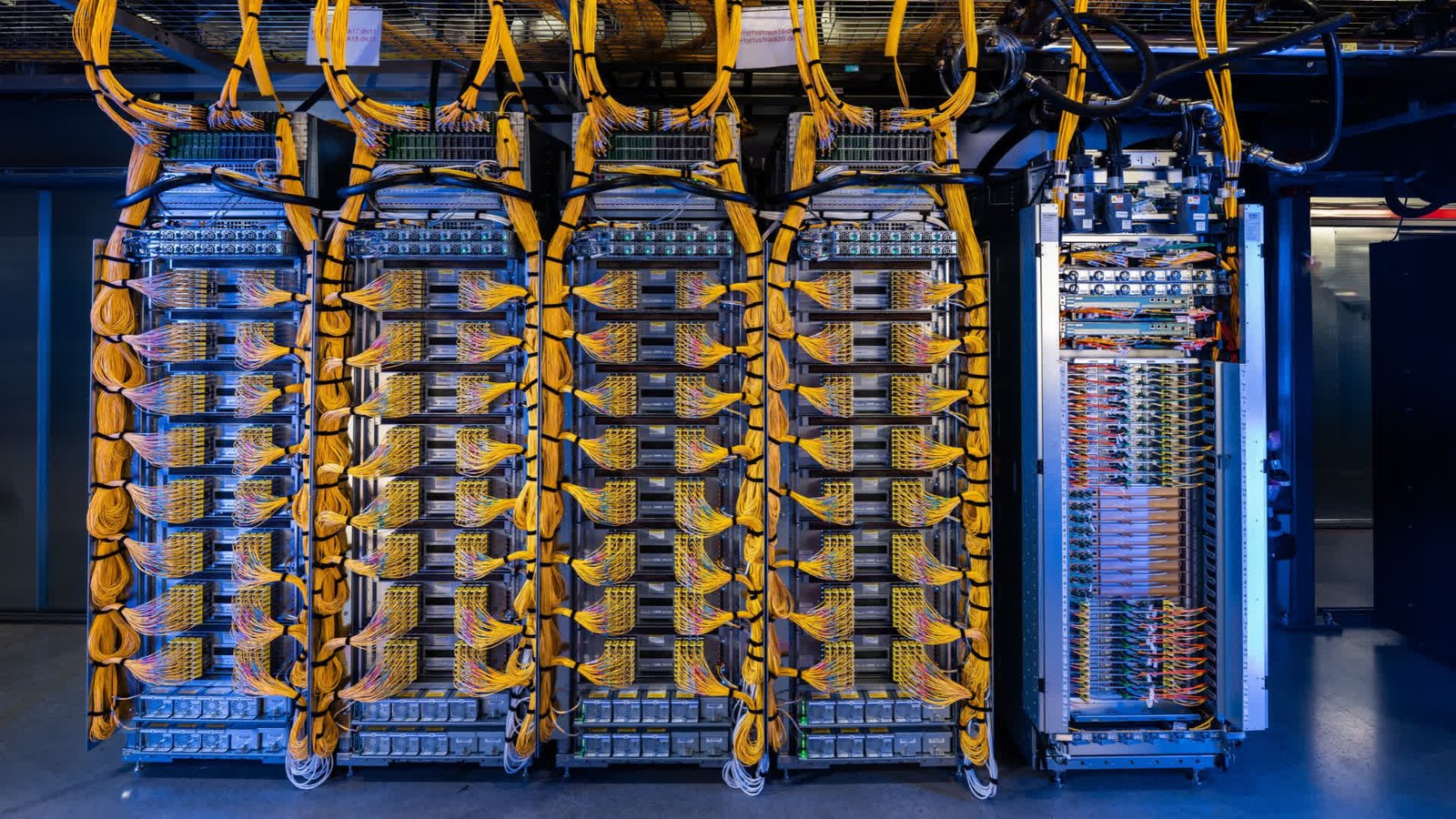
The Verizon release that landed on Monday morning read like a telecom document: a raised subscriber forecast, a simplified rate plan, a quarter that beat on profit and missed on revenue. The number that mattered to anyone building artificial intelligence sat in the fifth paragraph. Verizon will supply high-capacity fiber links to Amazon Web Services data centers under an agreement worth more than $2 billion.
It is the second contract of its kind for Verizon this year. In July the carrier agreed to connect Google’s data centers with dark fiber in a deal worth more than $1 billion. Glass with no electronics attached, lit by the customer, is a mundane product that telecom operators spent a decade treating as a legacy business. It has become one of the few lines growing fast enough to matter to investors who had written the sector off as a bond substitute.
The timing of the announcement was not random. Three days earlier, Amazon Chief Executive Andy Jassy told an Andreessen Horowitz podcast that AWS has already sold its 2026 computing capacity, that 2027 is “largely sold out,” and that a good chunk of 2028 has been claimed. “There’s only so much data center and power today,” he said on the show, released Oct. 23. “There’s only so much memory. And I don’t think that that shortage ends in 2027.”
Jassy has been making a version of this argument all year, usually as a defense of spending. Amazon plans capital expenditures of roughly $220 billion in 2026, a figure that has pushed trailing free cash flow to an outflow of about $7.6 billion. On the same podcast he said the company could comfortably invest more, and that doing so would not amount to a poor allocation of capital. The claim rests on contracts already signed, which is why the phrase “sold out” carries weight with analysts even though Amazon has never disclosed the backlog behind it.
The operating numbers give the argument some support. AWS revenue rose 37% to $42.2 billion in the second quarter, its fastest growth in 18 quarters. Jassy described the business as booming, and he was careful to note that Amazon keeps a slice of capacity out of long-term contracts so that stray demand has somewhere to land. “We always leave a certain amount for on-demand and our inference service Bedrock, or EC2,” he said, “but largely sold out all the big chunks.”
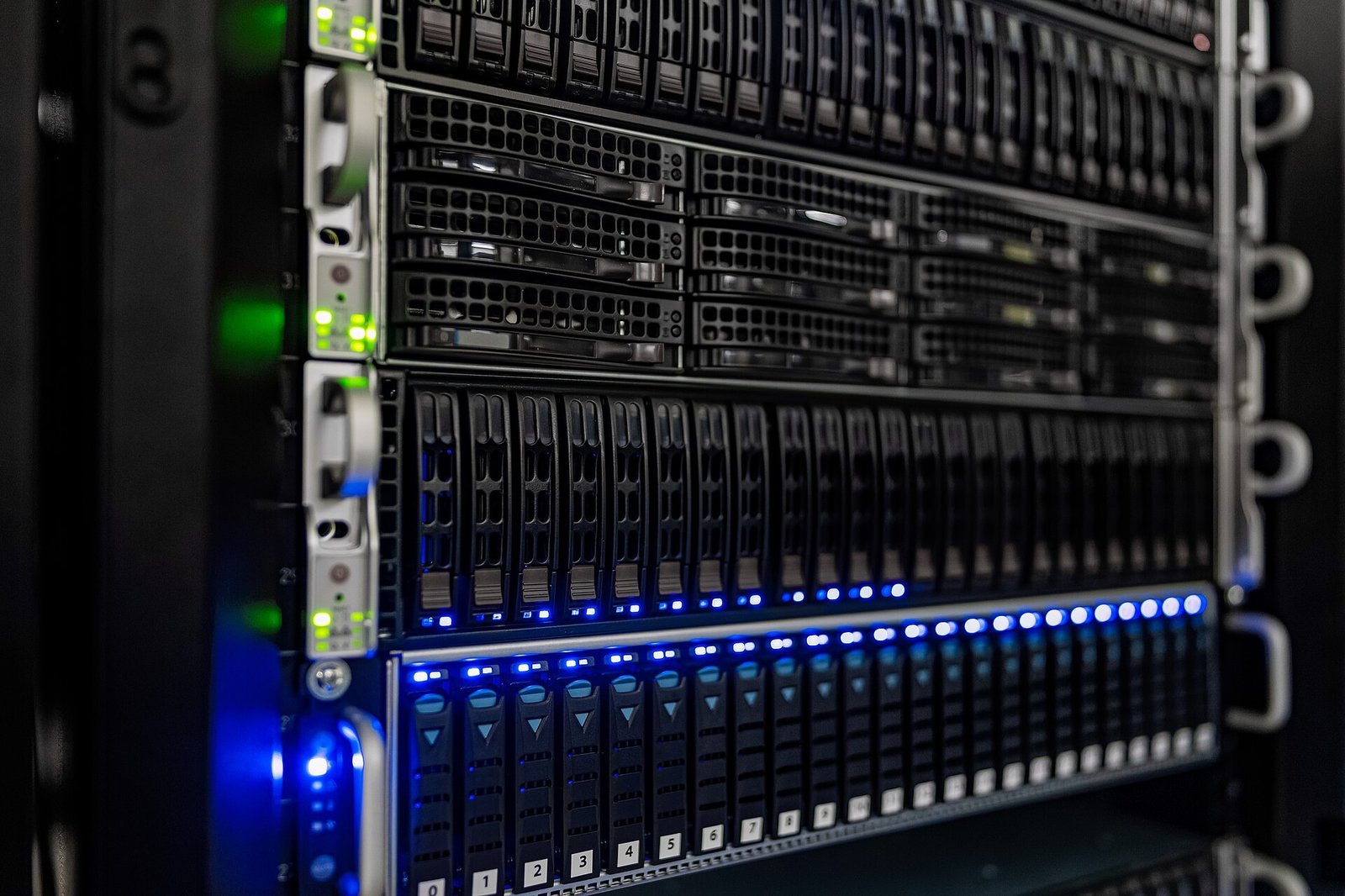
The fiber contract is the part of the story that reaches beyond Amazon. Training and serving large models requires moving data between buildings, sometimes between campuses dozens of miles apart, at rates that copper cannot carry. A single AI campus can draw hundreds of megawatts, and the clusters inside it talk to each other constantly. Whoever owns the conduit between those buildings controls a chokepoint that no amount of chip supply can relieve.
Verizon is not the only carrier chasing that business. Lumen, Zayo and a handful of regional operators have spent two years marketing long-haul routes to hyperscalers, and the prices on those routes have risen for the first time since the fiber bubble of the late 1990s left the country with more glass in the ground than it needed. The overbuild that ruined a generation of telecom investors is now an asset, because the strands are already buried and the right-of-way is already granted.
Verizon’s quarter, by contrast, showed why the company needs a new growth story. Monthly-bill-paying wireless subscriber additions came in at 406,000, nearly double the 209,439 that analysts surveyed by Visible Alpha expected. Verizon raised its full-year guidance to between 1.1 million and 1.2 million postpaid phone additions, from 750,000 to 1 million, and lifted adjusted earnings per share guidance to $5.04 to $5.06. Revenue of $34.3 billion fell short of the $34.74 billion analysts expected, pressured by fewer device upgrades as customers held onto handsets longer after the company cut subsidies.
Chief Executive Dan Schulman, a year into the job, has restructured operations and simplified the wireless lineup, launching a plan called Simplicity in June with transparent pricing and unlimited data. The strategy is working on subscribers and not yet on revenue, which is roughly where a turnaround of this kind sits twelve months in.
For Amazon, the risk in the current arrangement is not demand but the conversion of demand into profit. Depreciation on $220 billion of annual spending arrives on the income statement years before the contracts that justify it mature, and every quarter that AI usage grows more slowly than the capital plan assumes widens the gap. Memory prices have climbed through the year, and Jassy himself listed memory alongside power and buildings as the constraint that will not lift in 2027.
There is also the question of who ends up owning the pipes. Hyperscalers have historically preferred to own or lease their own fiber rather than rent it, and a multiyear contract with a carrier is a compromise that reflects how fast capacity is being added. Verizon gets a revenue stream that does not depend on consumer price increases. Amazon gets connectivity it can book today.
Both companies declined to describe the contract’s duration or the routes involved. What is clear is the direction of the trade. The most valuable infrastructure in computing is no longer only the building that holds the servers. It is the trench between the buildings, and the companies that already dug it are collecting rent.
Amazon reports third-quarter results on Oct. 29, the first test of whether the backlog Jassy describes shows up in the numbers investors can see.