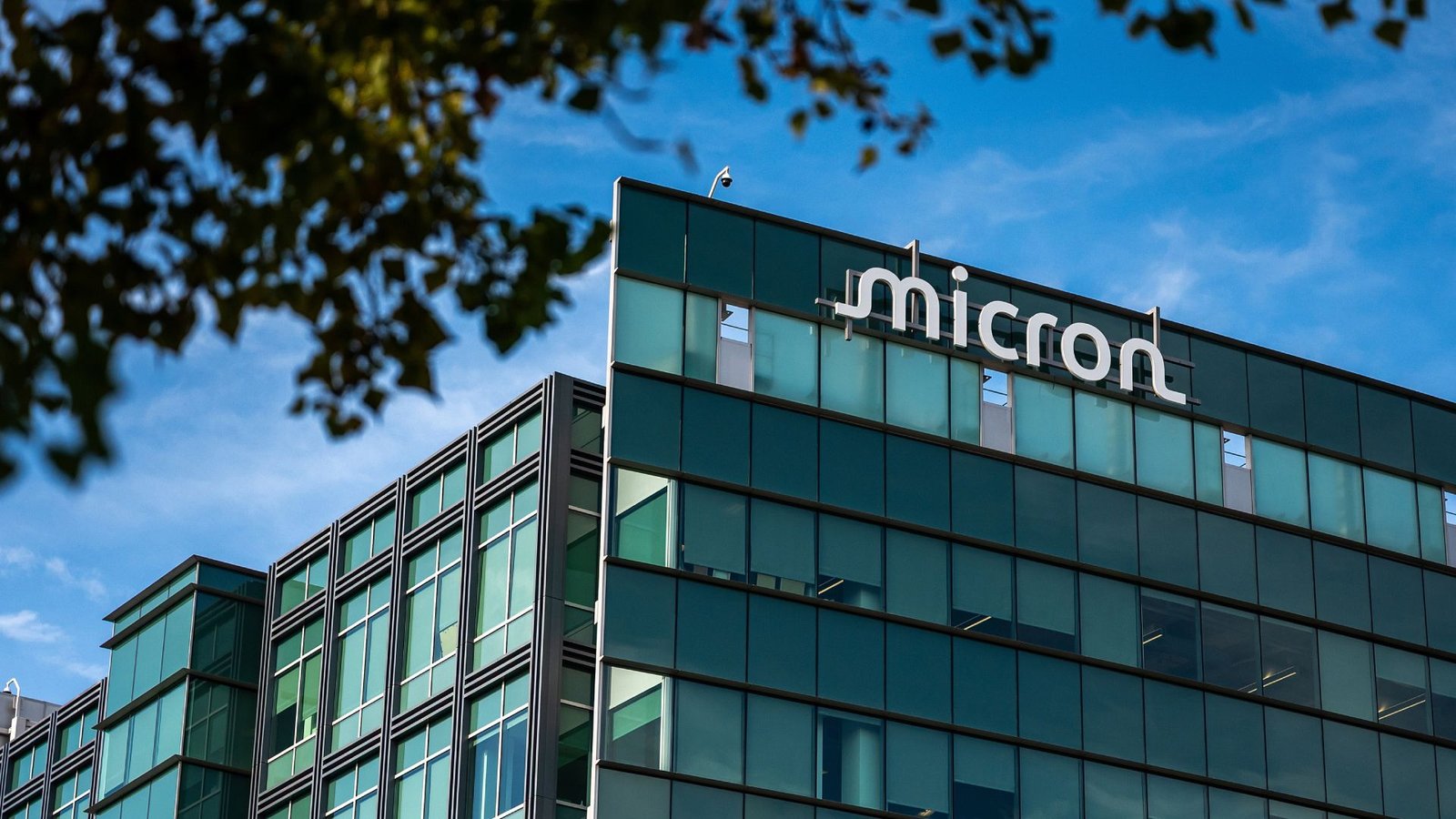
Micron Technology has already sold everything it can make of the memory that artificial-intelligence systems need most, and its chief executive says the shortage will outlast most corporate planning cycles.
Speaking on Monday, Sanjay Mehrotra said high-bandwidth memory output for 2026 is fully committed and that supply will stay tight into 2028. Customers, he said, should expect to pay materially more. The comments came after a fiscal quarter in which Micron reported record results, driven by demand from data centres building out AI clusters.
High-bandwidth memory is not a commodity part. It is built by stacking layers of DRAM dies, connecting them with vertical channels through the silicon, and bonding the stack beside a processor on the same package. Each bit takes roughly three times the wafer area of conventional memory because of that stacking and because yields fall as the number of layers rises. When the three large memory makers shift wafers toward it, they take capacity away from everything else.
That displacement is the mechanism behind the price move. Micron, SK Hynix and Samsung have all been reallocating lines to high-bandwidth products for two years, and the effect has spread from servers into ordinary DRAM and NAND flash. Buyers of laptops, phones and consumer electronics are now negotiating contracts in a market where the cheapest product has become the scarcest.
The shortage has a physical timetable. A new memory fab takes about three years from the decision to build to volume output, and the packaging capacity for stacking is tighter than the wafer capacity itself. Qualifying a new memory product with a processor vendor takes another six to twelve months of testing. None of those steps can be compressed by spending alone, which is why a shortage that began with a 2024 order surge is still being projected into 2028.
The pricing structure explains why “sold out” overstates nothing. High-bandwidth memory is sold under annual contracts, often with volumes agreed before production starts, and an allocation that is fully committed means new buyers cannot be served at any price until capacity arrives. The customers holding those contracts are the large cloud operators and the accelerator vendors that buy on their behalf.
Micron’s position in that group has changed. SK Hynix built the early lead and supplied most of the memory in the first generations of Nvidia’s accelerators. Samsung spent two years working through qualification problems. Micron, the smallest of the three by revenue, took share with a product that ran cooler and consumed less power, and it has been the most explicit about how much of its output is committed.
Analysts said the company’s outlook is now less a forecast about Micron than a forecast about AI capital spending. Memory prices move first when accelerator orders accelerate and fall hardest when they slow, and the industry’s record on that second half is poor. Micron lost $5.8 billion in its 2023 fiscal year after the last downcycle, having spent the preceding boom buying back stock and adding capacity.
The bull case rests on a structural difference. In previous cycles, memory demand came from PCs and phones, both of which are replaced on schedules consumers control. AI demand comes from companies signing multiyear capacity agreements, some of them non-cancelable, which should make the current upcycle longer and shallower than the last three.
The bear case is that the same agreements were signed when the marginal return on AI compute looked certain, and that a single disappointing model generation would leave the buyers with obligations they would rather renegotiate. Memory makers have heard that argument before, in 2001 and in 2019.
For the wider hardware industry, the practical consequence is a cost line that is rising rather than falling. Memory was for decades the component that got cheaper every year, and product planners built their margins on the assumption. That assumption is now suspended, and the companies that design devices around fixed price points are the ones absorbing the difference.
The next product generation complicates the picture. HBM4 doubles the width of the interface between memory and processor and, in most designs, moves the base layer of the stack onto a logic process made by a foundry rather than inside the memory plant. That split changes who controls the schedule: a memory maker that cannot get base dies from its foundry partner cannot ship, no matter how much wafer capacity it owns.
Micron is also building at home, with new plants in Idaho and upstate New York supported by a multibillion-dollar award under the CHIPS Act. Those fabs are scheduled to contribute late in the decade, which is roughly when the current shortage is projected to ease and precisely when the industry’s history suggests prices may be falling instead.
Micron’s own capacity plans are the only lever it controls. The company has said it will spend heavily on new cleanroom space and on packaging lines, and it has been careful not to promise that the spending will arrive before the shortage ends. Mehrotra’s guidance to customers was unusual in its directness: the shortage runs to 2028, and the price will reflect it. Buyers who assumed they could wait have already been told otherwise.