The patent at the center of Oura’s newest lawsuit against Ultrahuman was two days old when the complaint was filed. That timing explains more about the case than the technology the patent covers.
Oura sued on Oct. 22 in the U.S. District Court for the Eastern District of Texas, naming Ultrahuman and its contract manufacturer, SVTronics. The complaint asserts two patents: a design patent, D804,471, covering the appearance of a ring, and a utility patent, 12,769,363, covering internal components, which was granted two days before the filing. Oura is seeking damages and a permanent injunction against U.S. sales of the Ring Pro.
Ultrahuman’s chief executive, Mohit Kumar, said in a statement that no court order currently restricts the product, that the Ring Pro remains on sale in the United States and that the company will contest the complaint. A person close to Ultrahuman said outside counsel reviewed the redesign before it shipped.
The sequence behind the filing matters. In August 2025 the U.S. International Trade Commission found that Ultrahuman’s earlier Ring Air infringed Oura’s patents and issued an exclusion order, which halted imports. The Bengaluru company then spent months redesigning hardware and rearranging its supply chain. In March 2026, U.S. Customs and Border Protection ruled that the new ring could enter the country, and Ultrahuman started selling again.
Oura’s position, according to the complaint, is that the customs decision addressed the products and the patents in front of the agency at that moment. The patent issued on Oct. 20 was not among them. The suit also argues that Ultrahuman has a record of infringement and that the redesign did not steer clear of the parts of Oura’s design and internals the company treats as its own.
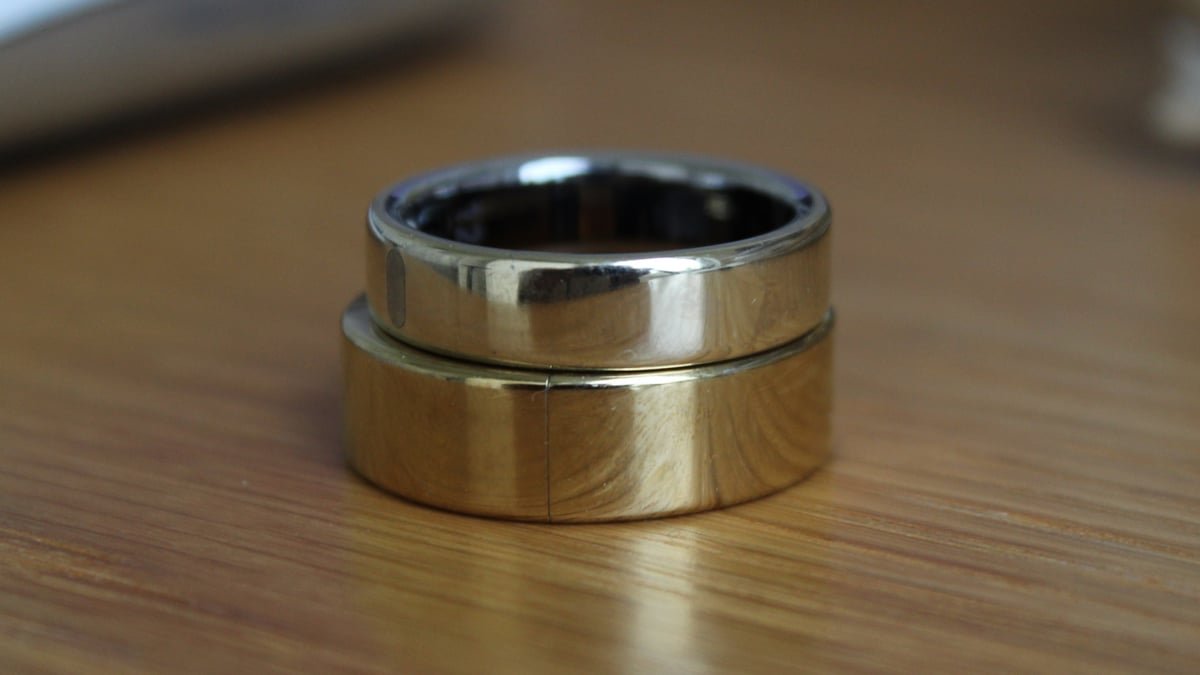
Design patents are an odd weapon in a hardware fight and an effective one. They cover how a product looks rather than how it works, which makes them inexpensive to obtain and awkward to design around when the product is a band the width of a finger. Oura has built a portfolio of them and has used the trade agency to enforce the result at the border, where an exclusion order does in a single ruling what years of litigation otherwise might.
The venue is a familiar one for patent plaintiffs. The Eastern District of Texas moves cases to trial faster than most districts, and its juries have a history of awarding large damages. Lawyers who practice there say a case filed this autumn would be unlikely to reach a jury before late 2027.
Oura brings more resources to the fight than it did a year ago. The company listed on Nasdaq this fall, offering 50 million shares at $40 to $44 apiece for a fully diluted valuation of as much as $15.62 billion, according to terms reported at the time. Its registration statement showed revenue of $1.21 billion for the nine months through June 30, up 74% from a year earlier, net income of $61 million and five million paying members.
The membership number is the one its lawyers will care about. A ring is sold once; the subscription attached to it is billed every month. Subscription revenue grew 121% to $240 million over the same nine months, and that line depends on the ring staying a premium object rather than a commodity that a competitor can undercut by half.
Ultrahuman competes on price and on markets Oura reached later. The company was founded in 2019, has raised about $83 million in total, and collected $70 million in September in a round that included Qualcomm Ventures. Sacra, a research firm that tracks private technology companies, estimates its revenue at roughly $69 million in the fiscal year ended in March.
Those figures make the American market a small part of Ultrahuman’s present and a large part of the case it makes to investors. The Ring Pro was the product that reopened the country after the import ban, and it is the product Oura now wants a judge to pull.
An injunction is not automatic. Since the Supreme Court’s 2006 decision in eBay v. MercExchange, a patent plaintiff that wins must still persuade a court that the four traditional factors for equitable relief are satisfied, and courts have granted permanent injunctions less readily since. Oura will argue that a competing product built on its patented design causes harm that money cannot repair. Ultrahuman will argue that a ban would leave buyers with fewer choices in a market where the leader already holds most of them.
Analysts who follow wearables said the case is less about the Ring Pro’s current volume than about the next two years. Smart rings are moving from a niche product bought by people who track their sleep into a category that phone makers and watch makers are preparing to enter. Whoever holds the design rights to the shape of the object, and to the arrangement of sensors inside it, holds a claim on that growth.
For Oura, the calculation is straightforward. Litigation is expensive, and the company can afford it. For Ultrahuman, the calculation is a wager: spend on lawyers and engineering to hold a market it has only just recovered, or cede the country and concentrate on Europe and India, where the same patents do not apply.
Kumar has said the company will fight. The complaint gives him until the court sets a schedule to decide how much of the fight happens in Texas.