Spain’s draft rule, when it circulated this autumn, asked data-center developers to run on renewable electricity around the clock. By the time the government revised it on Oct. 26, the requirement had narrowed to one hard number: 60% of consumption from renewables during peak hours, a share that holds through 2029.
The revision also bought time. Existing facilities and projects already under construction get a multiyear transition, and they may reach the threshold in stages rather than at switch-on. Officials trimmed the original text after industry groups argued that an hourly matching obligation would make several announced projects unfinanceable, according to people involved in the consultation.
The change is smaller than it looks and larger than a technicality. A 60% peak-hour standard is a different instrument from an annual average, because it asks a facility that draws power around the clock to buy clean electricity at the hours when the Spanish grid has the least of it.
Solar output collapses after sunset in Spain, and the winter demand peak arrives in the evening, when the country’s photovoltaic fleet is producing nothing. Wind may or may not be blowing. A data center whose load never dips therefore has to cover its peak-hour share with contracts for firm output, storage, or imported guarantees of origin, each of which costs more than the flat, sunny-hour power that made the Iberian peninsula attractive in the first place.
The government’s calculation is visible in the structure. Spain wants the investment that comes with artificial-intelligence computing and does not want the political cost of being told that server farms are raising household bills. Setting the threshold at 60% instead of the earlier figure, extending compliance to 2029 and grandfathering the pipeline lets Madrid keep both positions for three years and review them afterward.
The backdrop is a grid that has changed faster than its rules. Renewables supplied 56% of Spain’s electricity in 2024, a record, and emissions-free sources came close to 77%. Red Eléctrica, the grid operator, has been curtailing solar and wind on sunny, windy afternoons when supply outruns demand, while the same system still leans on gas plants in the evening. Adding a large, inflexible load to that pattern is exactly the stress case the rule is written around.
The blackout of April 28, 2025, which darkened the peninsula and forced the operator to rebuild the system from a black start, sharpened the argument on both sides. Defenders of the stricter draft said the outage showed what happens when variable generation is asked to carry a system without enough firm capacity. Developers said the outage showed the grid, not the data centers, needed the investment, and that a matching obligation would push projects to markets with looser rules.
Europe has run this experiment in the other direction. Dublin stopped accepting new data-center connections for years because the local grid could not carry them. Amsterdam paused new builds in 2019 while the city wrote rules on land use and cooling. Germany’s largest cluster in Frankfurt has been constrained by substation capacity rather than by any clean-power mandate. Spain is choosing a price signal over a moratorium, which is the friendlier option for an industry that needs to break ground.
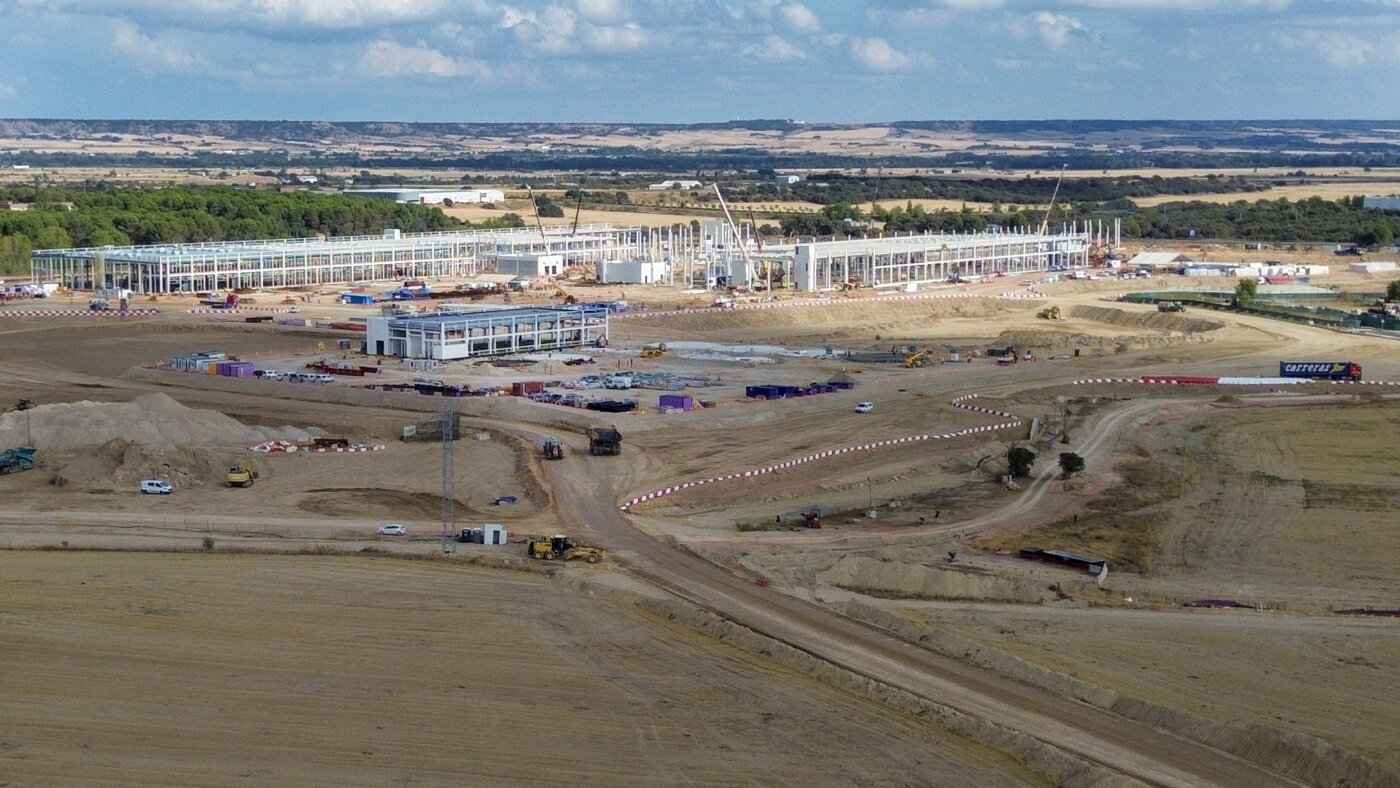
What arrives in Aragon suggests the demand is real. Amazon’s cloud unit committed 15.7 billion euros to the region in 2024 and has since raised its total Spanish plan to 33.7 billion. Microsoft has committed about 6.7 billion euros to sites around Zaragoza. Both companies say their facilities will run on renewable power, and both have signed the kind of long-term contracts the new rule effectively requires.
Analysts who cover the Spanish market said the binding constraint is not clean electrons but grid connection queues. Substation capacity around Zaragoza and Teruel is allocated years in advance, and a project that wins a connection but loses two years to permitting does not care whether its renewable share is measured hourly or annually.
European rules already push in the same direction. Operators of facilities above 500 kilowatts must report energy performance and water use under a delegated regulation that took effect in 2024, and the energy-efficiency directive asks member states to assess sustainability in data-center planning. A national standard that mirrors those reporting categories is easier to enforce than one that invents its own.
For the American cloud companies sizing Iberian sites, the practical effect is a longer compliance runway and an unchanged direction. A 60% peak-hour requirement through 2029 still means contracting renewables at scale, and a facility built today will be judged against whatever the government writes at the review. The transition period protects projects that are already pouring concrete. It does not protect a project that assumes the rules stay still.
That is the tension the government has bought three years of. If Spanish wholesale prices spike in an evening peak and the data centers are exempt from the cost through grandfathering, households will notice. If the projects stall because the obligations are unworkable, the investment goes to Portugal, Italy or the Gulf.
Officials have said the 2029 date is a review, not an expiry, and that the share may rise. Industry groups have read it the other way, as a ceiling that will hold long enough to finance against. Both readings can be correct for two years, and the difference will be settled by how much capacity is actually energised before the review, not by the text published this week.