The map Tesla published on Oct. 26 has a nose cone, two fins and a plume of exhaust. It is the new Houston service area for the company’s robotaxi business, drawn in the shape of a rocket. “Houston, we have liftoff,” Tesla’s robotaxi account wrote, adding that a bigger service area was now live.
The boundary matters more than the joke. Tesla expanded the zone from roughly 25 square miles covering Jersey Village, Harvest Bend and the Willowbrook corridor along U.S. 290 and State Highway 249 to about 254 square miles, stretching southeast through Bellaire and toward downtown. The area grew tenfold in a single edit. Mr. Musk, replying to users on X, said the resemblance to a rocket was a coincidence.
The fleet did not grow with it. Robotaxi Tracker, a third-party account that logs vehicle sightings and app activity, counts about 34 cars taking rides inside the Houston zone. That works out to one vehicle for every 7.5 square miles of service area, a ratio that describes a map rather than a taxi company.
Ride-hailing is a density business before it is a technology business. A car that spends nine minutes reaching a passenger and eleven minutes carrying one earns on roughly half its working time, and every mile of empty travel is a cost the operator absorbs. Riders judge the service by how long the app makes them wait, not by how much of the county is shaded blue.
Tesla has run this sequence before. The Austin service opened on June 22, 2025, with a geofence of about 20 square miles and a safety monitor in the passenger seat. The zone went to roughly 60 square miles that August, then 173 by the end of the month. Cars came later and more slowly than polygons.
Houston and Dallas opened to the public on April 18 this year, the first unsupervised expansion beyond Austin, using Model Ys with nobody in the front seats. Six metro areas now run without a vehicle supervisor: Austin, Dallas, Houston, Miami, Orlando and Tampa. The Bay Area still uses a safety driver.
The comparison that matters sits inside the same city. Waymo has operated a fully driverless service in Houston since August, with a fleet built over years of street mapping, depot operations and remote assistance staffing. Tesla’s advantage is cost per vehicle and the absence of lidar. Its disadvantage is that a camera-only system validated on one city’s intersections needs revalidation on another’s, and that work does not scale with the size of a drawn boundary.
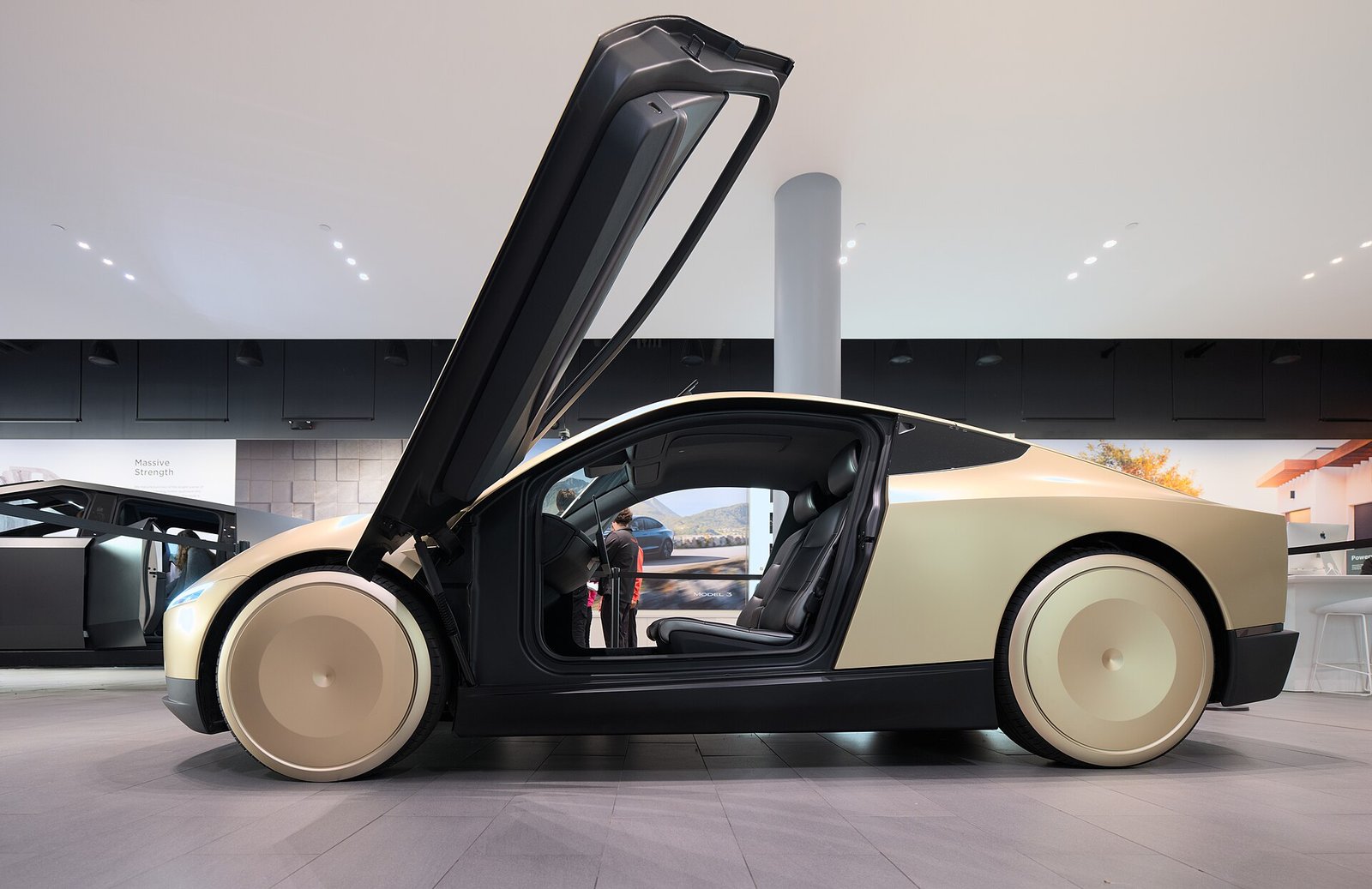
Manufacturing is no longer the constraint, which is the change worth noting. The Cybercab line in Texas moved into volume production in April, and Tesla has described nameplate capacity above 125,000 units a year. Texas records show 463 Cybercabs registered in the state, and more than 50 worked the Formula 1 weekend in Austin this month. Lars Moravy, Tesla’s vice president of vehicle engineering, said on a recent engineering video that the line can build cars faster than the company can deploy them. “It’s currently outpacing our deployments,” he said.
Public Cybercab rides remain limited to Austin. Dallas is next, in November, according to the company. Until then, Houston riders get Model Ys, a vehicle designed to be sold to families rather than to run sixteen hours a day, and a fleet small enough that a single shift change is visible in the app.
Then there is the question the company does not answer. Tesla has not published rides per vehicle per day, average wait time, or the share of requests it completes. Tracking accounts fill the gap with sightings, which is how a number like 34 enters the record. Investors have been asked to weigh a robotaxi business on the strength of announcements made on social media, and those announcements have run ahead of the operating data since the first summer.
Federal attention has followed. Tesla has reported a handful of crashes involving its Austin robotaxis to the National Highway Traffic Safety Administration, which collects the filings and opens inquiries when a pattern appears. Texas added its own permitting and reporting requirements for autonomous operators in 2025. A geofence that crosses municipal lines, as this one does, brings a second set of street rules, school zones and construction closures into the validation problem.
Mr. Musk has been generous with timelines. He said in 2025 that the service would reach half the U.S. population by the end of that year, and it did not. He now describes the rollout as gated by validation rather than by hardware, which is the more credible claim and the less marketable one.
None of this argues that the Houston expansion is empty. Density of demand is the thing being tested, and Houston is an unusually good laboratory for it: flat, grid-addressed, lightly regulated on ride-hailing, with cheap fuel and a transit system that carries a small share of commuters. If a driverless fleet can earn in a city built around the car, it can earn in most American cities. Harris County holds nearly five million people, and 254 square miles of its northwest side is a serious slice of the market.
It argues instead that square miles are the wrong scoreboard. The number to watch is rides per car per day inside the fence, and the wait a rider sees at eight in the morning on a Monday. Those figures are knowable, and Tesla has them. Until it publishes them, the rocket on the map is doing the talking, and a rocket is not a fleet.