In Ballerup, a suburb west of Copenhagen, the heat coming off a room full of Nvidia accelerators is being routed into pipes that warm houses. It is the least glamorous part of the artificial-intelligence buildout and, in Europe, increasingly the part that decides whether a project gets built.
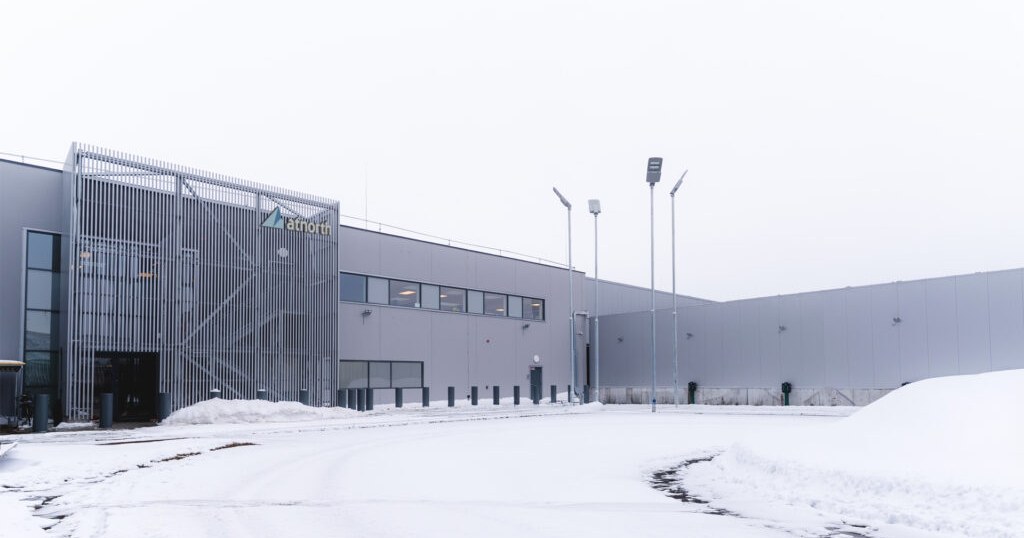
CoreWeave said on Oct. 27 that most of the planned 22.5 megawatts of information-technology capacity at atNorth’s DEN01 facility in the Copenhagen metropolitan area is now in service. It is the company’s first deployment in Denmark, and it runs on Nvidia’s Blackwell systems linked by Quantum-X800 InfiniBand, the interconnect that determines how quickly thousands of processors can share work on a single training job.
The waste heat from the hall feeds the local district heating network. From 2028 the facility is expected to supply enough heat for more than 8,000 homes. That arrangement is not charity: in Denmark a data center that cannot show where its heat goes faces a harder permitting process than one that can, and a municipality that gets a heating source out of the deal has a reason to approve the next hall.
The European footprint now stands at nine data centers across five regions. CoreWeave has been expanding into Europe for the same reason its customers have: inference traffic follows users, and a company selling computing by the hour cannot serve a European bank or a German manufacturer from Virginia without accepting latency and a legal argument about where the data sits.
The other half of the announcement concerns the network. CoreWeave is extending its global AI backbone into the Middle East and Asia-Pacific, adding access points in the United Arab Emirates, India, Indonesia, Singapore, Australia, South Korea and Japan. The sites will come online in batches starting in the fourth quarter of 2026, forming a closed loop by the middle of 2027. Each will carry multiple 400 gigabit-per-second links with hardware encryption under the MACsec standard, which secures traffic at the link layer rather than in software above it.
A backbone is a different kind of asset from a data center. It is a set of long-haul paths, peering arrangements and edge locations that determine how fast a request reaches a GPU and how fast the answer comes back. Building one is slow, capital-intensive and largely invisible to customers, which is why most neoclouds have rented capacity on someone else’s network instead. CoreWeave is betting that owning the path is worth the cost when the workloads are large enough that a few milliseconds of jitter show up in the bill.
The scale of what is being connected is worth stating plainly. As of June 30 the company operated 51 data centers with more than 1.5 gigawatts of power in use, against roughly 4.2 gigawatts under contract. The gap between those two numbers is the buildout: capacity that has been leased, financed and scheduled but is not yet delivering billable hours.
That gap is also the risk. A company that signs for four gigawatts and operates one and a half has committed to leases, power purchase agreements and equipment orders years before the revenue arrives. If demand for accelerated computing pauses, the contracts do not pause with it. CoreWeave’s balance sheet is a debt-financed bet on a market that has grown without interruption for three years.
Denmark is a small piece of that bet and a useful test of the model. The country has cheap wind power, a grid that can absorb a large industrial load, and a government that has been explicit about wanting the compute to be built locally rather than imported. It also has some of the highest electricity prices in Europe for industrial users once taxes are counted, and a planning system that treats large electrical loads as a public question rather than a private one.
Handing the heat back is the answer to the second problem. District heating is widespread in Danish cities, and a facility that can feed it turns a cost into a municipal service. atNorth has built its business on that trade, and CoreWeave is now the tenant that makes it work at scale.
For the industry the Danish site is a template rather than a one-off. Every large cluster built in northern Europe in the next three years will be asked the same questions about grid capacity, heat reuse and water, and the operators that answer them early will get the permits. The ones that arrive with a power purchase agreement and nothing else will wait.
What CoreWeave has done is put a date on its own expansion: capacity live now, a closed network loop by mid-2027, and seven new countries to sell into. Whether the demand arrives on schedule is the question the company cannot answer, and the 4.2 gigawatts it has promised to pay for is the version of that question its lenders will be asking.