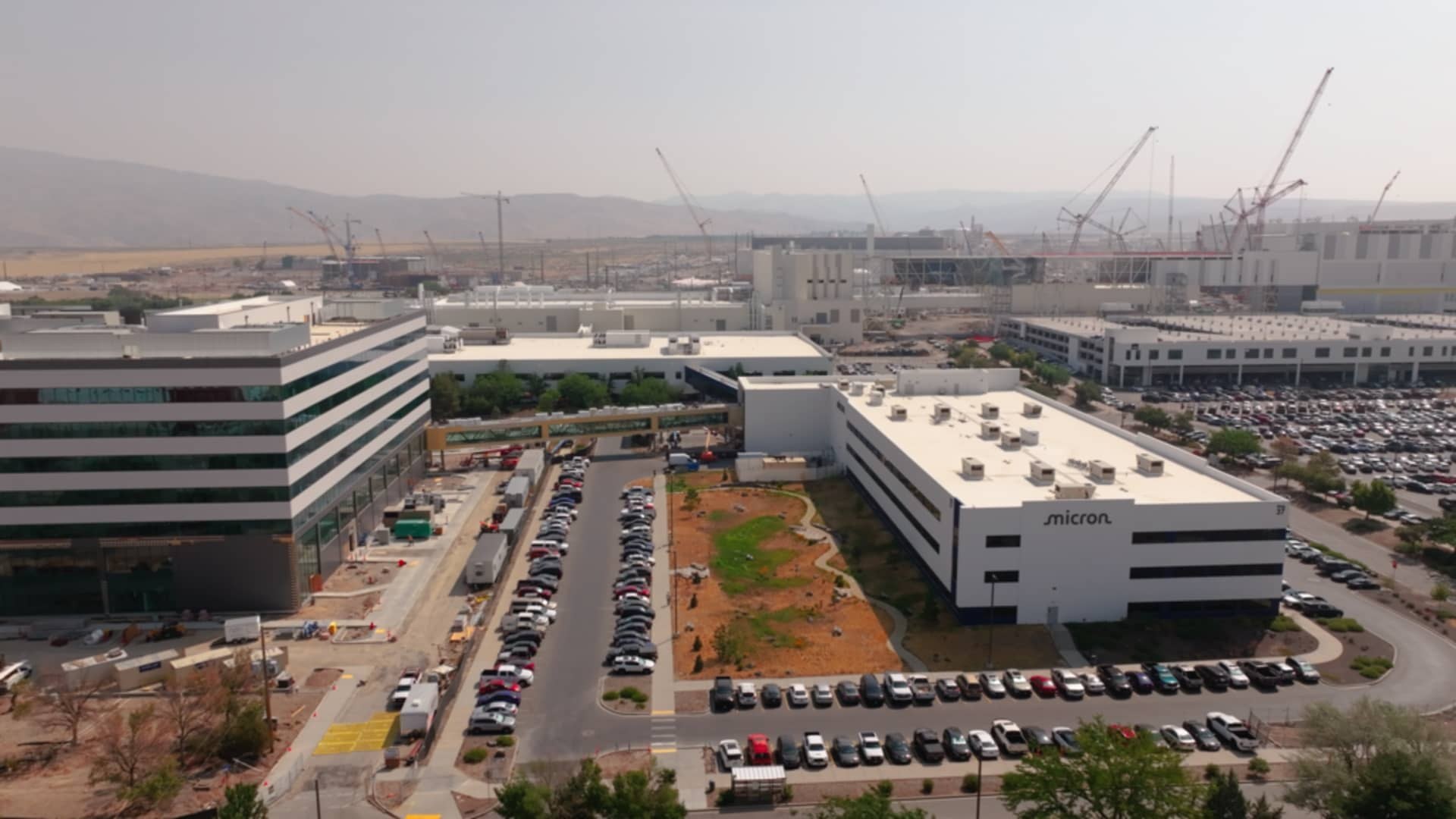
The corner of Capitol Boulevard and Island Avenue in Boise is a few blocks from Micron Technology’s headquarters and, for the past several years, a symbol of what happens when a semiconductor company hires faster than a city can build.
Micron said on Oct. 27 that it has committed $2.5 million to a housing land trust at that intersection, where about 325 apartments are to be built for households earning 60% of the area median income. The money is part of a broader community package disclosed alongside the company’s $50 billion expansion of its Federal Way campus, and it is the clearest sign yet that the constraint on American chip manufacturing has moved from permits to people.
The overall community commitment has grown from an initial $75 million to $142.1 million. Of that, $10.5 million is directed at housing. Beyond the land trust, $8 million goes to LEAP Housing, a nonprofit, with half of that earmarked for 30 new rental homes in Mountain Home, a city about 45 minutes southeast of Boise where housing costs have climbed as the metro area filled up. More than $67 million of the total is new money added since the original pledge.
Scott Gatzemeier, Micron’s vice president of US front-end expansion, said the first of the site’s two fabs is close to coming online. He described hiring and the community’s capacity to absorb new workers as the deciding factors in whether the project succeeds, which is a notable thing for an executive to say about a plant that will cost billions before it produces a wafer.
The reason is arithmetic. A leading-edge memory fab employs thousands of people, most of whom are not engineers, and it needs them to live within a commuting distance that Boise’s housing stock does not currently support at the wages those jobs pay. A company can build a cleanroom in three years. A city cannot build a neighborhood in three years, and it will not build one at all if the land is held by speculators waiting for the plant to open.
A land trust solves that specific problem. The trust keeps ownership of the ground and leases it, which removes the land cost from the apartment’s economics and lets a developer build for tenants whose incomes would not otherwise cover a market-rate rent. The subsidy is permanent in a way that a rent check is not, because the apartment stays affordable after the first tenant leaves.
Micron is not alone in this. The chip manufacturers building under the CHIPS Act have all discovered that the labor force is the binding constraint, and the ones in Arizona and Ohio have spent comparable sums on child care, transportation and training. What is different about Boise is that the company is anchored there, and the community it is paying to expand is the one its own executives live in.
The scale of the wager is unusual for a memory maker. Micron has long been the most cyclical of the large semiconductor companies, with earnings that swing with the price of DRAM and NAND rather than with its own execution. A $50 billion commitment to domestic front-end capacity is a bet that the current shortage of memory, driven by data-center demand, lasts long enough to pay for plants that will not be fully depreciated until the 2030s.
Memory prices have cooperated. The industry is in the middle of the sharpest upcycle in its history, with the largest supplier reporting margins this week that would have been unimaginable three years ago. That cash is what makes a project of this size fundable at all, and it is also what makes the decision to spend it on housing in Idaho rather than on a bigger fab somewhere cheaper worth examining.
The alternative was to build where housing already exists, or to build nothing and buy capacity from partners. Micron chose the site it has occupied for decades, where it already has the permits, the utilities and the political relationships, and then paid to fix the one input the site could not supply. That is a rational choice for a company whose engineers do not want to move, and it is expensive in a way that does not show up in the fab’s cost per wafer.
For Boise the money is real but not transformative on its own. Several hundred affordable apartments in a metro of fewer than a million people will not reset the market. What it can do is demonstrate that a large employer will pay for the housing its hiring requires, which is the argument local governments have been making to the industry since the first round of federal incentives was announced.
The measure of the program will not be the announcement. It will be whether the apartments at Capitol and Island are occupied by people who work at the fab, whether the second fab gets staffed on schedule, and whether the next expansion is announced with a housing package attached before the neighborhood objects rather than after.