By the time the market opened on October 29, Alphabet shares were down 13% at $283, and about $500 billion of market value had come off the company in a single session. Only one day in the history of the U.S. stock market has destroyed more.
The trigger was a quarter that missed on both lines for the first time in nearly four years. Revenue rose 25% to $127.58 billion, short of the $128.22 billion analysts expected. Operating income rose 30% to $40.58 billion at a 31.8% margin. Net income fell 25% to $26.17 billion, and earnings per share came in at $2.12 against a $3.02 consensus.
Most of the earnings gap came from a mark, not from operations. Alphabet recorded an $8.66 billion loss on equity holdings, including its stake in SpaceX, as valuations were written down to market. That is an accounting event, and it is the kind of line analysts usually strip out.
The market did not strip it out, because the cash statement was worse than the mark. Free cash flow was negative $9.07 billion, against roughly negative $2.7 billion expected. Microsoft, reporting the same afternoon, generated positive free cash flow of $18.63 billion. The two hyperscalers are now $27.7 billion apart on the metric that pays for dividends and buybacks.
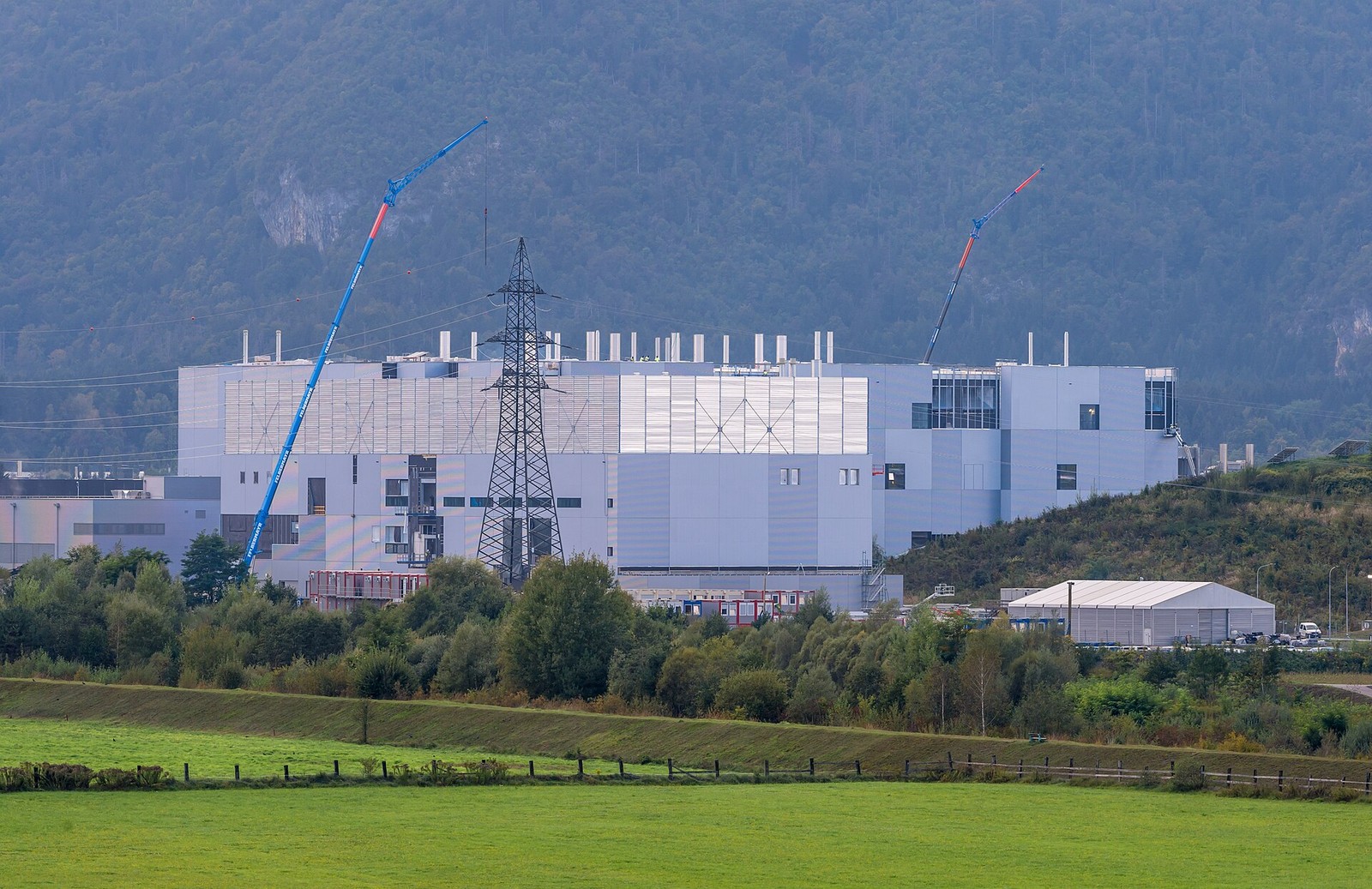
Capital expenditure was $51.36 billion in the quarter, which was itself below the $55.2 billion FactSet consensus. Management kept its full-year guidance at $195 billion to $205 billion, a range it lifted in July from as much as $190 billion, and said spending would rise significantly again in 2027. Spending less than expected and still burning more cash than expected points to the timing of payments and to working capital, not to a single line item.
Those dollars turn into cost on a schedule. At roughly $200 billion of annual spending and a six-year useful life, the depreciation charge alone reaches about $33 billion a year, before power, networking or the land underneath the buildings.
That is the trade investors are being asked to underwrite. On one side, Google Cloud grew 103% to $30.7 billion, roughly double what analysts had modeled, as companies bought computing for AI training and inference and as Alphabet sold more of its own tensor chips. Search and advertising brought in $63.4 billion, up 12% but below the $64.9 billion expected. The Gemini app reached 1 billion users, which the company described as the fastest growth of any product in its history.
On the other side, the bills arrive before the revenue does. A data center built this year depreciates on a schedule that starts immediately, while the customer contracts that justify it convert over years. Alphabet’s contracted backlog stood at $561 billion, and management said more than 55% of it will turn into revenue within 24 months. The backlog is revenue under contract, and it is also money that has not arrived yet.
The company’s defenders point to the backlog and to cloud share gains against Amazon Web Services and Microsoft Azure. Citizens analysts, who recommend the stock, wrote before the report that Google is well positioned across AI but that execution risk exists and that they were growing more cautious on Search as agents change how people look for things. That caution landed on the numbers: search growth of 12% is healthy in isolation and soft against a company spending $200 billion a year.
There is a structural point underneath the reaction. For most of the past three years, Alphabet could fund its buildout from search cash and still return capital. Negative free cash flow changes the arithmetic of every subsequent decision, from buyback pace to how aggressively the company prices TPU capacity against Nvidia hardware.
Berkshire Hathaway’s position shows what a re-rating looks like on a single holder’s books. The conglomerate owns 106 million Alphabet shares, worth about $30 billion at current prices, down from $37.8 billion at the end of June, according to filings. Berkshire did not have to sell a share to lose $7.8 billion.
The quarterly report also carried a smaller signal about how the business is changing shape. Google Services, the advertising and subscription engine that has funded everything else, grew 11% to $96.3 billion. Cloud grew nine times faster from a much smaller base. The company is becoming two businesses with different capital needs, and the market is still valued as though the first one pays for the second.
What happens next turns on three numbers. The first is whether search growth holds as AI agents intercept queries, which is the argument the bear case rests on. The second is whether the backlog converts on schedule, because a 24-month promise is only as good as the customer’s ability to pay. The third is 2027 capital spending, which management has already flagged as higher without putting a figure on it; analysts surveyed by FactSet expect the figure to exceed $300 billion.
Alphabet is not short of demand or technology. It is short of the thing the market wanted this quarter, which was proof that the spending is self-funding. The 103% cloud growth was the best argument management had. It was not enough to cover a $9.07 billion cash deficit on the same page, and the stock paid for the difference.