The European Commission’s decision comes down to one number: 319 million euros. What that money buys is a wafer 100 millimeters wider, and a factory in southern Austria that Brussels hopes will be the first of its kind on the continent.
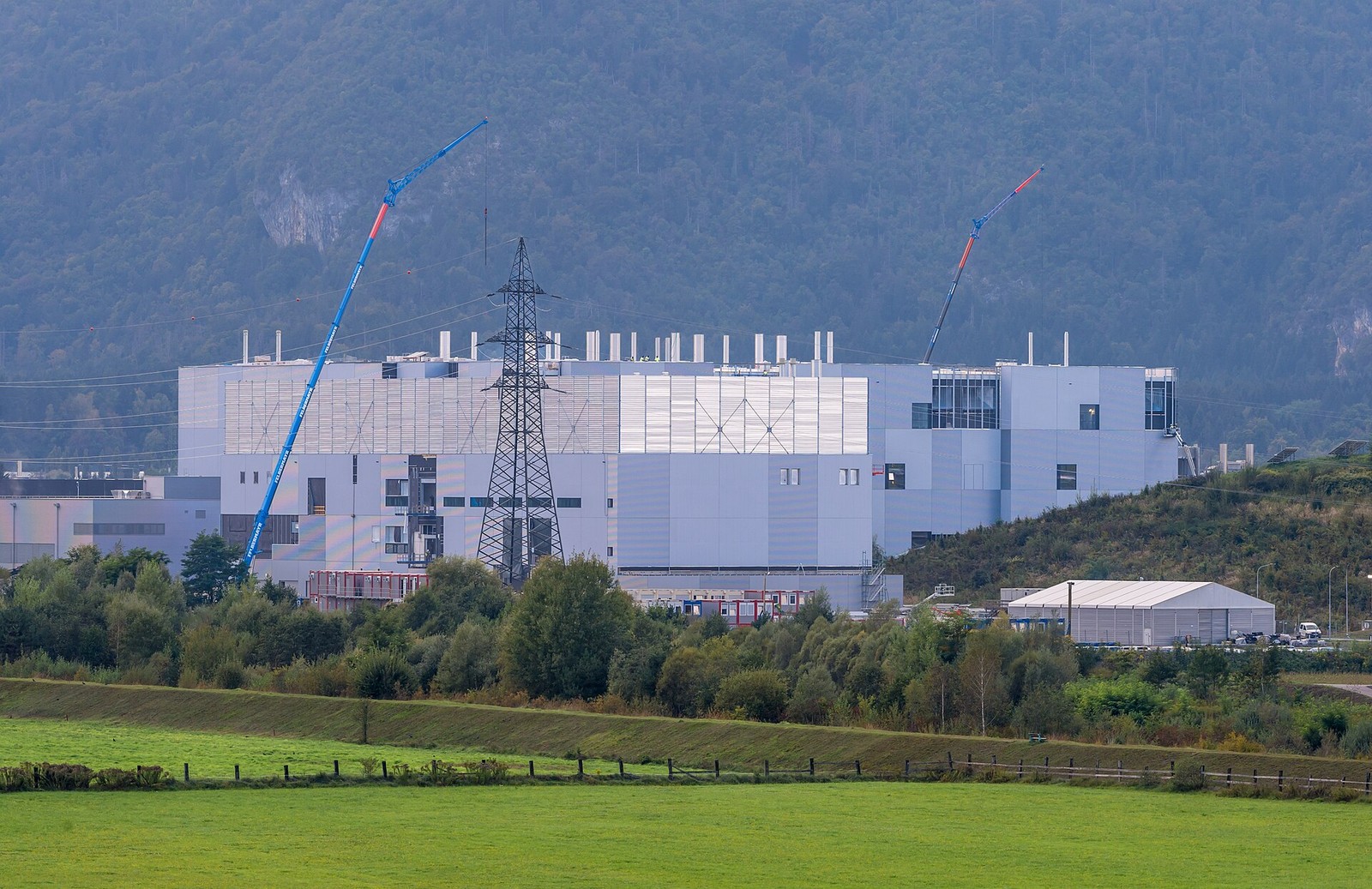
On Tuesday the Commission approved Austrian state aid for Infineon Technologies Austria AG to upgrade its plant in Villach, in Carinthia. The grant is a direct payment of 319 million euros toward a project the company values at about 1.1 billion euros, spread through 2034. The plant will make power chips from gallium nitride on 300-millimeter wafers, a step up from the 200-millimeter wafers on which such devices are made today.
The Commission’s decision, filed as case SA.113427 under Article 107(3)(c) of the EU treaty, turned on a single test: whether the investment is first-of-a-kind in Europe. Power gallium nitride is currently produced on wafers no larger than 200 millimeters, and the Commission found no comparable 300-millimeter capacity inside the bloc. That finding is what allows a national subsidy to clear state aid rules that normally forbid them.
Infineon calls the project Empowering Fab. The company has been making power semiconductors in Villach since 2021, when it opened a 1.6 billion euro factory there for 300-millimeter thin wafers, and its Austrian subsidiary reported revenue of 4.757 billion euros in the 2024 fiscal year. In September 2024 it announced it had produced the world’s first 300-millimeter power gallium nitride wafer. The new money moves that work from development into volume production, with output targeted to begin by the end of 2027.
The physics behind the subsidy is unglamorous and consequential. Gallium nitride switches faster than silicon, dissipates less energy as heat and tolerates higher voltages, which lets engineers shrink power supplies. The same properties make it attractive in server racks built for artificial intelligence, where power delivery has become a limit on how many accelerators fit in a hall. It also suits electric vehicle chargers, solar inverters and the motor drives in robots.
Market researchers at Yole Group expect power gallium nitride devices to grow about 35 percent a year, reaching roughly 3.5 billion dollars by 2031, with data centers and electric vehicles taking over from the phone chargers that first commercialized the technology. Infineon’s own projections assume a faster growth rate, about 44 percent a year, reaching 3 billion dollars by 2030.
The appeal of a bigger wafer is simple arithmetic. A 300-millimeter disc holds roughly 2.25 times the area of a 200-millimeter one, so each process run yields more chips from the same equipment and cleanroom time. The difficulty is that gallium nitride is grown on a different substrate than silicon and cracks as it cools, which is why the industry stayed on smaller wafers for years. Infineon’s claim is that it has solved the transition.
Brussels did not hand over the money without conditions. Infineon agreed to give startups, smaller suppliers, universities and research institutes access to hardware and software kits and to its laboratory facilities, to run training programs for the workforce, and to share with Austria any project profits that exceed current expectations. The Commission also concluded that the aid has an incentive effect, meaning the investment would not have gone to Europe without it, and that it is limited to the funding gap the company demonstrated.
Those terms are now the template for a small class of European chip subsidies. Under the Chips Act, passed in 2023 with about 43 billion euros in public and private commitments, Brussels has been trying to lift the bloc’s share of global chip production toward 20 percent by 2030. Europe’s strength is not leading-edge logic, where Taiwan and South Korea dominate, but power devices, analog chips and the automotive supply chain. Gallium nitride sits inside that strength.
The competitive picture is less comfortable. Chinese manufacturers have been adding gallium nitride capacity quickly, mostly on 200-millimeter lines, and they compete hardest in exactly the consumer and industrial segments Infineon is targeting. Larger wafers are the European answer to that cost pressure: the same strategy of running ahead on process rather than matching on price.
There is a utilization risk that the Commission’s paperwork acknowledges only indirectly. A 1.1 billion euro line needs years of high-volume orders to pay back, and the gallium nitride market, for all its growth rate, is still measured in the low billions. Infineon has been cutting costs elsewhere in the group as automotive demand softened. A new fab that starts production in late 2027 will arrive into whatever cycle exists then, not the one that justified the investment.
For Austria, the calculation is more local. Villach is one of Carinthia’s largest private employers and the province’s most visible technology asset, and Carinthia has built a cluster of suppliers and university programs around it. A subsidy that keeps the next process generation in Villach is worth more to the regional government than the tax it forgoes.
The Commission’s approval does not oblige Infineon to succeed, only to try. If the 300-millimeter gallium nitride line reaches volume with acceptable yields, Villach becomes the reference case that other European governments cite when they ask Brussels for the same treatment, and the first-of-a-kind exemption gets easier to use. If yields lag, Brussels will have helped finance a factory that competes with the company’s own 200-millimeter lines a few hundred meters away.
The first wafers are due off the line by the end of 2027. By then the question will no longer be whether Europe can make power gallium nitride, but whether it can make it cheaply enough to keep the customers it is trying to attract.