June Paik started FuriosaAI in 2017, when the case for a chip company in Seoul was mostly theoretical. The company he runs has now raised 820 billion won, about $590 million, in a round that values it at 3.8 trillion won, or roughly $2.75 billion after the money.
The Series D was announced Oct. 29 and lifts the Korean company’s valuation about threefold from its previous round. Bloomberg reported the round at $620 million raised and a $2.9 billion valuation, a higher count that reflects the exchange rate and the timing of the close rather than a different deal. A Korean government-led growth fund took part, an unusual investor for a company that sells into other people’s data centers.
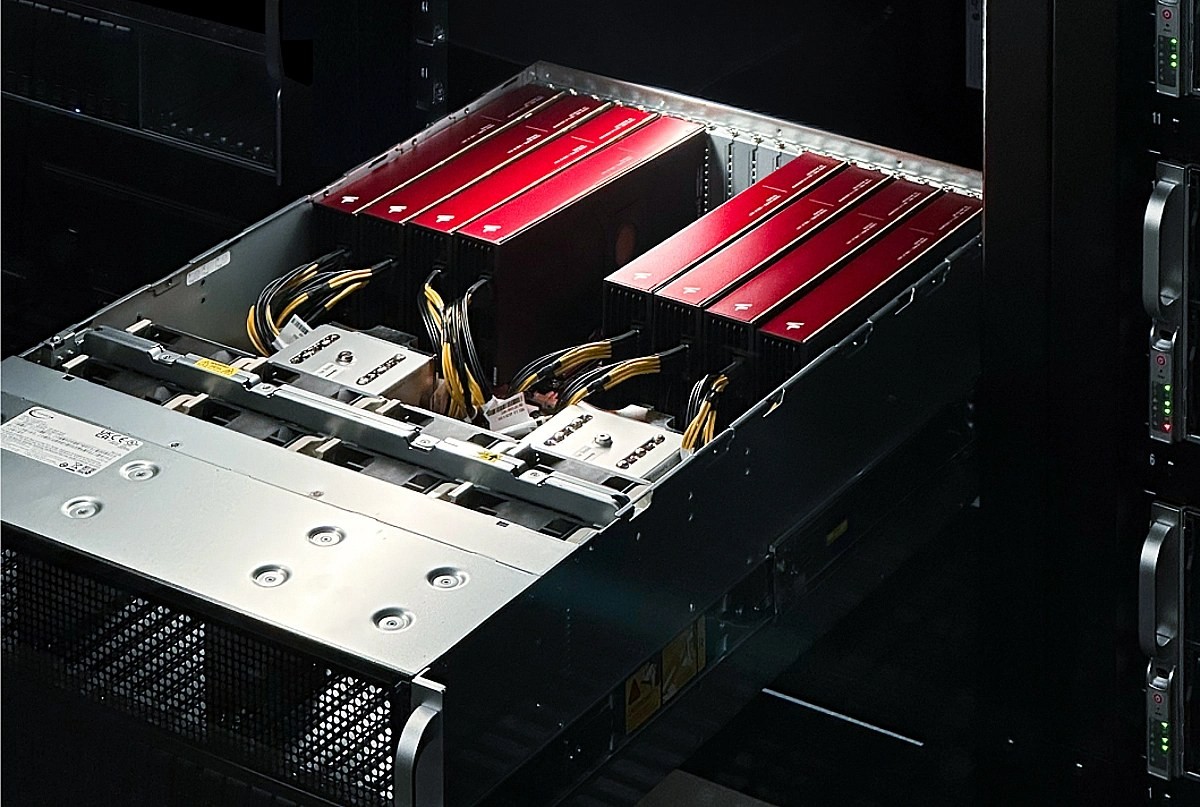
FuriosaAI builds accelerators for inference, the half of machine learning that answers a question rather than training a model to answer one. Its flagship part, RNGD, pronounced renegade, was unveiled in August 2024 and is now shipping to enterprise customers. The new money is earmarked for the next generation of silicon and for volume production, which is the expensive part of selling chips.
The bet is that the economics of artificial intelligence are shifting from training to serving. Training a frontier model is a capital event, decided by a handful of companies and financed against a roadmap. Serving a model is an operating cost, paid every time a user types a prompt, and it falls on every company that puts an assistant in front of customers.
That distinction matters to whoever signs the electricity bill. Inference workloads reward chips that move data efficiently and waste little power, and they run on software stacks that have to be good enough that a customer’s engineers can port to them without rewriting their model code. Training rewards raw throughput and interconnect. A startup that picks the inference fight is choosing a smaller technical moat and a much larger set of potential buyers.
The set is large because Nvidia’s position leaves a gap. The company’s accelerators carry most of the market, and buyers who want a second source have spent three years looking for one. Every serious alternative has run into the same wall: the software. Nvidia’s programming model has a decade of libraries behind it, and a challenger that saves on power per token does not save anything if the engineering team spends a quarter porting.
FuriosaAI’s answer has been to sell against total cost of ownership, meaning the price of the rack, the power to run it and the cost of the people who keep it working. In a data center where power is the binding constraint, a chip that delivers more tokens per watt can win a contract without beating Nvidia on a benchmark.
The Korean government’s involvement adds a dimension that has little to do with silicon. Korea has been building a domestic position in AI infrastructure to match its hold on memory, where Samsung Electronics and SK Hynix supply the high-bandwidth stacks that every accelerator needs. A national champion in logic chips would complete a supply chain that currently stops at the memory.
That ambition also explains why the round closed at this size. Korean policy has pushed capital toward AI hardware through state-backed vehicles, and a government fund in a Series D does more than write a check: it signals to domestic conglomerates and pension money that the company is a strategic asset rather than a venture bet.
The valuation is where the argument gets harder. At $2.75 billion, FuriosaAI is worth more than most semiconductor startups ever reach and less than the cost of a single large data center. It has one product in volume, a customer list it has not disclosed in detail, and a next-generation chip that has not shipped. Comparable challengers in the United States have raised at similar or higher marks on similar evidence, which suggests the market is pricing the option rather than the revenue.
There is precedent for the exit that does not happen. In early 2025, reports that Meta Platforms was in talks to acquire FuriosaAI ended without a deal, and the company went back to raising private capital instead. A founder who walks away from a hyperscaler and then raises at a higher price has promised his new investors what the company is worth alone.
The competitive field is crowded in a way that does not show up in a single valuation. Groq, Cerebras and a cluster of newer entrants all sell inference silicon. Korean peers including Rebellions and DeepX are chasing the same domestic and export customers. Nvidia, for its part, has spent the past two years optimizing its own parts for the inference workloads that were once an afterthought in its product line.
What separates the survivors will not be the peak number on a spec sheet. It will be whether a customer with a working model and a deadline can move it onto the new hardware in weeks, and whether the vendor can supply the second rack when the first one works. FuriosaAI says the new money goes to exactly those two problems, and the round is large enough that the answer will be visible within a couple of years.
The government fund’s presence also sets an expectation. State-backed capital tends to want domestic factories, customers and a supply chain, and it tends to stay through a downturn that a venture fund would not. That patience is an advantage in a business with long design cycles, and a constraint for a company that might prefer to sell to whoever pays.
For now the ledger reads simply: a chip that exists, a market that is growing faster than the incumbents can serve it, and a valuation that assumes both continue. The next fixed date is one nobody outside the company can inspect until it ships, and the number quoted when it does will not be the valuation but the power draw.