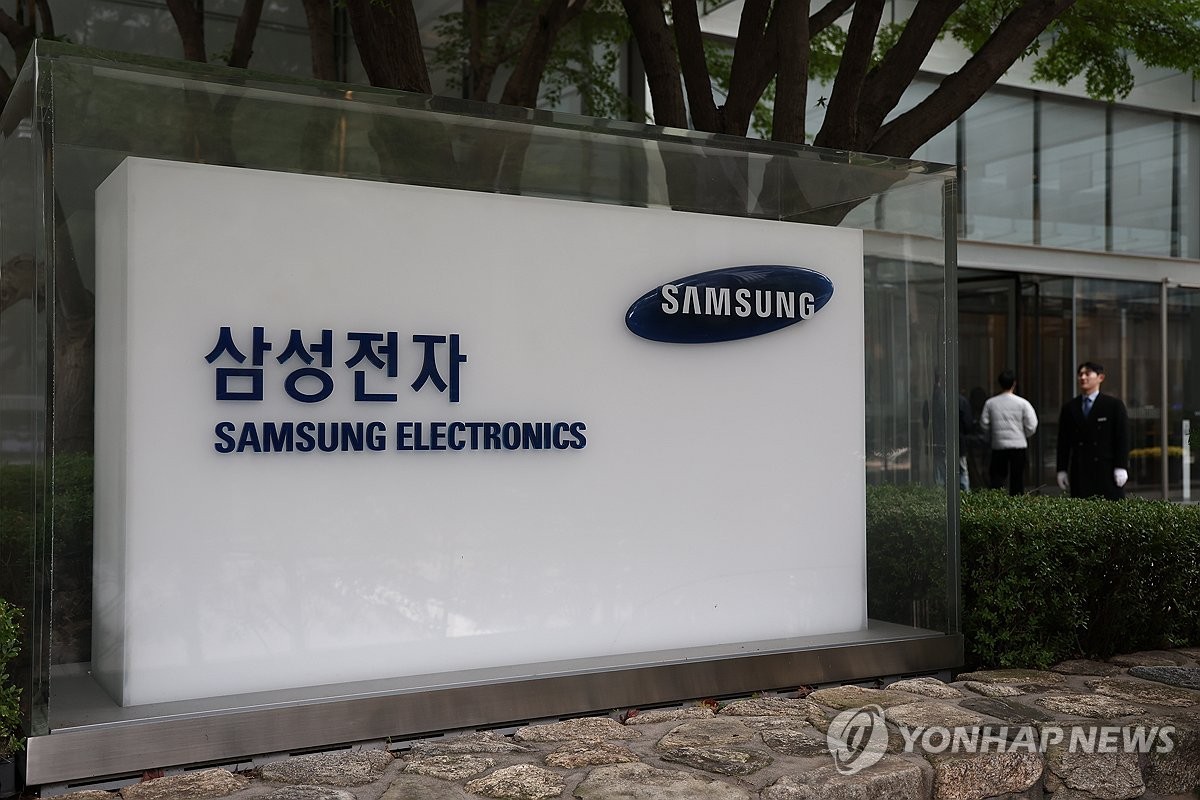
Samsung Electronics reported the largest quarterly operating profit any technology company has ever posted, and its shares closed down 4.13% on the day.
The numbers, released on October 29 for the quarter ended September, explain why the record was not enough. Revenue rose 126.9% from a year earlier to 195.3 trillion won. Operating profit reached 107.4 trillion won, up 783%, the first time a global technology company has cleared 100 trillion won in a single quarter. It was the fourth consecutive quarter in which Samsung set records on both lines.
Almost all of it came from chips. The Device Solutions division, which houses memory and foundry, posted 147.1 trillion won in revenue and 106.5 trillion won in operating profit. The mobile and consumer division, Device eXperience, grew revenue 8% sequentially and still recorded an operating loss of 0.8 trillion won.
The memory business is the story. Samsung said it scaled sales of HBM4, the fourth generation of high-bandwidth memory, on the strength of product competitiveness, and that server solid-state drives sold in volumes it had not planned for. Server demand pushed prices higher across every application, which is the part of a memory upcycle that flows almost directly to operating profit.
Memory has done this before. What is different is the buyer. The customers now are hyperscalers building training and inference clusters, and they sign multi-year agreements rather than spot orders, which lengthens the visible order book and shortens the moment of reckoning. Samsung said it expects AI infrastructure spending to reach a record level in 2027 and that demand will exceed industry supply by a wider margin than in 2026.
The company is returning cash at a pace that matches the earnings. It declared a third-quarter dividend of 30 trillion won, or 4,601 won a share, and said it plans to return another 55 trillion to 75 trillion won this year through dividends and buybacks, with the final plan due for board approval by the end of January 2027.
That is a large number even by Samsung’s standards, and it carries an implicit statement about where management sees the limits of reinvestment. A chipmaker that expected to redeploy every won of profit into capacity would not hand back this much in the same quarter it announced record profit.
The stock reaction is the more interesting data point. Results were essentially in line with what analysts had modeled. A company that meets expectations and falls 4% is a company whose expectations had already been set by something other than the quarter.
Josh Gilbert, an Asia-Pacific analyst at eToro, said investors had been spoiled by the AI rally and now treated a record quarter as the minimum requirement. The diagnosis is hard to argue with. Samsung’s shares had run up through the year on the assumption that memory pricing would keep climbing, and an in-line quarter gives holders nothing new to buy.
There is a competitive map underneath the numbers as well. Samsung spent most of the past two years behind SK Hynix in high-bandwidth memory, losing the first wave of AI memory orders to a rival that qualified earlier with Nvidia. The HBM4 ramp described on Thursday is the company’s answer, and the fact that it is now shipping at scale is the operational achievement of the quarter, whatever the share price did.
The foundry business is the unresolved part. Device Solutions’ profit is overwhelmingly memory, and Samsung has spent years and tens of billions of dollars trying to win contract manufacturing customers away from TSMC without a commensurate return. The division’s combined results flatter that effort. A memory upcycle covers a lot of foundry losses.
Then there is the consumer side. An operating loss at Device eXperience in a quarter when the won is weak and component costs are rising describes a business squeezed between Chinese competitors on price and Apple on margin. Samsung sells more phones than anyone and makes little money doing it, and the AI features it has pushed into its handsets have not changed that arithmetic.
What the quarter does not answer is how long the pricing lasts. Memory has historically been a business of two-year booms and brutal corrections, and every participant in this one is adding capacity at once. Samsung, SK Hynix and Micron are all building fabs that will come online into a market whose demand is being set by a handful of companies spending at rates no one has sustained before.
Samsung’s own guidance is that supply stays tight through 2027. That forecast is worth what any forecast at the top of a cycle is worth. The order book is longer than it used to be, the customers are better credits, and the product mix has moved toward parts that are hard to make. None of that repeals the cycle. It only changes how long the fall takes when demand stops outrunning supply.
For now the company is printing money at a rate no technology firm has matched, and the market has decided that this is the baseline rather than the achievement. The next quarter will show whether the pricing behind it holds, and whether a record that no one else has posted can still move a share price.