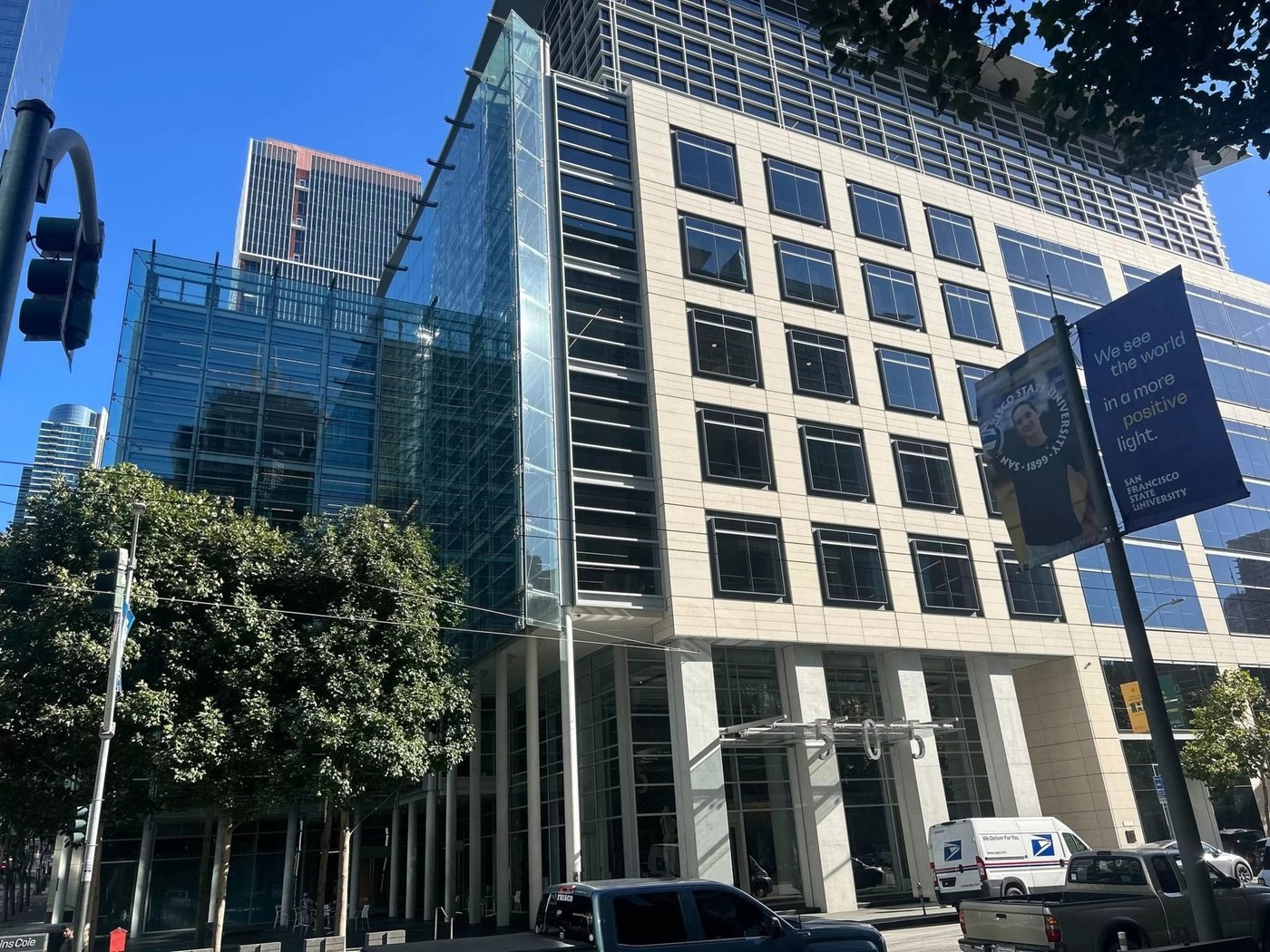
The building sits near Centennial Airport, south of Denver: two structures, about 200,000 square feet, laid out to produce two gigawatts of gas turbines a year. It does not make airplanes.
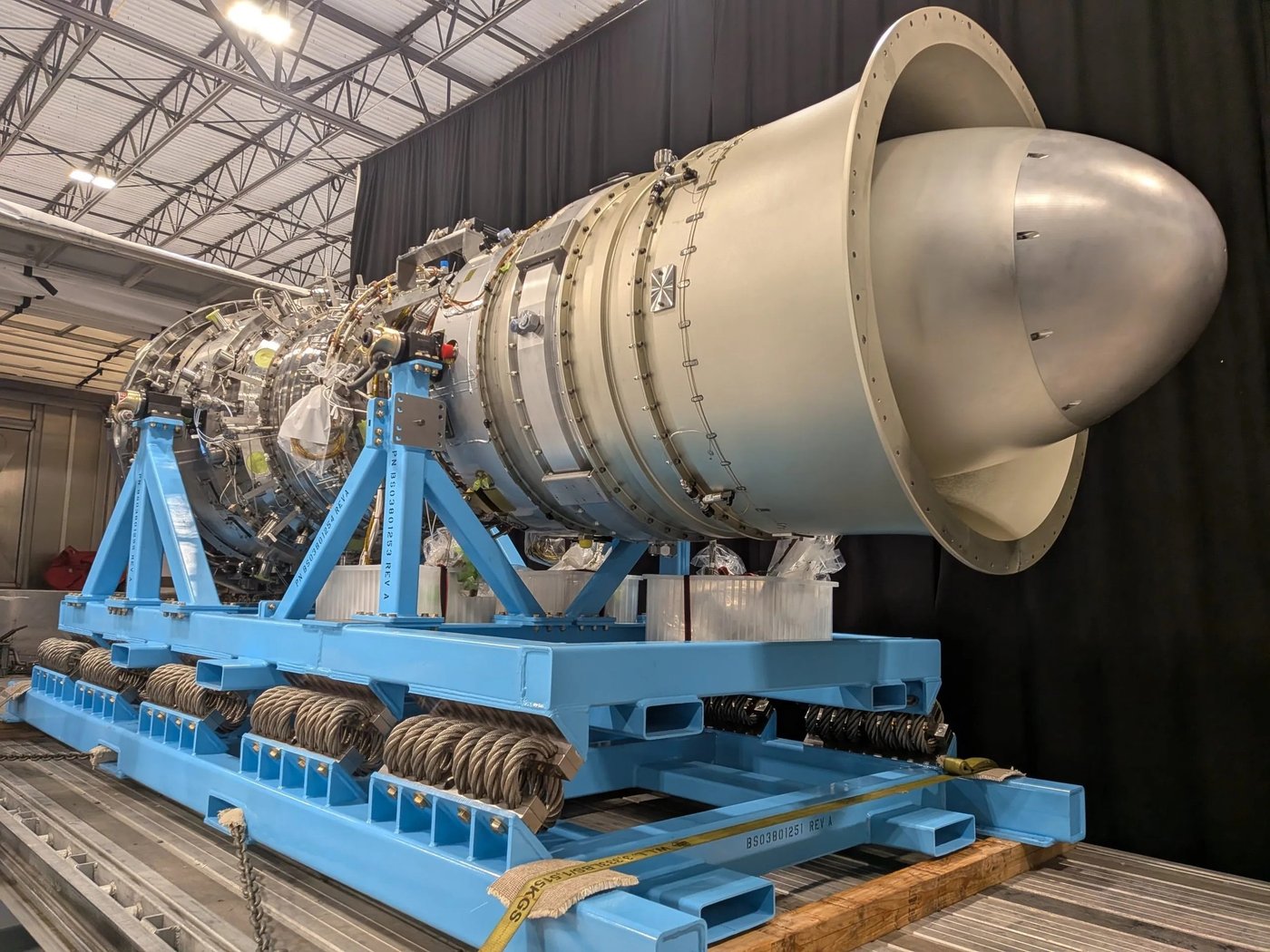
Boom Supersonic unveiled the plant on Oct. 22 alongside its first complete turbine core, a machine it calls Sprint Core, and a plan to cast single-crystal blades and vanes in what the company describes as an all-digital foundry. The turbines are rated at 42 megawatts each and are aimed squarely at the data centers now being built to train and run artificial-intelligence models. Boom says the site will employ about 500 people and that it will deliver roughly 250 megawatts of units to other sites next year.
For a company known for a Mach 1.7 airliner, the pivot is unusual, and Blake Scholl, the founder and chief executive, has not presented it as a retreat. “It’s time for a renaissance in energy and in supersonic flight,” he said at the unveiling. The engineering overlap is real: the Superpower turbine shares roughly 80% of its parts with Symphony, the engine Boom is developing for its Overture aircraft, so a production line for one is a production line for the other.
The commercial overlap is less forgiving. Boom’s first customer for the turbine business was Crusoe, a Denver neighbor that has become one of the largest builders of AI data centers and supplies computing capacity to OpenAI in Abilene, Texas. Crusoe agreed to a $1.25 billion launch order. On Sept. 25 it ended the arrangement. Crusoe’s spokesman said the company’s energy plans had not changed and that it still intends to use turbines, “just not Boom’s.” Scholl had said the turbine revenue would help fund development of the airliner. That funding bridge now has a hole in it.
The airliner has its own problem, and it is being described by the customer rather than by skeptics. Scott Kirby, chief executive of United Airlines, was asked about Boom’s schedule in an interview with the Office Hours: Business Edition podcast that appeared on Oct. 28. “’29 is their official timeline,” he said. “It’s not going to happen in ’29. It’s going to take longer.” Kirby added that Boom has “a lot of hurdles to overcome” in developing and certifying Overture, and that “it’s not a guarantee that they’ll overcome.” In March he had put the odds of the aircraft entering commercial service at 50-50.
United signed in 2021 for 15 Overture aircraft with options on 35 more, contingent on the plane meeting specifications and passing certification. American Airlines followed in 2022 with 20 firm orders and 40 options; Japan Airlines has an agreement as well. The deposits attached to those deals are non-refundable, which protects Boom’s cash position and tells you how much of the order book is a real commitment rather than a marketing number. Airbus and Boeing learned decades ago how far an option book can travel from a delivery schedule.
The physical evidence of the timeline is a factory in Greensboro, North Carolina, completed in 2024 and intended for Overture production. It has largely sat idle since, a fact that has annoyed state officials who put more than $50 million of taxpayer money into building it. A plant with no work in it is the clearest statement available about where the program stands.
The regulatory backdrop has improved, which makes the delay harder to attribute to Washington. President Trump signed an executive order in June 2025 directing agencies to clear a path for supersonic flight, and the Federal Aviation Administration proposed a rule in June 2026 that would lift the long-standing ban on commercial supersonic flights over land, provided the aircraft are quiet enough. Boom’s XB-1 demonstrator flew supersonic in 2025 and later tested a technique it calls boomless cruise, flying slightly above Mach 1 at altitude so that shock waves refract upward before reaching the ground. Certification of a passenger aircraft is a different and much longer exercise than demonstrating a phenomenon in a test vehicle.
The turbine business sits in a market with the opposite problem. Gas turbines for data centers are sold out for years. GE Vernova, Siemens Energy and Mitsubishi Power have backlogs stretching toward the end of the decade, and lead times that once ran 18 months now run past 2029 for some frame sizes. That scarcity is the opening Boom is trying to take: a 42-megawatt unit built from an existing aero-engine design, from a factory that took nine months from lease signing to production parts, is an attractive proposition to a developer who cannot get a GE slot.
It is also one of the hardest manufacturing problems in the industry. Single-crystal turbine blades are cast in vacuum furnaces from nickel superalloys, and the number of plants worldwide that can do it reliably is small. Boom’s claim to have built a digital foundry for the process is a claim about yield as much as about technology, and yield is learned in production, over years, with customers who tolerate early defects. Data center operators do not.
That is the bind. The turbine line needs patient, technically sophisticated buyers willing to qualify a new supplier; the aircraft line needs capital that the turbine line was supposed to supply; and the most credible customer for either has just walked away from the larger order. Scholl has two products, two customer bases and one balance sheet.
What the Denver factory changes is the nature of the bet. Boom is no longer a company asking the market to believe in a 2029 airliner. It is a company asking the market to believe in an industrial ramp with a shorter feedback loop: turbines shipped, megawatts delivered, revenue booked. The first 250 megawatts will say more about Boom’s future than any statement about Overture’s schedule, and they will arrive, or not, long before 2029 does.