The application had been sitting in Westborough’s municipal files since the spring, a proposal to build a drone delivery station in a town of about 21,000 people some thirty miles west of Boston. On Saturday it stopped being a plan for the town’s future and became part of its record.
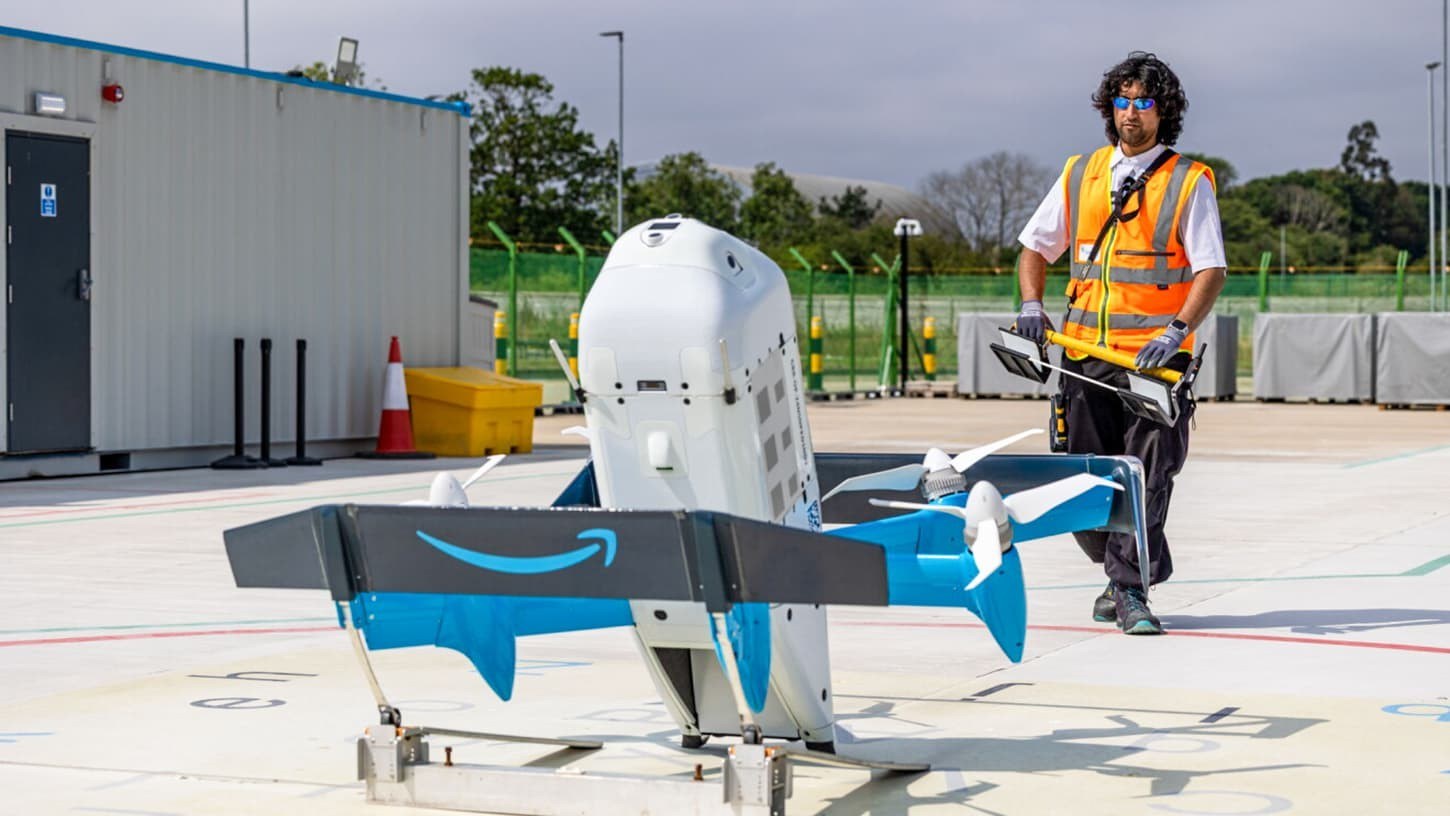
Amazon withdrew the application on Oct. 31. The company had wanted to build a facility that would let its Prime Air drones make short hops to customers in the area. Residents and town officials objected, citing noise and the safety of the airspace above their neighborhoods, and the town’s resistance held long enough that the company stopped asking.
Why this matters now is not complicated. Amazon has been promising drone delivery since 2013, when the company put a video of a flying package in front of the public and set a five-year target. Thirteen years later, Prime Air operates in a handful of small markets, and every expansion still runs through a local approval process that can stop it. The constraint is no longer the aircraft. It is consent.
Two pieces of jargon explain the gap. Prime Air holds a Part 135 air carrier certificate from the Federal Aviation Administration, a designation that lets it fly commercially under rules written for charter operators rather than for a delivery network. And its drones fly beyond visual line of sight, meaning no human on the ground can see them for most of the trip, which is the capability that makes a delivery network work and the one that makes neighbors nervous. Federal rules for flights beyond line of sight are still being written, and until they settle, every new market is a negotiation.
For the households under the route, the objection is not abstract. A drone delivery station is not a warehouse on the edge of town; it is a pad, with a flight path that passes over specific yards at low altitude, repeatedly, on the days people are home. Noise from small multirotor aircraft is sharper than its volume suggests, because the blade passing frequency sits in a range the ear notices. A town that accepts a cell tower, which hums constantly, may still reject an aircraft that crosses a backyard forty times a day.
The airspace objection is harder to argue and harder to dismiss. Drone corridors have no fences. A resident cannot decline to live under one, and the homeowner with a swimming pool, a trampoline and a dog has no way to make the operator accountable for a malfunction. Federal preemption means a town cannot ban the flights themselves, so the town’s only remaining point of control is the ground facility, and Westborough used it.
Amazon’s side deserves a fair hearing, and the company has made it before. Drones cut delivery times for small items, they replace van trips with electric aircraft on short routes, and the company argues the safety systems are more conservative than the rules require. A single drone delivering a phone charger produces less carbon than a van covering two miles to do the same job, and in a town like Westborough, where the last mile is mostly detached houses on wooded lots, that is the use case. Amazon has not said it will abandon the region, and a smaller site nearby is still possible.
The town’s counterargument is about who absorbs the externality. The delivery is for the customer in the house. The noise falls on the neighbors, who did not order anything. That asymmetry is why drone delivery keeps stalling in suburbs and keeps advancing on college campuses and in planned communities, where a single entity can consent on behalf of everyone.
What happens next is a test of the business model rather than the technology. Prime Air’s remaining service areas are concentrated where a municipality or a large property owner signed off early. Every additional market now costs a year of local process, and each withdrawal makes the next town’s planning board more confident that saying no is survivable. Amazon can keep spending on aircraft. It cannot spend its way past a zoning file.
Congress could change the arithmetic by writing the line-of-sight rules into a standing framework, which would move the argument from town halls to courtrooms. That would help Amazon and hurt the residents who currently hold the only veto they have. It is also the outcome the company has been lobbying for, without much to show for it.
Back in Westborough, the file is closed and the flight path that was never drawn stays undrawn. The town keeps its quiet, and Amazon keeps a market it cannot reach. A decade of engineering has produced a delivery system that works and a business that still needs permission, one cul-de-sac at a time.