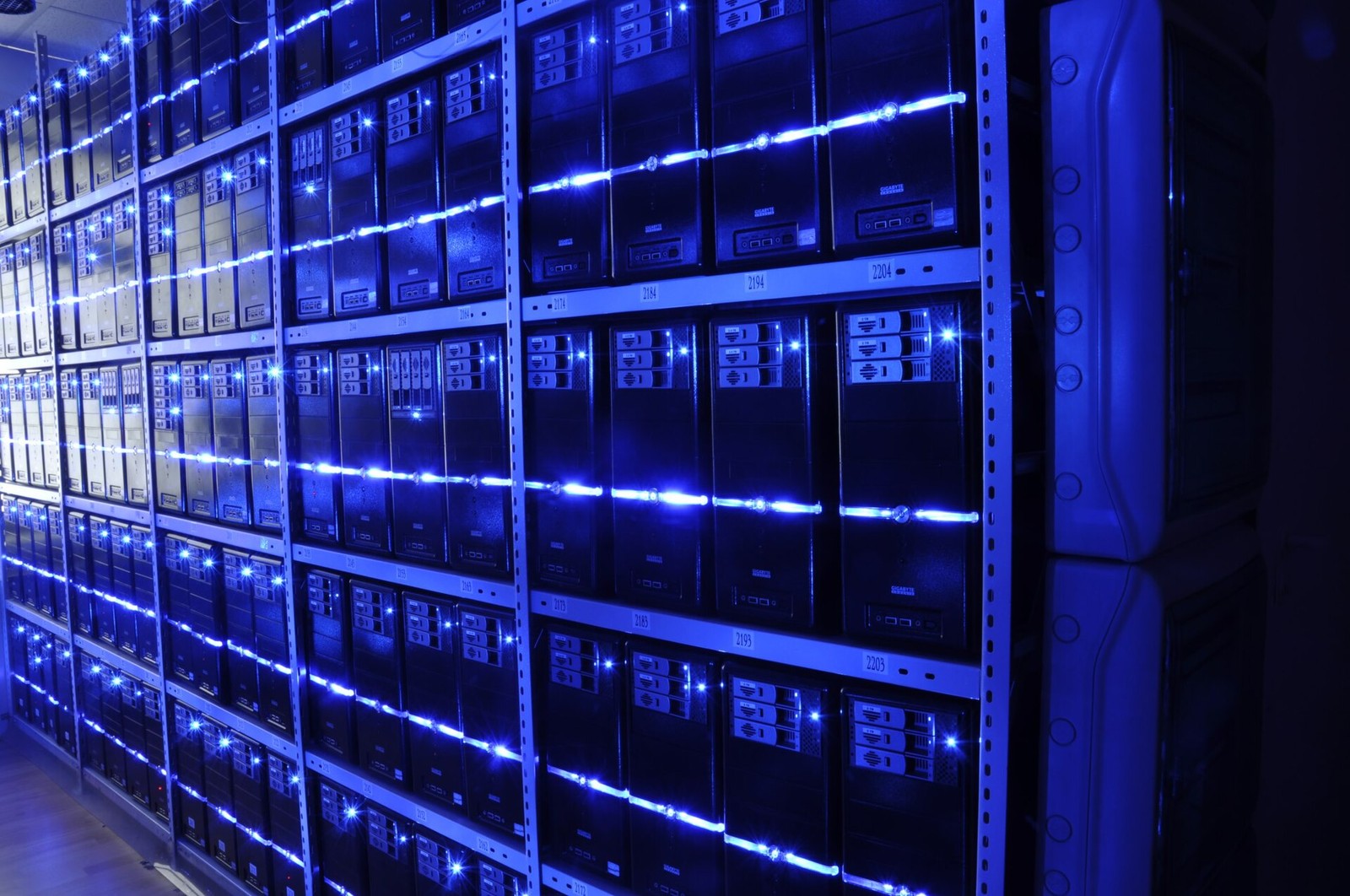
Anthropic has committed to spend close to $900 billion on servers, buildings and electricity. The figure appears in the registration statement the company filed on October 30, and it sets the terms of every conversation it will have with public investors from here.
The commitments cover capacity the company has contracted for but not yet paid for. They are not borrowings in the ordinary sense, and they do not appear as debt in the way a bond does.
They are larger than anything else on the balance sheet.
The same document reports a net loss of $80.7 billion for the first half of the year.
Read the two numbers together and the shape of the offering becomes clear. This is a company spending at a scale only a few institutions have ever attempted, financed so far by private capital, now asking public markets to fund the next stage of the same plan.
The obligations are mostly lease and purchase agreements tied to data centers and the power contracts that keep them running. They come due on a schedule negotiated when capital was abundant and the company’s valuation was climbing every quarter.
Capacity of that kind takes years to deliver. Revenue does not wait for it, but the payments do start when the buildings open.
The arrangement is standard across the industry now. Model developers sign multiyear take-or-pay contracts so that builders can finance construction, and the contracts become the collateral. A commitment to pay for power whether or not it is used is what makes a project bankable. It is also what makes a company’s cost base fixed while its revenue is not.
Peers have signed similar paper. The difference is disclosure. Private investors negotiated their terms with the same numbers in front of them. Public investors will read them in a filing, at the same time as everyone else.
That changes the price of capital. A private round can be priced on a story about the next model. A listing is priced on the ratio between what has been promised and what has been earned, and analysts will build that ratio into their models before the first day of trading.
The filing does not avoid the harder subject. It lists loss of control over artificial intelligence systems among the factors that could produce what it describes as catastrophic and existential risk, language that sits uneasily beside a document otherwise devoted to growth and capacity.
Companies usually keep that kind of warning in the back of the risk section. Here it has to be read next to a nine-hundred-billion-dollar commitment to build the systems in question.
There is a second front in the same document. Anthropic has built its own molecular biology laboratory and acquired Mithril Medicine, a biotechnology company that, by the account in the filing, had a single employee. Drug discovery is now part of the pipeline the company presents to investors.
The logic is not mysterious. Biology is where models can be pointed at a problem with a measurable outcome, and where a successful result is worth more than the compute it consumed. It also puts the company into a business with decade-long timelines and regulatory gates, in addition to one with quarterly capacity targets.
Both businesses consume the same resource. A laboratory that runs experiments in-house needs models, and models need clusters.
The filing therefore asks investors to accept two kinds of duration at once: multiyear obligations to landlords and utilities, and multiyear programs in a field where the company has no track record.
Supporters of the plan will point to backlog. Committed capacity is also reserved capacity, and a company that controls its own compute does not have to bid for it later at whatever the market charges. The commitments are a hedge against scarcity as much as a cost.
The counterargument is arithmetic. Fixed payments begin on delivery dates, revenue arrives when customers sign, and the gap between the two is bridged by whoever is willing to fund it. For a private company, that is a short list of investors who already know the business. For a public one, it is the market, priced daily.
The listing also lands in a year when the cost of the buildout has become the central argument about the sector. Every large operator has raised capital spending guidance, and every one of them has been asked when the returns arrive. Anthropic’s filing answers the first question in detail and leaves the second to the model.
What the document does not do is soften the sequence. Servers, buildings and power are ordered now. The revenue that justifies them is expected later. Between the two sits a company that has never been through a downcycle with public shareholders.
The risk is not that the $900 billion is unpayable. It is that the payment schedule and the revenue schedule drift apart in a year when capital is more expensive than it was when the contracts were signed. That is the scenario the filing’s own numbers make easy to imagine, and it is the one investors will test first.