The post went up on Oct. 7 and left nothing to interpretation. “No, we will build and run the fab. Let there be ZERO doubt about that,” Elon Musk wrote on X, adding that “maybe TSMC subleases part of the Terafab if they want, but nothing more than that.”
Three weeks later, the certainty has acquired a question mark. Supply-chain sources cited by Taiwan’s DigiTimes reported on Sunday that Musk has softened his position and that talks with Taiwan Semiconductor Manufacturing Co. are expected to restart, with TSMC taking the lead on construction and day-to-day operation of the Texas fab. Ownership and the investment split remain under discussion, according to the same reports. None of the three companies has confirmed an agreement or responded to requests for comment.
The shift, if it holds, would settle an argument that has run since March. Musk announced Terafab on March 21 at the Seaholm Power Plant in Austin, describing a joint effort by Tesla, SpaceX and xAI to build “the most epic chip-building exercise in history,” aimed at a terawatt of computing capacity. The first phase, a $16.8 billion fab in Grimes County, Texas, broke ground in August. Intel joined in April as the first publicly named manufacturing partner, supplying its 14A process.
What Musk did not have was an operator. Running a leading-edge fab is a different business from designing chips or building cars. It requires coordinating thousands of process steps, tool installations, metrology and a workforce that takes years to train, and the output is measured in yield, the share of dies that work. A plant with the right equipment and the wrong process discipline produces expensive scrap.
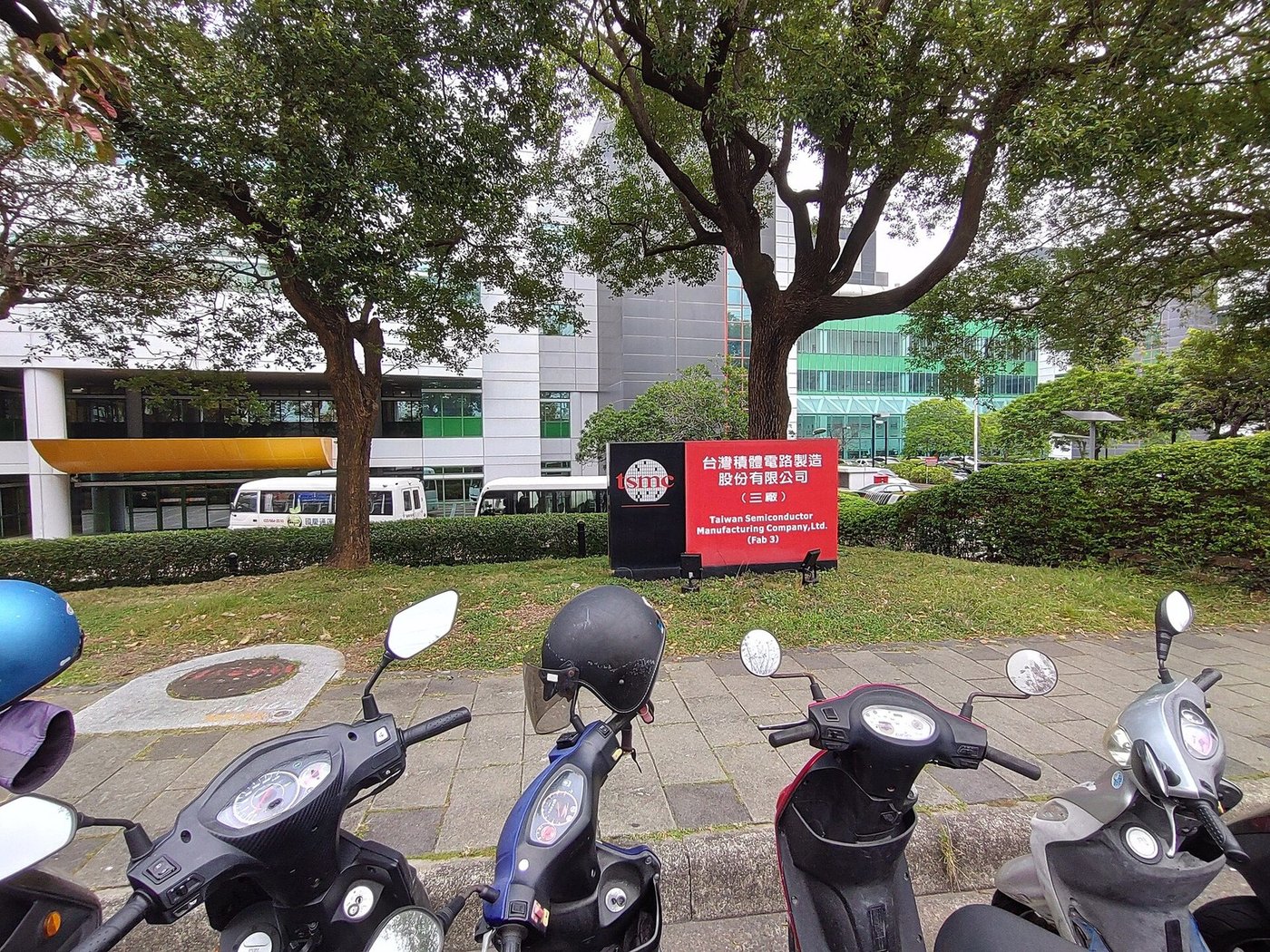
TSMC’s chairman and chief executive, C.C. Wei, made the condition explicit on the company’s third-quarter call on Oct. 15. Asked whether a Terafab arrangement might follow the model of TSMC’s joint ventures in Japan and Germany, both of which TSMC operates, he said: “We are still in discussion. But the fab got to be run by TSMC.” He added that large U.S. customers had asked for more capacity and that TSMC had sent teams to Texas to evaluate a site beyond its Arizona base.
TSMC has the standing to insist. It reported third-quarter revenue of $46.7 billion, up 41% from a year earlier, and guided to $52.3 billion to $54.3 billion for the fourth quarter. Its process technology is the reference point against which other fabs are measured.
Musk’s own schedule illustrates the distance between ambition and execution. He told investors on SpaceX’s third-quarter call that he wants working test chips from a research fab in Austin around May or June 2027, with volume production at Terafab in the third or fourth quarter of 2028. He described the production date as a “vision” rather than a commitment, a word choice that carries weight from an executive who has moved timelines repeatedly and said in the past month that he still has a lot to learn about making chips.
The ownership question is where the money sits. A fab operator typically funds tools and carries yield risk; an owner funds the building and carries demand risk. Musk’s original structure put both on Tesla and SpaceX, with TSMC reduced to a tenant. The arrangement now under discussion would reverse that for operations while leaving equity unresolved. For Tesla, whose capital budget is already committed to vehicles, robots and energy storage, and for SpaceX, which is spending on launch capacity and satellites, the difference between owning a fab and hiring one is the difference between a fixed asset and a supplier contract.
Investors have treated the project as optionality rather than a line item. Tesla closed at $399.81 on Friday, down 0.87%, a valuation that does not appear to price a semiconductor manufacturer inside the company. That may be the most telling datum: the market never fully believed Musk would run a fab himself, which is why the reported softening registers as relief rather than retreat.
The strategic case for Terafab has not changed. Musk’s companies need more advanced chips than the foundries are willing to add capacity for at the pace he wants, and he has said so directly. “We will buy all of their chips,” he said in March, referring to Samsung, TSMC and Micron, but “there’s a maximum rate at which they’re comfortable expanding, and that rate is much less than we would like.”
What has changed is the recognition that buying capacity and running it are separable decisions. TSMC has run this play before: in Japan it built and operates the fab while Sony, Denso and the government hold equity; in Germany the arrangement is similar. A Texas version would give Musk the capacity, the domestic content and the political credit without asking him to assemble a process engineering organisation from nothing.
The capital question underneath is not small. A leading-edge fab of the scale Musk described costs more than the $16.8 billion first phase once tools are counted, and the returns depend on utilisation. A fab that supplies Tesla, SpaceX and xAI is a captive plant, and captive plants carry the utilisation risk of their parent. TSMC’s model spreads that risk across many customers. Musk’s model concentrates it in three companies that share an owner, a balance sheet culture and a history of missing dates.
Intel is the loose end. It was the first public partner and is expected to supply 14A, but a plan in which TSMC builds and operates the plant raises the question of what that process commitment means if the operator has a competing technology. Neither company has addressed it, and the reported talks do not mention Intel.
The next checkpoint is unglamorous: a signed agreement with a named operator, an investment figure and a capacity number. Until then, Terafab is a groundbreaking with a schedule attached, a partner list that has already changed once, and no one publicly accountable for making the chips.