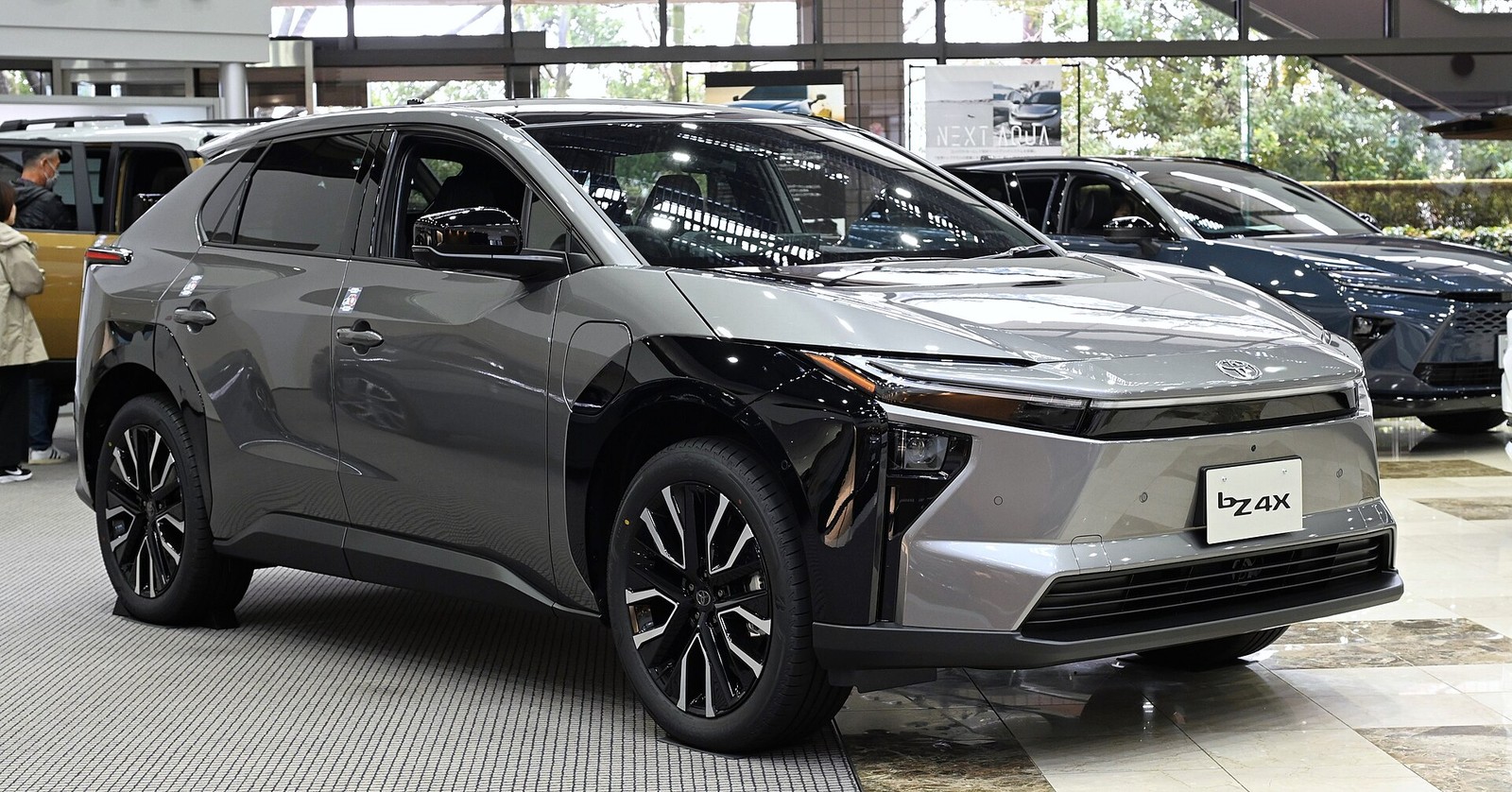
Toyota Motor will build Waymo’s next robotaxi, a Level 4 vehicle, at its Takaoka plant in Toyota City, installing the self-driving hardware on the same line that assembles the base vehicle rather than retrofitting it afterward. The first fleet begins testing and validation in Japan in 2027, with the United Kingdom and other Waymo markets to follow in later years.
The arrangement turns an April 2025 preliminary agreement into a production plan. Toyota says the entire process, from assembling the bZ4X electric crossover to integrating Waymo’s sensors and computers, will happen under one roof. The vehicles will be Level 4, meaning they can operate without a human behind the wheel inside a defined area.
Waymo’s co-chief executive, Dmitri Dolgov, said the company chose Toyota for the safety and reliability of its vehicles, and described the partnership as a way to bring fully autonomous driving to international markets. Toyota executive vice president Hiroki Nakajima said safety technology matters most when it reaches as many people as possible.
Building the robotaxi on a production line is the part that matters commercially. Waymo has until now equipped vehicles in separate facilities, a slow process that limits how quickly a fleet can grow and adds cost per car. Moving the integration into the plant makes the robotaxi a factory option, priced and scheduled like any other variant, which is the difference between a demonstration fleet and a product.
Japan is a deliberate first market. Waymo said in September that it would open its service to Tokyo riders in 2027 with Nihon Kotsu, the city’s largest taxi operator, and the GO ride-hailing app, aiming for roughly 100 vehicles subject to regulatory approval. Japan amended its road traffic law in 2023 to permit Level 4 services in designated areas, giving operators a legal route that most countries still lack.
Japan’s taxi industry has a chronic shortage of drivers as its workforce ages, which gives the government a reason to tolerate experiments that would face more resistance elsewhere. A vehicle that drives itself also solves a problem the industry cannot solve by hiring.
The country also suits the vehicle. Tokyo’s streets are dense, well mapped and heavily policed, and the taxi industry is organised around dispatched fleets rather than individual drivers, which is closer to how a robotaxi network actually runs. Japanese-market bZ4X models are right-hand drive, as are British ones, which explains why those two markets are named before continental Europe, where the vehicle is sold in left-hand drive.
Liability follows the same logic. When the hardware is fitted at the plant, the boundary between a manufacturing defect and a software fault is drawn by contract before the first fare, not litigated after the first crash.
The customised bZ4X carries automatic doors, a power liftgate and more rear legroom than the retail version, changes aimed at riders who need help getting in and out. Waymo says that in the areas where it operates its vehicles are up to 20 times safer than human drivers on serious crash injuries, a figure drawn from its own claims data and one that regulators will want to examine independently.
The background is a partnership that has taken time to produce hardware. Toyota and Waymo announced their tie-up in April 2025, when the American company was looking for a mass-market vehicle platform and a manufacturer that could build at scale, and Toyota was looking for autonomy software it had failed to develop convincingly on its own. Toyota’s own automated driving efforts had concentrated on advanced driver assistance rather than full autonomy, and its investment in the software stack lagged the leaders.
Scale is the test. Waymo operates commercial service in Phoenix, San Francisco, Los Angeles, Austin and Atlanta, and has been adding cities faster than it has been adding vehicles, a constraint that a factory partner is meant to relieve. The company has said it intends to expand into more markets in 2026 and 2027, but each new city requires mapping, depot space, charging and a regulatory negotiation that takes months.
Competition is moving in the same direction. In China, Baidu’s Apollo Go already runs fully driverless paid rides in several cities on vehicles built with local partners, and Pony.ai and WeRide are pursuing similar arrangements. The Chinese operators have the advantage of a permissive regulator and a domestic supply chain that produces lidar and compute at lower cost.
What the Toyota deal does not settle is who owns the customer. Waymo runs the service, the app and the data; Toyota supplies the vehicle and the factory. Carmakers have spent a decade trying to avoid becoming suppliers of hardware to software companies, and this agreement accepts that role in exchange for volume and a share of the learning.
For Toyota the calculation is different from Waymo’s. The group sells roughly ten million vehicles a year and can amortise the bZ4X platform across far more units than a robotaxi fleet will absorb. If autonomy arrives slowly, Toyota still has a crossover to sell. If it arrives quickly, Toyota has a place on the line.
The near-term risk sits with the regulators. Japan’s approval process for Level 4 operations is defined but narrow, and the Tokyo service depends on permits that have not been granted. Britain has legislated for autonomous vehicles but has not yet licensed a commercial service at this scale.
Waymo has promised rides in Tokyo in 2027. The factory in Toyota City is where that promise either becomes a schedule or slips.