The job listing is short and does not contain a picture. Amazon is recruiting for a newly formed home robotics team, and the description of the work is a single negative: the team is building a robot that is not yet on the market. CNBC found the postings on Monday. There is no name for the product, no launch window, and no explanation of what it does that the machines already in Amazon’s catalog cannot.
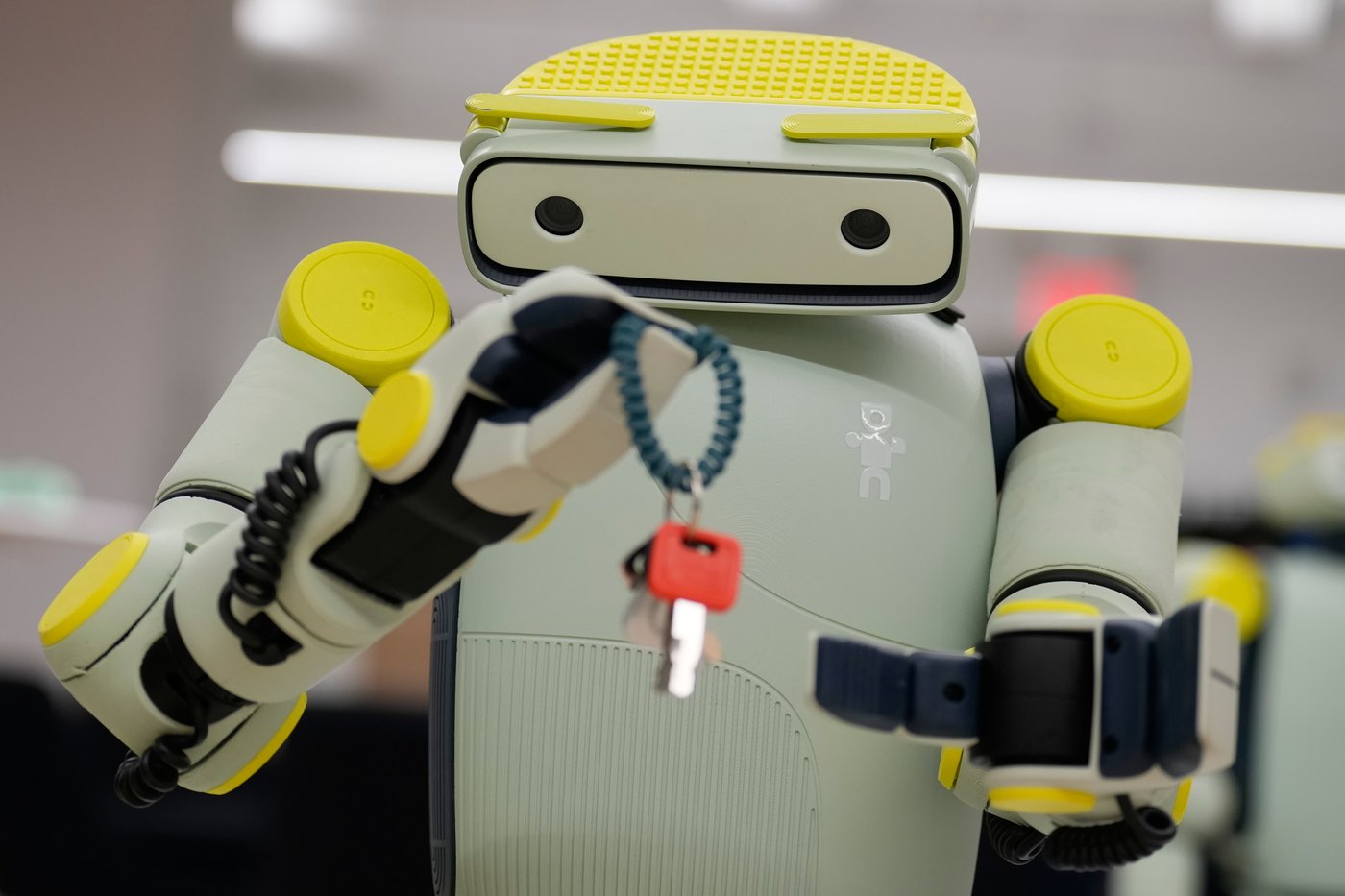
The machine it follows is Astro, the wheeled home assistant Amazon has been selling for several years. Astro has devoted owners, the kind who give the device a nickname and defend it in comment threads. It has also been received, by most of the people paid to evaluate such things, as a product close to the scrap heap: useful in narrow tasks, expensive for what it does, and awkward in a way that hardware cannot fix with a software update.
That matters because the home is the one large surface Amazon has never held with a device. The company’s speakers and cameras are in a great many houses, but they are endpoints for a voice service rather than machines that act. A robot that could act, moving through rooms and doing work rather than answering questions, would give Amazon a physical position in the household at the moment when every large technology company is trying to turn an assistant into something that completes tasks instead of describing them.
What the team is doing beyond hiring is not public. The postings describe an organization being assembled rather than a product being finished, and the company has not said whether the work is a successor to Astro, a different form factor, or a research effort that may never ship. That the listing exists at all is the disclosure.
There is a technical reason the timing is plausible. The hard part of a home robot used to be the software: every behavior had to be written, and every room defeated the code written for the previous one. Models that can plan a sequence of steps from a plain description change that calculus, because a machine can be given a goal and left to work out the moves. A robot with a capable model inside it needs less bespoke engineering per task, which lowers the cost of the second attempt at a category.
The people who study home robotics are less optimistic, and their objection is not about models. A factory floor is designed to be legible to a machine. A house is not.
Stairs, pets, toys on the floor and furniture that gets moved twice a year make every home a different environment, and a robot that works in one may fail in the next one down the street. The failure mode is not a crash. It is a machine that stops in a doorway and waits for a person who has gone to work.
Cost is the older problem. Consumer robots have repeatedly died at the point of purchase rather than in the laboratory, because a device that costs many times a vacuum cleaner has to do more than a vacuum cleaner to justify the space it occupies. Amazon can subsidize hardware in a way a startup cannot, and it has done so before, but a subsidy is a bet that the device will eventually earn its place through services, and that bet has not paid off in this category yet.
Privacy is the question the company will be asked first. A camera that moves through a house records things a stationary speaker never sees, and Amazon’s existing devices have already made it the subject of litigation, regulation and a certain amount of household argument. A machine that navigates by watching will need an answer that is more specific than a settings menu.
The competitive frame has shifted as well. Several labs now sell agents that operate software on a user’s behalf, and the next step in that progression is an agent that operates in the physical world. Whoever gets a useful one into homes first sets the terms on which the category is judged, and a subscription attached to a robot that does chores is a more durable business than one attached to a speaker that plays music.
Amazon has killed hardware before and kept going, which is the part of its record that supports the decision. It has also shipped devices that succeeded because they were cheap enough to be bought on impulse and useful enough to be kept. The company knows the difference, and the hiring suggests it has decided the second attempt is worth funding.
Success would be visible in three numbers rather than in a demonstration video: a price a normal household will pay, a ship date the company is willing to repeat, and a return rate low enough that the device stays in the house after the novelty fades. None of those is in the listing.
For now the evidence is a requisition with no picture, and a robot named Astro sitting in the corner of a room somewhere, waiting to be either replaced or vindicated.