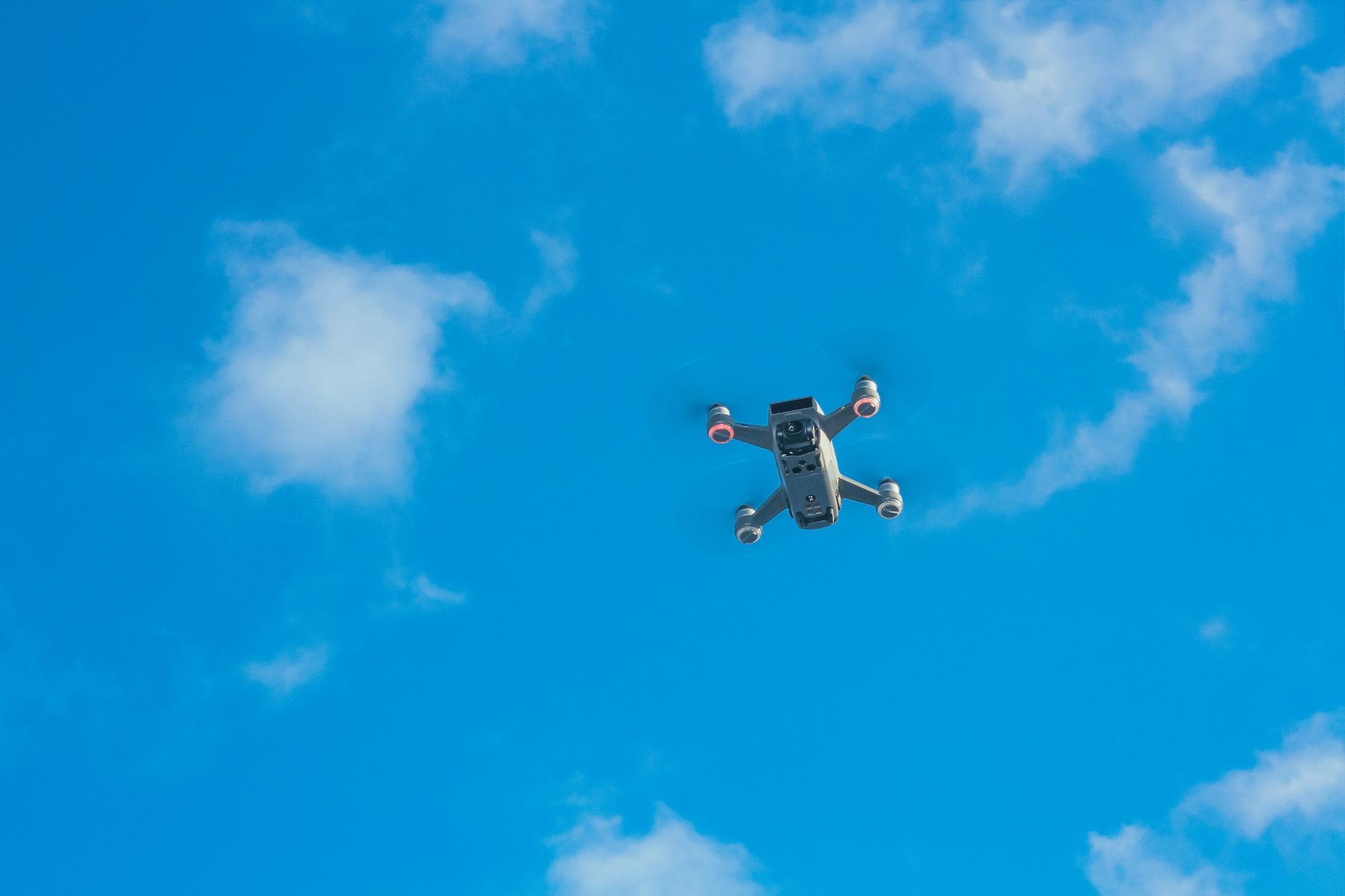
A radio base station is built to listen to handsets. Ericsson wants it to listen to everything else. The Swedish equipment maker is developing a sensing system that reads radio reflections off a drone’s airframe to identify and track it, according to TechRadar, which reported the work on November 8. The company plans a limited commercial pilot in 2027 and a wider deployment in 2028, starting with the airspace around airports and military facilities, where unauthorized flights are the complaint operators hear first.
The appeal is arithmetic carriers already understand. A cell site is a tower with power, backhaul, a known location and a maintenance contract. If software can turn the same radio into a short-range sensor, the added cost is a radio card and the compute beside it, not a new radar installation with its own mast, power run and permit file.
What the system does differs from what radar does, and the difference is why the idea is interesting rather than redundant. Radar sends a pulse and listens for the return, which needs a transmitter dedicated to the job and a frequency allocated for it. A cellular sensor reads reflections of signals the network is already broadcasting, and it reads them at many points at once, because a modern network has many antennas.
A drone crossing a cell boundary produces a sequence of returns from different angles, and software that fuses them can estimate position and, in principle, velocity. That is what Ericsson is selling: not a better radar, but a denser one. Density is the point, because a single reflection off a plastic body is a weak signal, and a network of receivers is a way of collecting many weak signals at once.
Physics still sets the limits. The return competes with reflections from buildings, vehicles, trees and, at an airport, aircraft on the ground. Wind moves the clutter, rain weakens the signal, and a system tuned to find a drone at the fence line may struggle to hold it at two kilometers.
The commercial case starts where the liability is sharpest. Airports have spent a decade dealing with drones near approach paths, and the bodies that run them have budgets, insurers and regulators who want an answer. Military sites have the same problem with a different threat model.
Both are places where a fixed radar installation is slow to site and slow to permit, and where a cellular network is installed and permitted already. That is the wedge Ericsson is aiming at. It also explains why the first deployments are described as limited and commercial rather than national.
Regulatory questions arrive with the first contract. Sensing turns a communications network into a surveillance instrument, and the rules for the two are not the same. A spectrum license describes what a carrier may transmit, not what it may infer from the reflections.
Aviation authorities will ask who is responsible when the system names an object and somebody acts on the name. Privacy rules will ask whether a network that can track a drone can track a person carrying a phone, and the honest answer is that the signal processing is similar. That is why the first customers are expected to be sites with a security reason and a legal one.
Operators have a second reason to be careful. A false positive at an airport is not a data error; it is an evacuation, a delayed arrival or a confrontation with a member of the public, and the carrier that supplied the sensor will be asked to explain it. A system sold as an aid to security has to be calibrated against the cost of being wrong, and that cost lands on the operator’s reputation rather than on the vendor’s balance sheet.
The competitive picture is less settled than the technical one. Radar makers have decades of clutter data and a customer list, and they will argue that a network tuned for phone calls is not a sensor. Drone makers are already flying lower, slower and in shorter bursts to stay under detection.
The carrier’s advantage is coverage and cost. The radar maker’s advantage is proven range and an installed base of people who know how to use it. The 2027 pilot tests whether the first advantage is enough to win a customer with an incident on the record.
The supplier question is who owns the relationship with the airport. Ericsson sells radios to carriers, and carriers sell connectivity to the airport authority or to the systems integrator that manages its security. A sensing product adds a third party to that chain, and the party with the customer relationship is not the one with the sensor.
That is a distribution problem before it is a technology problem, and it is one reason a company with a strong radio business would rather license the feature to an integrator than sell it directly. What to watch is not the demonstration, since vendors demonstrate sensing at trade shows. The signal is a named operator, a site, and a contract that pays for the radio cards.
If a carrier signs for an airport perimeter in 2027, the technology has a reference customer and the 2028 expansion has a template. If the pilot stays a pilot, the reason will be in the false-alarm rate, and the market will move to the next use of the same radios, which is probably the one that sells more bandwidth.