SAN ANTONIO — At 5 a.m. Eastern on Monday, a short post from Tesla’s robotaxi account on X said the service was open in San Antonio. By late morning, Robotaxi Tracker, a third-party service that scans the company’s app for cars in operation, had logged none.
The launch is Tesla’s eighth robotaxi market. The first-day service area covers roughly 274 square miles, taking in downtown and the corridors along I-10, I-35, 281, 410 and 1604. By the company’s own comparison, that is more than four times the ground Waymo covers in the same city.
Tesla did not say how many cars it would put on the road, which hours they would run, or whether a safety monitor would ride in front. Those details have accompanied every previous launch, usually in materials sent to local officials rather than in a single social post at dawn.
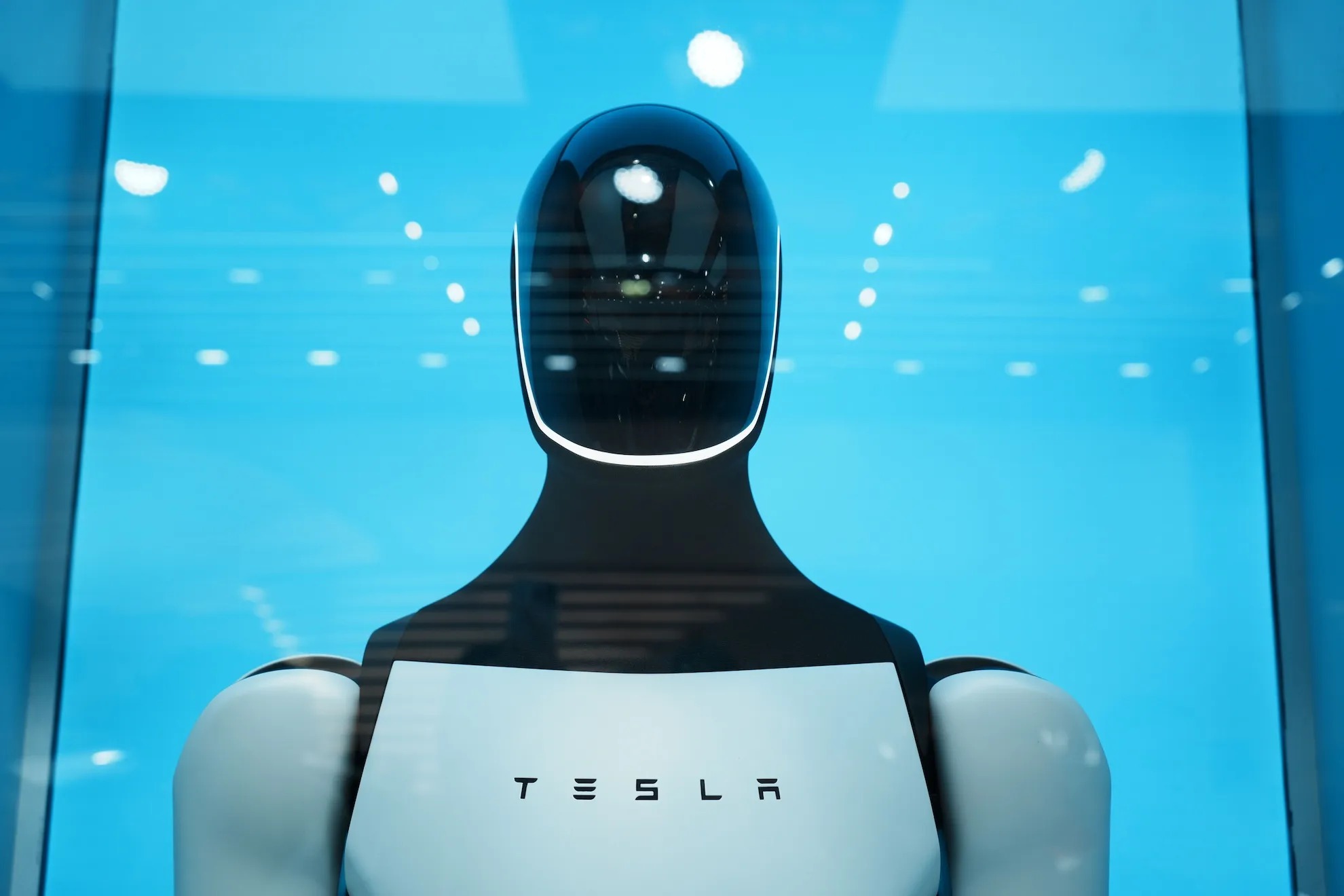
Hours later, Elon Musk was talking about a different machine. Optimus, the company’s humanoid robot, would begin reaching customers around the end of 2027, he said, and the first units would probably be leased rather than sold outright.
He put the cost of an early machine near $30,000, falling toward $20,000 as production scales. Full mass production is at least a year away. Tesla intends to work the robots inside its own factories before any go to outside buyers. The company says one machine does the work of about five people.
Leasing changes the arithmetic in ways that matter more than the price. A robot that is rented never leaves the balance sheet. It throws off a monthly fee and a steady stream of service obligations, and it carries a residual value nobody can price, because no secondhand market for humanoid robots exists. Selling books revenue in a single quarter. Renting builds an annuity and hands the depreciation risk to Tesla.
For a manufacturer that has spent a decade arguing it deserves a technology multiple rather than an auto multiple, the annuity is the whole point. Car sales rise and fall with credit conditions and model cycles. Fleets, in theory, compound.
People in the industry have been circulating talk of reservations opening in early December. The company has not confirmed it. The program has slipped before: Optimus was unveiled at Tesla’s 2021 AI Day, and reporting last year described a pause in component work over the dexterity of its hands.
San Antonio fits the other half of the strategy neatly. Texas has kept its rules for autonomous vehicles light, and Tesla’s Austin base sits about eighty miles up the interstate. The city spreads across a beltway, hosts two large military installations and draws a steady flow of airport, hotel and convention traffic, the kind of repeatable trips that fleet operators study before they commit cars.
The city also sits at the edge of a cluster of markets where ride-hailing competition is already sharp. Uber and Lyft have spent years building density in San Antonio, and Waymo has been signing partnerships with both as it enters new metros. A Tesla car has to win trips one at a time, and the first impression of a vehicle arriving with nobody in the driver’s seat is the only marketing the service gets.
Waymo, Alphabet’s robotaxi arm, got to Texas first and has been adding cities at a pace Tesla has not matched. Its vehicles run without a person behind the wheel in most of its markets. Tesla’s fleet still leans on employees at the wheel in California, where regulators have not cleared driverless commercial service, and it began in Austin with a small, invitation-only group before widening access.
The bigger question is what investors are paying for. Tesla’s shares have long traded at multiples that auto analysts cannot reconcile with car margins, on the assumption that software and robots will eventually supply the earnings. A new city and a leasing model in the same news cycle keep that assumption alive. Neither settles whether the unit economics work.
The company’s board has tied much of Musk’s compensation to exactly this kind of transition, with tranches that vest on market value and on operational targets the company set for itself. Every quarter that passes without a commercial fleet is a quarter in which those targets look further away, which explains why announcements of new territory carry more weight than their revenue would justify.
Humanoid rivals are not standing still. Figure AI and Apptronik have signed pilot deals with manufacturers, and Chinese vendors have pushed quoted prices down sharply, which is one reason Tesla’s own cost targets keep sliding toward $20,000. A lease also blunts the sticker shock that has slowed adoption of industrial robots generally, since factories can expense a monthly payment against a capital budget they have already spent.
There is a regulatory edge to the leasing plan as well. A rented machine stays under Tesla’s care, which lets the company control maintenance, collect operating data and pull units back if a design flaw surfaces. Sold machines scatter into warehouses where the company cannot see them.
For now the map is live and the tracker is quiet, a combination that has preceded other Tesla launches and been explained away later. Whether Monday’s silence reflects a slow first morning or a service that is not quite running is a question the company has not addressed. The same is true of the robot: a price, a date and a business model, all announced before a single unit has been handed to a paying customer.