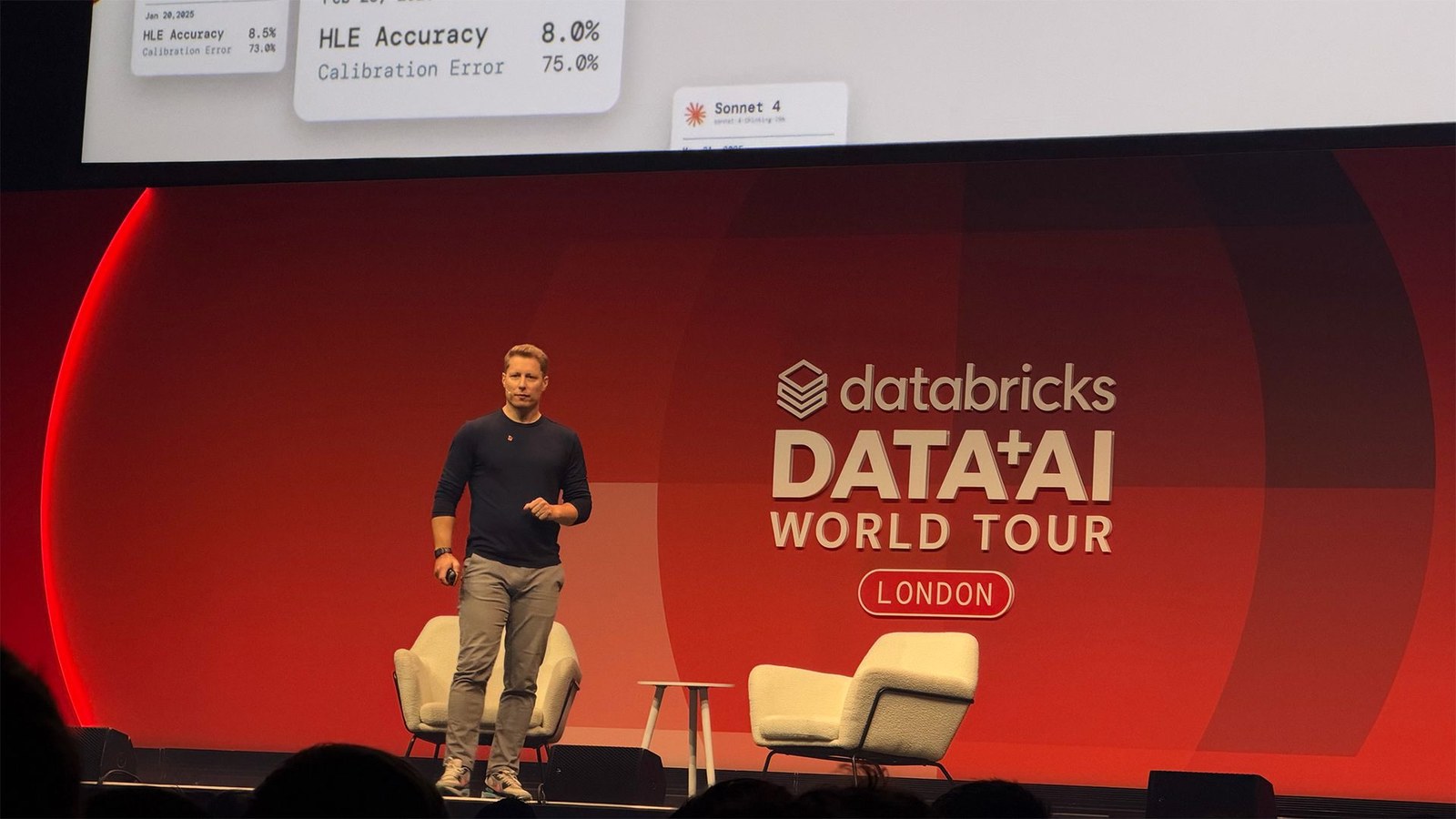
Databricks said on Nov. 11 that it will spend about $3 billion over three years across Europe and the Middle East, the largest commitment the company has made outside North America. The plan is a bet that the next phase of enterprise AI will be bought in the regions where the data sits rather than exported from California.
More than $500 million of the total goes to the Netherlands, where the company will expand its research and development center and double the team based there. The remainder covers the wider region, including an office being prepared in Abu Dhabi.
The Dutch number is the specific one, and it says something about what the company thinks it is buying. Research and development spending is a commitment to people rather than to buildings, and doubling a team in a country with a tight engineering labor market is a statement that the work will be done there for years.
The Gulf piece is different in kind. An office in Abu Dhabi is a response to clients who have begun asking for their data to stay in the country, a requirement that has become a condition of doing business rather than a preference. Sovereign customers with capital to spend on AI want the platform inside their borders, and a vendor that cannot host there does not get the contract.
Data localization sounds like a hosting decision and behaves like an engineering one. A platform that queries across regions has to be rebuilt so that data, metadata and logs all respect the boundary, and every feature that assumes a global pool of storage has to be reconsidered. The cost of that work is not the data centers. It is the years of product engineering required to make a global system behave locally.
Europe’s rules push in the same direction. Companies operating under the region’s data protection regime have to know where information is stored and who can reach it, and the documentation burden has grown as regulators have become more specific about automated processing. A platform that can show a customer exactly where a query ran is easier to sell to a compliance department than one that cannot.
That is the commercial opening Databricks is spending against. Enterprise AI work runs through the data layer, and whoever owns the data layer decides which models the company can use. A platform positioned between the customer’s stored data and whichever model the customer chooses has a claim on the budget that a model vendor does not, because the data does not move when the model changes.
The competitive pressure comes from two directions. The large cloud providers sell their own data platforms and would prefer that customers stay inside a single cloud, and Databricks has built its business on the argument that analytic workloads should not be tied to one provider. That argument travels well in Europe, where multi-cloud arrangements are common and where procurement rules often discourage dependence on a single supplier.
The other pressure is price. European enterprises buy software differently from American ones: budgets are smaller, approval chains are longer, and the preference for open formats is stronger because switching costs are treated as a governance issue rather than a technical one. A vendor that arrives with a large platform and a large price has to justify both, and the justification usually runs through interoperability.
The three-year structure of the commitment is worth noting. A company that expects to be public eventually spends like this before it is, because the spending is what makes the revenue credible to the institutions that will price the shares. Research centers, regional offices and local hosting are the fixed costs of being a global platform, and paying them early is a way of buying the right to be treated as one.
The risk is timing. The spending lands before the revenue does, and the revenue depends on European enterprises moving from experimental AI projects to production systems that run on a purchased platform. That move has been slower in Europe than in the United States, for reasons that have as much to do with works councils, legacy systems and risk appetite as with technology.
Talent is the other constraint. Doubling a team in the Netherlands means competing with ASML, with the Dutch banks and with every American company that has opened an engineering office in Amsterdam for the same reason: a deep pool of technical staff, a working culture that suits distributed teams, and a legal system companies find predictable.
Abu Dhabi carries a different set of expectations. Gulf governments have been building AI capacity with sovereign money, and they have been explicit that the capacity should be domestic. A vendor that opens an office there is buying access to that spending and accepting the conditions attached to it, including the requirement that the work be done in-country by people the government can reach.
What Databricks is really buying with the $3 billion is position. The company is placing engineering, hosting and sales capacity in the regions where its largest prospective customers have decided that data location is non-negotiable, and it is doing so before those customers have finished choosing platforms.
The commitment has been made and the offices will open. Whether the spending returns anything depends on European and Gulf enterprises buying a platform rather than a set of tools, and on whether the company can be as local as its customers now require while remaining one product.