
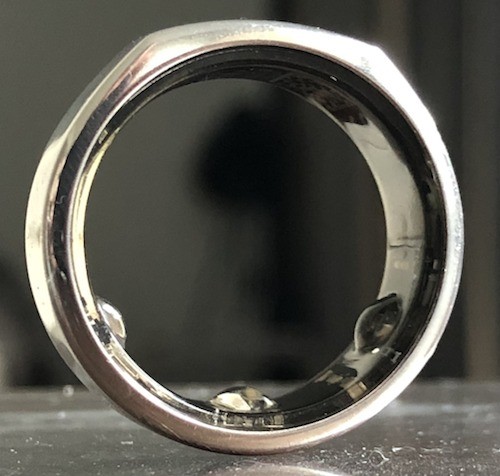
Oura agreed on Nov 10 to buy Counsel Health, an AI-native primary-care company, for $625 million, a deal that moves the ring maker from measuring health to acting on what it measures.
Counsel pairs conversational artificial intelligence with practising physicians. A user describes a problem to the software, the software triages it, and where a case warrants it the person is connected to a doctor. The service is already integrated into the Oura app, and the two companies plan to extend it into prevention, prescriptions, laboratory work and the management of chronic conditions.
The logic of the purchase is simple and slightly uncomfortable. A ring that tracks sleep and heart rate produces data, and data without a next step is a dashboard. Users who see a poor night’s sleep or a rising resting heart rate ask the same question: what should I do about it? Until now Oura’s answer was to show a trend line. With Counsel, the answer becomes a conversation, and possibly a prescription.
That is a different business. Monitoring is a consumer product with a subscription, a return rate and a hardware margin. Care is a clinical service with licensure, liability, record-keeping and a reimbursement question attached. The two sit next to each other in the app and nowhere else in the company, which is why the acquisition reads less as a feature purchase than as an entry into a regulated industry.
The price reflects that. Counsel had raised about $36 million in total, including a $25 million Series A led by Andreessen Horowitz and GV. Paying $625 million for a company at that stage is a bet on the combination rather than on the standalone product, and it prices two assets that are hard to build separately: a supply of clinicians willing to work through software, and a distribution channel already sitting on a large number of fingers.
Distribution is the scarce half. Oura’s rings are sold as consumer devices and worn continuously, which makes the company one of the few in health technology that talks to its users every day without an appointment. That habit is worth more to a clinical service than another app store listing, and it is the reason a hardware maker can contemplate owning the consultation layer instead of renting it from a provider network.
The competitive pressure is visible in the product cycle. RingConn and Ultrahuman have spent two years closing the gap on sensor accuracy and battery life at lower prices, and the argument that once separated Oura from the field — that its software was better — gets harder to sustain when the hardware converges. Adding clinical service is a way to compete on something a rival cannot copy in a season.
There is a strategic symmetry to the timing as well. Oura postponed its listing this year, which leaves it with a private valuation to justify and investors who will eventually want a growth story that is not tied to how many rings ship. Care subscriptions are recurring revenue with a different ceiling, and a company that sells both looks more like a platform than a device maker when the roadshow comes.
The risks are not small. Health data gathered for wellness purposes carries one set of permissions and data gathered inside a clinical relationship carries another, and merging the two requires consent that consumers rarely read and regulators do notice. A user who bought a ring to sleep better did not necessarily agree to have his heart-rate history reviewed by a physician.
Then there is the question of supply. Physicians are the constraint in every market that trains them slowly, and a service that triages with software and escalates to a human only shifts the bottleneck rather than removing it. Counsel’s model depends on having enough doctors to absorb the cases the software cannot close, and on paying them in a way that works at consumer subscription prices.
Oura is also placing a bet on what patients want. The alternative view is that people want a doctor who knows them, and that a chat interface routing them to whichever clinician is free is a worse product than the one they already have, just faster. The counter is that most people do not have a doctor who knows them, and that a fast answer at two in the morning beats an appointment in three weeks.
For the wearable industry the deal sets a marker. Sensors, batteries and algorithms were the differentiators of the last decade, and they are now commodity parts available to anyone with a supplier list. The next layer is what the device does with the reading, and doing something usually means employing someone licensed to do it.
Oura has not said how the service will be priced after the acquisition, or whether it will be bundled into the existing subscription. Those numbers will decide whether this is a health company with a hardware arm or a hardware company that bought a clinic. The rings will keep counting either way.



