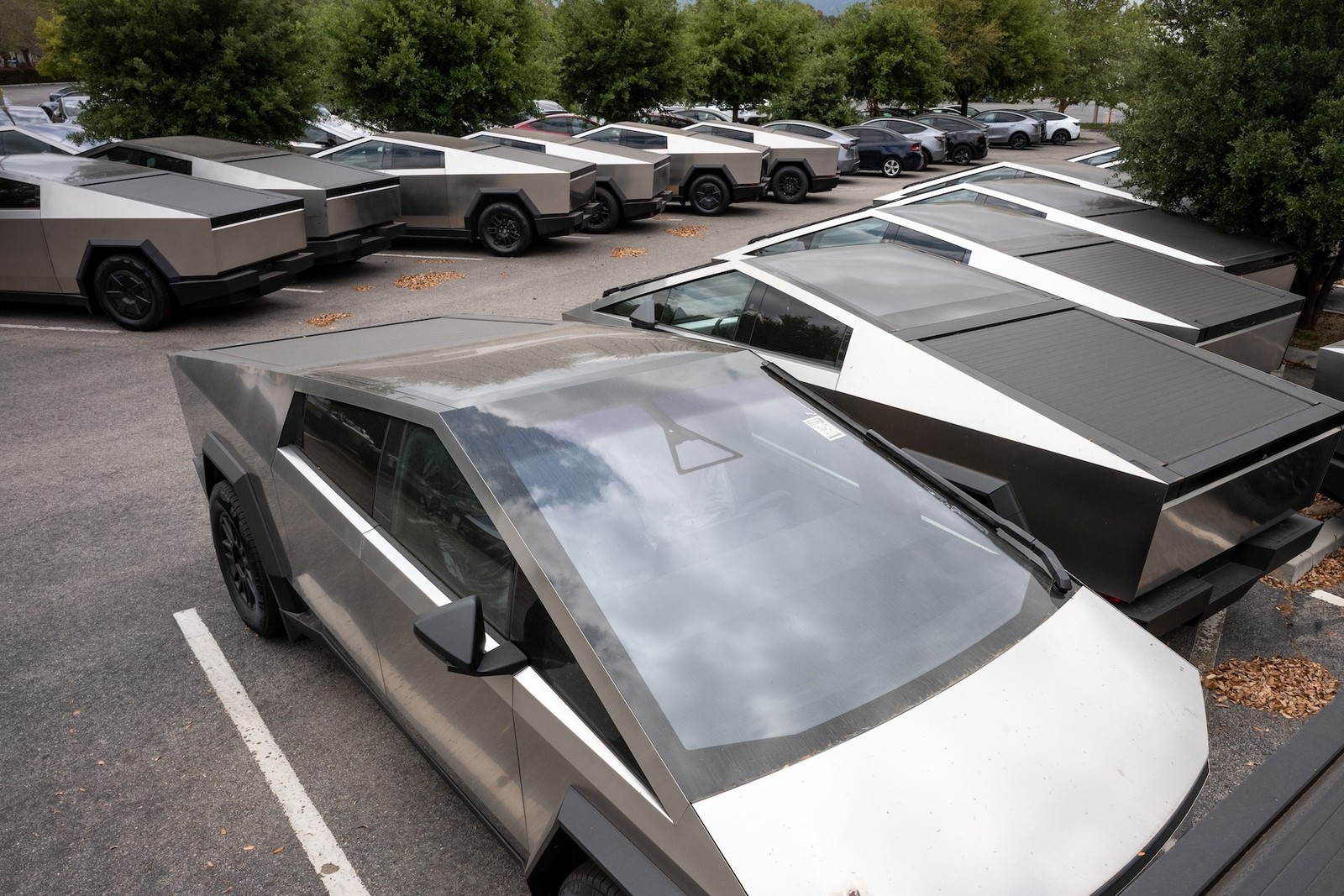
Tesla stopped taking orders for the Cybertruck on November 10. The only version still available is the Cyberbeast, the fastest and most expensive trim, and its price went up by $7,500. The company has said the truck will end production in 2027, when the line is converted to build the Cybercab.
The two moves were made on the same day and belong together. Closing the order book simplifies what is left to build: one configuration, one set of parts, one price. Raising the price on the surviving version protects the margin on the units still in the queue. Neither is a growth decision. Both are the arithmetic of winding something down.
Tesla has never been a company that retreats quietly from a product. The trimming of the range is the closest thing to an admission it has offered that the truck did not become what it was supposed to.
The Cybertruck was meant to do two things. It was meant to take a slice of the most profitable segment of the American vehicle market, where full-size pickups sell in volume at prices that support heavy margins. And it was meant to demonstrate that Tesla could build a vehicle unlike anything else on the road, in stainless steel, with a shape that no other manufacturer would risk.
What it did instead was occupy a category of one. The buyers who wanted a conventional truck bought one from a company that had been building them for decades. The buyers who wanted a statement bought the Cybertruck, and there are only so many of those. A vehicle that defines its own segment sells well at first and then finds the size of that segment, which is almost always smaller than the launch numbers suggest.
Cutting to a single trim is what manufacturers do when a model’s volume falls below the level that justifies complexity. Every configuration carries its own parts inventory, its own build sequence, its own certification work and its own warranty exposure. At high volume those costs spread thin. At low volume they accumulate, and the answer is to strip the line back to the version that sells.
Choosing the Cyberbeast for that role is a decision about who the remaining customer is. The top trim has the highest sticker and the highest content, which means the highest revenue per unit and the most room to absorb a price increase. It also means the remaining buyers are the ones least sensitive to a $7,500 move, which is a polite way of saying the volume is expected to be small.
The price increase itself is the interesting signal. Demand that is falling usually meets falling prices. Tesla raised the price on the only version left, which suggests the constraint is not demand but cost, or that the company has decided the remaining order book is deep enough to bear it. Either way, the customer buying a Cybertruck in the final year is paying more for less choice.
The 2027 end date and the Cybercab conversion were disclosed before this week. What November 10 did was make the plan operational. A production line that will be repurposed has a finite number of builds left, and every decision between now and then is about extracting value from the run rather than building a franchise.
That is a strategic bet with a clear logic and an unclear payoff. The company’s valuation has rested for several years on the proposition that its future is autonomy rather than manufacturing, and the Cybercab is where that proposition becomes a product. Converting a line that builds a low-volume truck into a line that builds robotaxis is, from a capital standpoint, the cheapest way to make the transition. From a demand standpoint, it assumes the robotaxi market arrives on schedule.
The second event of the day was a coda to a much older story. The Securities and Exchange Commission applied to close the investor compensation fund created after the 2018 episode in which Elon Musk wrote on social media that he had funding secured to take Tesla private. The fund has distributed $41.53 million to 3,350 investors. With the money paid out and the claims resolved, the agency is asking a court to wind the account up.
The mechanics of such a fund are how securities enforcement actually reaches people. A settlement produces a pool of money, a claims process opens, investors who traded during a defined window file documentation, and an administrator verifies the claims and pays them proportionally.
For the company, the closure of the fund is the last administrative step in a case that has been part of its public story for eight years, cited in every discussion of whether its chief executive can be trusted with a disclosure.
The coincidence of the two announcements is the kind that invites a narrative. On one day, the order book for a vehicle that was supposed to redefine a segment closed down to a single expensive trim, and the last piece of a case about a promise that was not true was filed away. The company’s defenders would call that bookkeeping. Its critics would call it a pattern. Neither would be describing anything the filings do not already show.
What the filings show is a company that is narrowing its product line while widening its bets. It is ending a truck, ending a case, and moving a factory toward a vehicle that does not yet have a market because the market it needs does not yet exist in regulatory form in most American cities. That is either the most disciplined capital allocation in the industry or the most expensive act of faith in it, and the answer will be visible in the build rate of the Cybercab line long before it is visible in any earnings call.