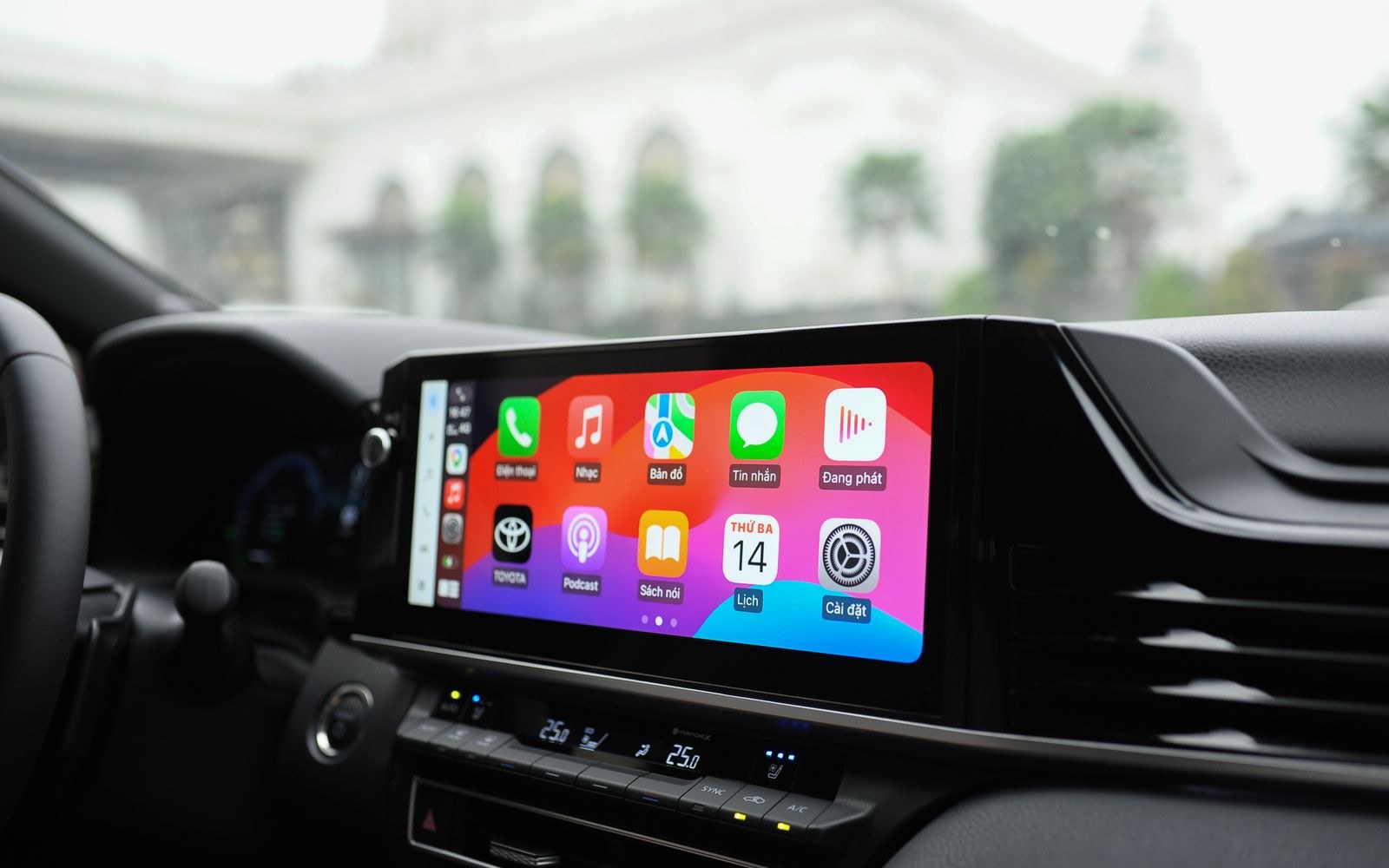
The commute averages about an hour for millions of drivers, and for most of that hour the screen in the middle of the dashboard has done little more than play music and show a map. Starting Wednesday, iPhone users can tap an icon there and talk to Gemini.
Google said in a blog post that its Gemini app is now available on Apple CarPlay, with the full Gemini Live conversation experience running hands-free through the car’s display. Chats sync to the Gemini app on the iPhone, so a summary requested at a traffic light is waiting when the driver parks.
The rollout is global and begins this week for all Gemini users on iOS, in every language Gemini Live supports. Users need an updated app, microphone permission, and at least one prior conversation with Gemini Live on the phone before the icon appears on the car screen.
The features Google is promoting are the ones that need hands and eyes elsewhere. Drivers can ask for a daily brief, have unread email summarized or a reply drafted if Gemini is connected to Gmail and Calendar, get a lunch recommendation near an exit, or rehearse a presentation out loud with the assistant playing a skeptical vice president.
None of that is new capability. It is new surface: Gemini Live has been available on Android Auto and on cars with Google built in since last year, and the same conversations have been possible on a phone in a cupholder for anyone willing to hold it.
What changed is Apple’s position. With iOS 26.4, released in February, Apple began allowing third-party chatbot apps onto CarPlay, a screen it had guarded for a decade. ChatGPT arrived in March. Claude and others followed, and Gemini was the largest holdout among the major assistants.
Apple’s own assistant is the reason for the caution. The company unveiled a revamped Siri at its developers conference in June, after a delay of more than a year, and the new version leans in part on Gemini models under a multiyear agreement the two companies announced in January.
So the arrangement is stranger than a normal app launch. Apple is paying Google for the intelligence inside its own assistant while Google ships a competing assistant onto Apple’s screen, where it can be used without Siri at all. The two companies are partners, suppliers and rivals on the same dashboard.
For Google, the appeal is distribution. Gemini’s consumer business depends on being where people already are, and the phone is crowded with assistants. The car is one of the few remaining places where voice is the only sensible interface, and where a driver will talk for twenty minutes without touching anything.
For Apple, the calculation is smaller and less comfortable. Opening CarPlay to rivals reduces the risk that regulators treat the dashboard as another walled garden, and it gives iPhone buyers one less reason to leave. It also hands competitors an hour a day of undivided attention in a place Apple controls.
Carmakers are building their own assistants into the same screens, usually with a wake word and a smaller set of skills. A phone-based app that arrives with the driver’s calendar and inbox competes with those systems for the microphone, and it does so without the manufacturer’s testing. Automakers and regulators have spent years pushing touchscreens out of drivers’ reach and voice controls in. A conversational assistant that can be interrupted mid-sentence suits driving better than a menu does, though a model that answers at length is not obviously less distracting than a text message.
Google’s advantage in the car may be the account rather than the model. A driver who has connected Gmail and Calendar is asking about his own day, and the answer requires permission only Google holds. That is a moat built from logins, and it travels into Apple’s operating system intact.
There is a commercial logic underneath the ceremony. Gemini Live consumes tokens, and a long hands-free conversation in traffic burns through them without producing a click, an ad or a subscription. Google can afford that as a distribution cost. A smaller assistant vendor would have to meter it.
Whether drivers use it is a different question from whether it is available. Voice assistants in cars have a long history of being installed, demonstrated once and abandoned. The habit test is whether a commute conversation becomes part of the day before Apple’s new Siri arrives with a fuller set of controls over the car itself.
Google has now shipped Gemini onto Android Auto, onto cars with Google built in, and onto CarPlay within about a year. The sequence describes a strategy that treats the vehicle as a screen to be colonized rather than a product to be sold, and it does not depend on who made the car.
The dashboard has room for one assistant at a time. Both companies now intend to be that assistant, and only one of them owns the screen.