Samsung’s Austin campus sits behind a security gate on the north side of the city, a set of fabrication halls that have been making logic chips for outside customers since the late 1990s. On Nov 15 the company confirmed it will add 2.7 trillion won to the site, expanding capacity for semiconductors destined for SpaceX’s Starlink satellites, with production scheduled to begin in 2030.
The part in question is a microcontroller, the small processor that runs a single job inside a larger system. In a satellite it might sequence a power bus, drive a reaction wheel or read a sensor, and it does that job for years without maintenance, because nobody can send a technician to low Earth orbit.
That constraint shapes the engineering. A spacecraft alternates between direct sunlight and the shadow of the planet on every orbit, so its electronics cycle through temperature extremes dozens of times a day. Radiation adds a second problem: charged particles can flip a bit in memory or latch a circuit into a state it cannot leave on its own.
Samsung said the devices must hold their behaviour across temperature extremes and under radiation, a specification that is closer to aerospace qualification than to consumer electronics. The company has not named the specific process or the volume it expects.
The 2030 date is the tell. Space-grade parts are designed into a satellite years before launch, and a customer will not qualify a supplier it cannot count on for a decade of production. Committing fab capacity ahead of the design win is how a foundry signals that it intends to stay in the business.
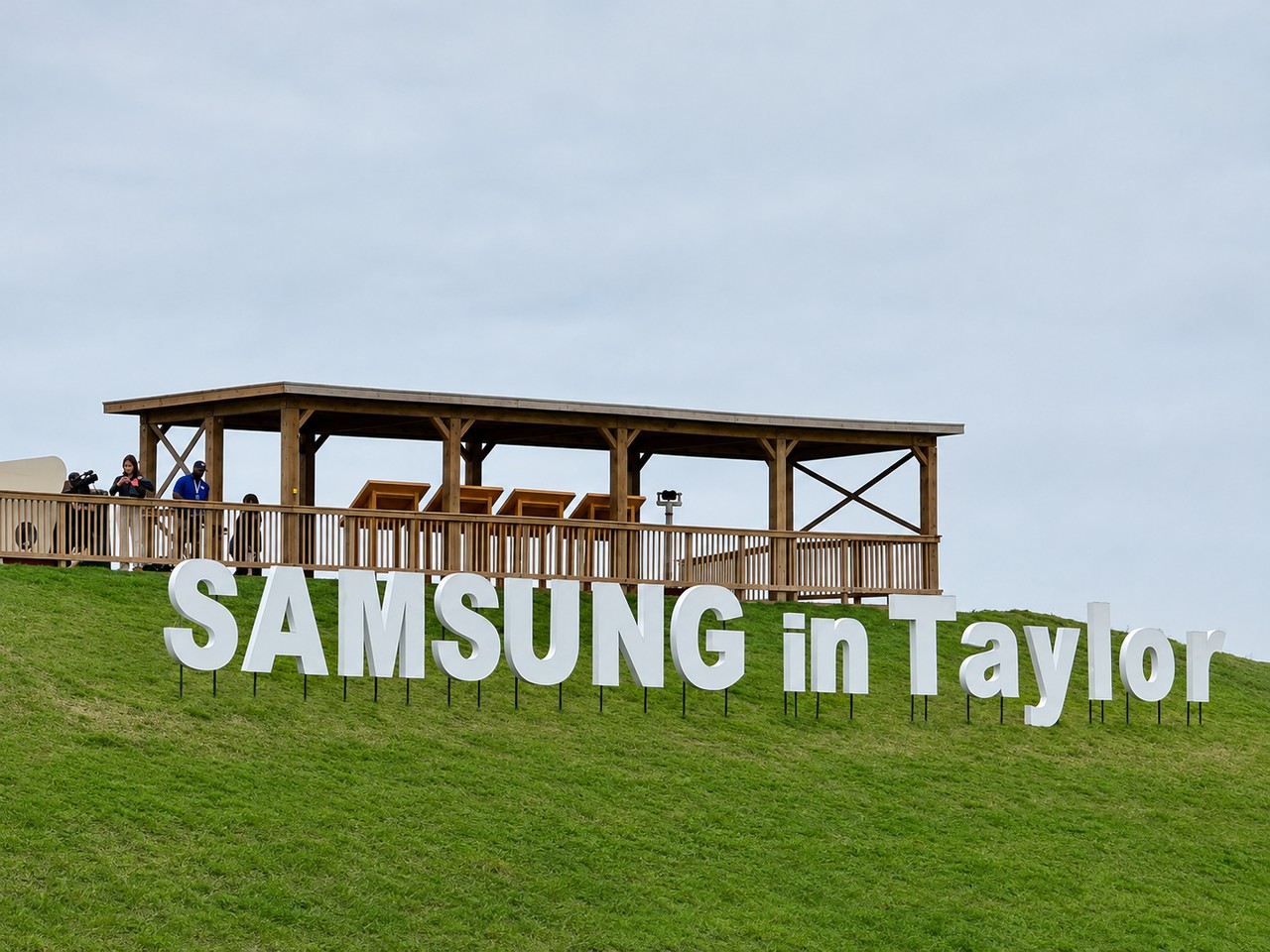
The arrangement also clarifies how Samsung’s two Texas sites divide the work. Austin takes aerospace and satellite chips. Taylor, the newer campus in the same state, is being built around AI logic. The split is geographic convenience and commercial logic at once: the two product families need different qualifications, different customers and different tolerances for defect density.
Starlink gives the Austin line a customer with an unusual appetite for volume. The constellation grows with every launch, and each satellite carries a set of control and power-management components that must survive the same environment. A satellite that fails early is not repairable, which pushes reliability requirements up and unit prices with them.
Samsung has been making embedded processors and analog parts in Austin for automotive and industrial customers for years, work that rewards exactly the kind of long qualification cycles the satellite business demands. The new money extends a franchise the site already has rather than opening a new one, which is the cheaper way to add revenue.
The money is the largest single piece of news in the announcement. At 2.7 trillion won, the commitment is big enough to require board approval and a construction schedule measured in years, and small enough beside the group’s memory spending that it will not move consolidated results on its own.
There is a policy dimension the company has been careful not to overplay. Samsung’s Texas investment has been discussed in Washington and Seoul in the context of American incentives for domestic chip production, and a project that supports a satellite constellation owned by an American launch company fits comfortably inside that conversation. Samsung said nothing about subsidies in its confirmation, and none should be assumed.
For the foundry business, satellite chips are a small, sticky, high-margin corner. They will not fill the leading-edge capacity that AI accelerators absorb, and they will not rescue a quarter in which advanced-node utilization disappoints. What they do is diversify a customer base that has become dangerously concentrated in a handful of large logic buyers.
The comparison with memory is unavoidable inside the group. Memory is a commodity market with violent price swings; aerospace parts are a contract market with audits, traceability requirements and a customer who stays for a decade. The second is smaller, and the second is quieter, which is part of its appeal to a company that has spent two years explaining cyclicality to shareholders.
Samsung’s own framing has been modest. The company described the investment as an expansion of existing capacity for satellite semiconductors rather than a new business line, and it pointed to the 2030 production date as the relevant deadline for investors to watch.
Executives elsewhere in the industry will read the move differently. A foundry that can qualify space-grade parts has demonstrated process control that automotive and industrial customers also pay for, and the qualification itself becomes a marketing asset in markets where reliability is the purchase criterion.
What remains unknown is how much of the Austin expansion is dedicated to Starlink and how much is general-purpose capacity that could serve other customers. Samsung has not broken out the split, and the fab’s floor plan can be reconfigured faster than its customer relationships can be replaced.
The gate on the north side of Austin looks the same as it did last week. The difference is on the capital plan, where a line item that once read automotive and industrial now has a satellite beside it, and a production date in 2030 for parts that will be in orbit long after the building is obsolete.