
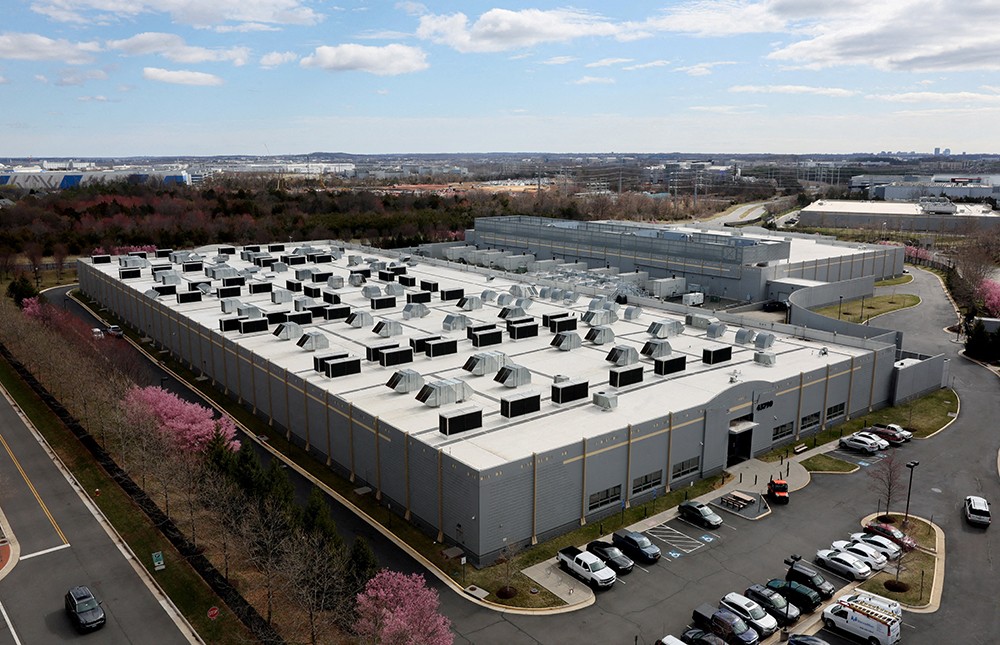
Andy Power described the plan as a ratio. Digital Realty’s Japanese platform holds 193 megawatts of capacity today. Ten years and $10 billion from now, he expects it to hold about 700.
Mr. Power, the company’s chief executive, laid out the numbers in an interview with Nikkei Asia published on Nov 14. The buildout will run through a joint venture with Mitsubishi Corp., the Japanese trading house, and would take the American developer’s footprint in the country to nearly four times its present size.
The capital is the less interesting half of the announcement. Ten billion dollars spread across a decade is roughly a billion a year, a pace the largest data-center developers have sustained in several markets at once. The half that matters is where the megawatts land and what has to happen before they can be switched on.
A megawatt in this business is a unit of contracted power draw, not floor space. A campus that signs for 100 megawatts has secured the electricity to run servers at that level and the substations to deliver it. Capacity figures are therefore statements about grids as much as about buildings, and they are only as firm as the interconnection agreements behind them.
Mr. Power said Japan is the company’s preferred investment destination in Asia. He also said the new capacity will be aimed first at inference, the workload that runs a trained model rather than the workload that builds one.
That choice shapes where the buildings go. Training runs can be placed wherever power is cheapest and network delay does not matter much; inference sits closer to users, because a fraction of a second is part of the product. Inference also draws power more steadily, which utilities prefer and which makes long-term supply contracts easier to negotiate.
The shift toward inference is the part of the business changing fastest. Serving a model to millions of users costs more over time than building it once, and the spending that follows a trained model lands on racks in leased buildings rather than on the clusters where the model was made. That migration is what the developers are underwriting, and it is why capacity forecasts keep moving upward in markets with stable grids.
Mitsubishi’s role is the part that is hard to replicate. A trading house arrives with land positions, utility relationships and local standing that a foreign developer cannot assemble quickly, and Japanese approvals tend to move at the speed of the relationships behind them.
The constraint Mr. Power named is not capital. It is power and land approvals. In several Japanese markets the binding limit has shifted from finding a site to finding a grid connection, and a substation queue can outlast a construction schedule by years.
That is one reason the target is stated in decades. A developer that expected to build quickly would not announce a ten-year plan; one that expects to spend much of the decade waiting on permits and interconnects describes exactly that.
The demand case rests on Japanese enterprises and public agencies running more of their computing inside the country, and on the latency argument that keeps inference local. Both arguments have been made for years; the capacity they justify is only now being committed, which is why the announcement reads as a bet on the next several years rather than on the last two.
For tenants, 700 megawatts is a statement about scarcity as much as about supply. Customers who sign leases of a decade or more want to know the campus will exist when their own commitments come due, and a developer that can show permitted land and secured power can ask for terms a speculative project cannot.
Digital Realty has spent two decades assembling campuses in markets where land and power were available before tenants arrived. Japan now fits that pattern, with one difference: the queue for power is longer than it used to be, and the queue does not care how much capital is behind the request.
For the Japanese market, a single developer committing this much over a decade is a supply signal to everyone else in the queue. Landowners price differently when they know who is buying, and utilities triage requests when they can see the pipeline.
The joint venture structure also spreads the political risk. A Japanese partner with its own standing can carry a project through prefectural negotiations that would stall for a foreign owner working alone, and it gives the developer a local face at the hearings where these projects are actually decided.
Mitsubishi gets a role in the operating business rather than a passive stake, if the pattern of such ventures holds. Trading houses rarely sign on as landlords; they sign on as partners with a view to the flows that follow the buildings.
The number to watch is not the $10 billion. It is the gap between 193 megawatts and 700, measured in years, and how much of that gap is filled by the end of the decade.
Mr. Power’s forecast will be tested by approvals rather than by customers. Demand for inference capacity in Japan is not the scarce item; a grid connection with a date on it is, and those arrive one approval at a time.



