Try to check what a data center company’s electricity costs the climate and the search ends in the same place every time: a sustainability report with a number in it, a footnote that redefines the number, and no clean way to compare it with the company next door. A Harvard research team put that problem in a form anyone can picture on Nov. 16, reporting that the hyperscale data centers in question draw, over a year, roughly as much electricity as the entire state of Michigan.
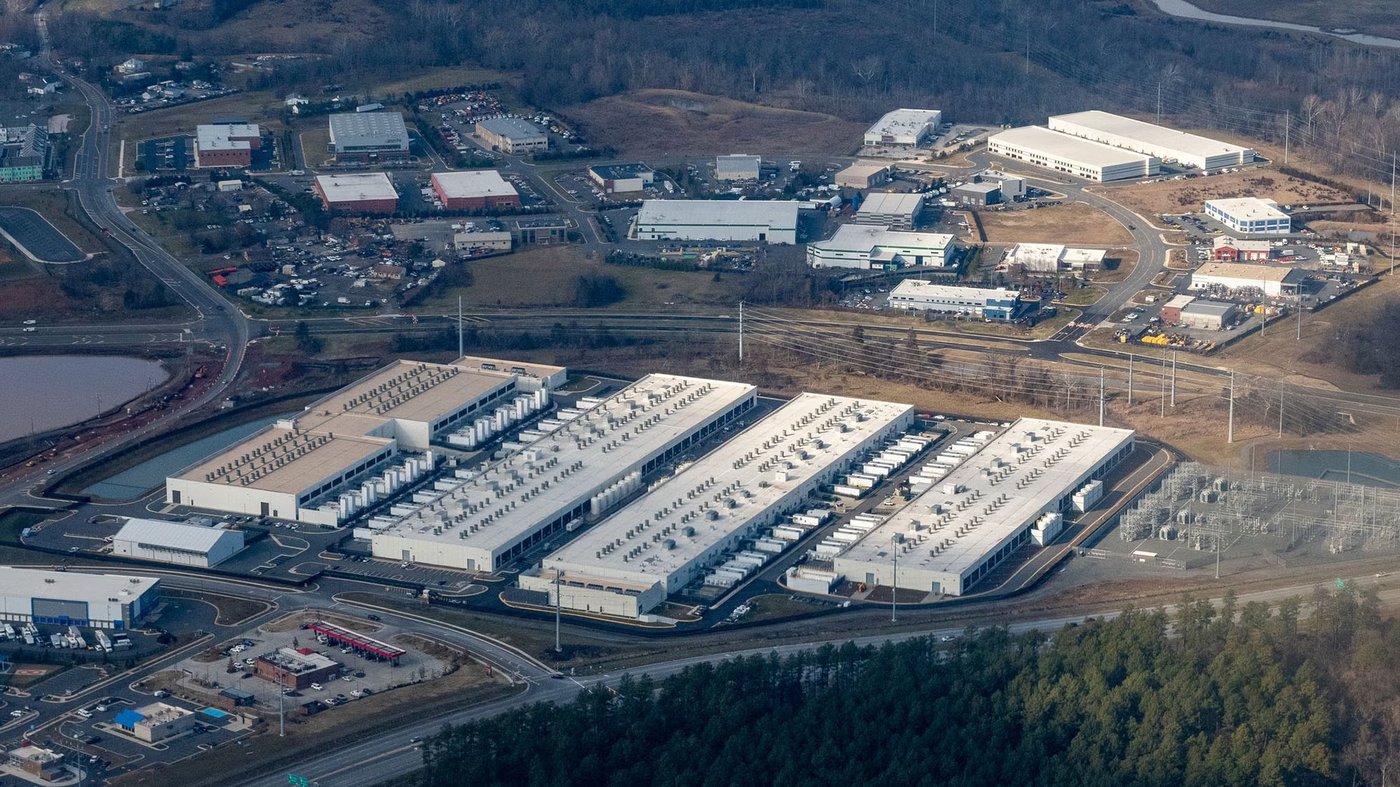
Hyperscale is jargon for the very large kind: warehouses of servers built by a handful of companies, sized in the hundreds of megawatts, designed so that thousands of machines can fail without anyone noticing. The comparison to a state is the part that travels, because a state has voters, a grid, a regulator and a power bill that somebody has to pay.
Why should a reader who has never opened a sustainability report care? Because the electricity those buildings draw is priced into the same grid that heats homes and runs factories, because the climate claims made by the companies building them now feed into investment decisions and public policy, and because a figure nobody can verify is a claim rather than a measurement.
The report’s second finding should worry the industry more than the first. Most operators publish carbon numbers on terms of their own choosing, and the result is that an outside party cannot check the arithmetic. Two companies can both report progress and mean different things by it. A third can publish something that resembles neither.
That is not the same as accusing anyone of lying, and the report does not do so. What it describes is a measurement problem: categories are defined differently, the boundaries of what gets counted are drawn differently, and the underlying electricity data often sits with a utility rather than with the company. A firm can be entirely honest and still produce a figure that cannot be reconciled with a rival’s.
The disclosure machinery has noticed. CDP, the organization that runs the main global system for companies reporting environmental data to investors, said the same day that it is discussing with the market which data should be added. That sentence is doing a lot of work. It means the gap is acknowledged by the body that maintains the questionnaire, and it means the fix, if there is one, will be negotiated with the companies being asked.
Michigan is an instructive comparison for a reason that has nothing to do with servers. The state is a manufacturing economy whose electricity system has been through its own transitions, and its annual consumption is a figure that utilities, regulators and legislators already argue about in public. Putting a class of private buildings on the same scale makes the argument legible to people who will never read an accounting methodology.
The opposing case deserves to be stated plainly. Operators argue that their disclosure has improved faster than any comparable industry’s, that they publish more than the law requires, and that a voluntary framework yields more data than a stalled mandatory one. They also point out, correctly, that a data center’s emissions depend heavily on the grid it plugs into, so a company building in a coal-heavy region can look worse than one that is simply luckier about geography.
Both points are true, and neither answers the question the report raises. If the framework is voluntary and the definitions are local, then the comparison a regulator or an investor wants to make is exactly the one the data cannot support. Voluntary disclosure that cannot be compared is a public relations instrument with extra steps.
The policy stakes run through procurement. Governments that buy cloud services increasingly write climate conditions into contracts, and they can only enforce what they can measure. The same holds for the asset managers who signed up to net-zero commitments and now have to explain to their own clients how they checked.
Then there is the plainer infrastructure question. A single state’s worth of demand arriving inside a decade is a planning problem for the grid, and grid planners work from forecasts. If the largest new loads on the system report their consumption on inconsistent terms, the forecast gets harder, and the cost of that difficulty lands on everyone with a meter.
CDP’s answer, when it comes, will be a set of fields in a questionnaire, which is a dull thing to wait for and the only thing that would change the arithmetic. Standard setters have run this play in other industries, and the pattern is familiar: a common definition, a period of messy compliance, and then numbers that can finally be put side by side.
Until then the report’s contribution is mostly negative, and useful for being so. It establishes a scale that is easy to hold in your head, and it documents why the next decimal place is unavailable.
Which returns the reader to the same document, the same footnote and the same polite refusal to be compared. Michigan’s number, by contrast, is public, audited and argued over in a hearing room. The distance between those two kinds of knowledge is what the Harvard team measured, and it is not closing on its own.