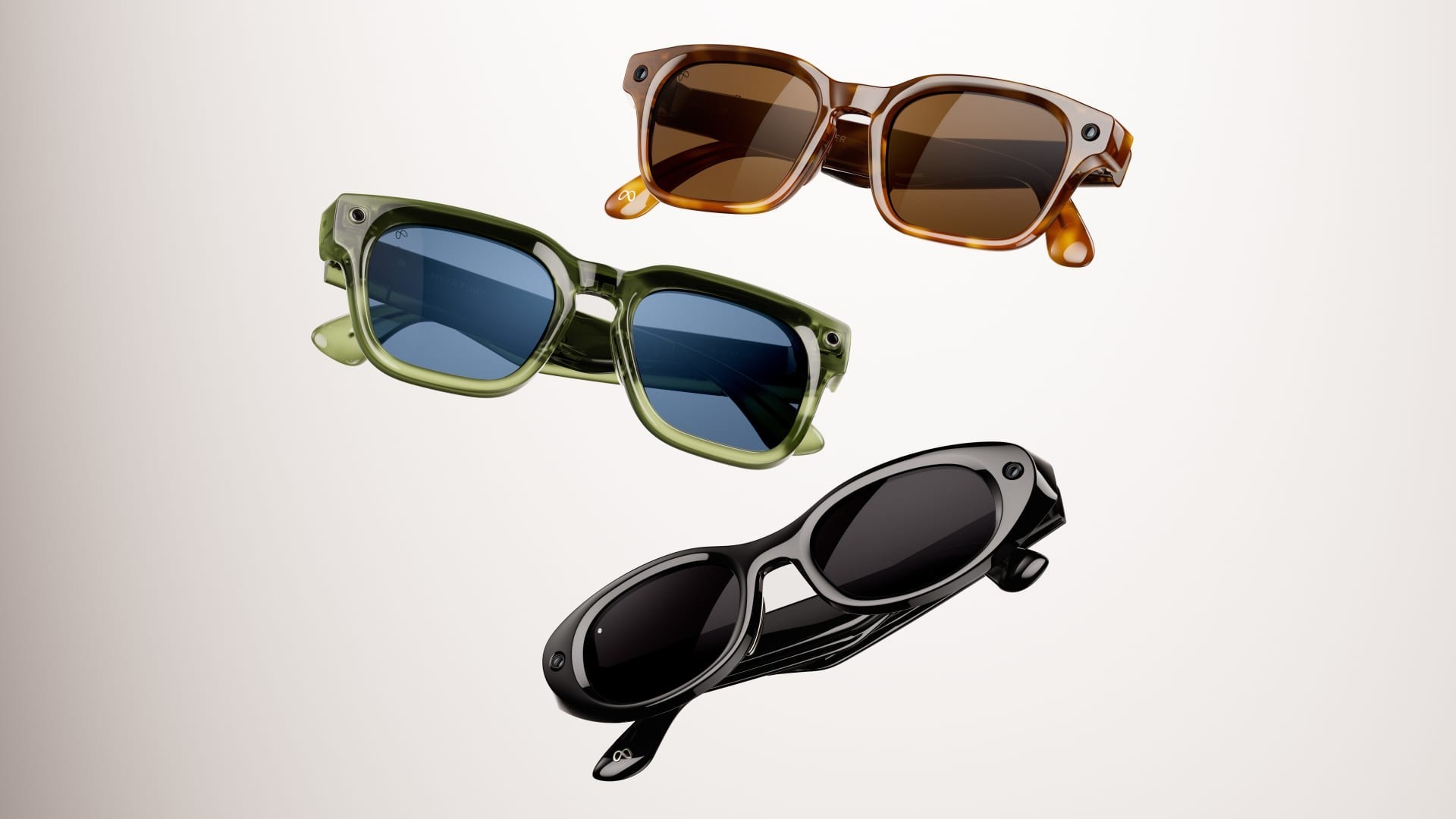
The pitch for a pair of smart glasses usually begins with what the frame can do on its own. Apple’s version begins with what it can borrow. A wearer looks at a sign, asks a question out loud, and the answer arrives in the ear while the work happens somewhere else, on the phone already in a pocket.
Bloomberg reported on Nov. 16 that Apple’s first smart glasses will treat Siri and the iPhone’s apps as the product’s main selling point, rather than building a separate ecosystem inside the frame. The glasses are due next year. They will arrive against Meta’s Ray-Ban line, which has had the category more or less to itself.
The division of duties is narrow and specific. The glasses pick up sound, take photographs and display short prompts. The iPhone handles the connection, the computing and most of the interaction. No large model runs on the frame.
That is a departure for a company that has spent more than a decade justifying the price of its hardware with the silicon inside it. A phone, a watch and a headset each carried a chip Apple designed and priced accordingly. In the glasses, the chip that matters is the one the customer bought last year.
It also answers the oldest problem in the category. A frame has room for a battery roughly the size of a thumbnail and almost nowhere to put heat. Every function moved to the phone buys back weight, thickness and an hour of runtime. The glasses can look like glasses, which is the only design brief that has ever sold in eyewear.
The trade is control. A product that depends on a second device inherits that device’s limits: the connection drops, the model goes out of reach, the phone is nearly flat at the end of a long day. Apple has not said what happens then. It has not announced a price either.
Siri sits at the front door in this arrangement, and that is the riskiest part of it. The assistant has been the least convincing piece of Apple’s software for years, slow to answer and quick to mishear. Making it the only interface to a pair of glasses puts the company’s weakest service where customers will judge the product first.
The compensating argument is that Siri no longer has to be the intelligence. If a model in a data center can read a menu, translate a sign or summarize a conversation, the assistant only has to route the request and speak the result. Apple’s own work on models has been slower to show than its rivals’, and routing can be done with somebody else’s model.
For developers, the arrangement is less a new platform than a new input method. Apps built for the iPhone do not need to be rebuilt for a pair of glasses that runs them through the phone. That lowers the risk of a launch with nothing to do on the first day. It also caps the upside, because a new screen creates new software categories and a new microphone creates voice features bolted onto old ones.
One part of the product needs no model at all: the camera sitting on the wearer’s face. Photographing strangers stalled this category the first time it was tried, and a frame that records what its wearer sees invites rules about when it may do so. Apple has said little about how a recording will be signalled, which is the kind of detail that decides whether a device is allowed indoors.
Meta’s position is the harder one to attack. The Ray-Ban frames are already on faces, in a category where the name on the temple is part of the purchase. Apple arrives with a stronger phone, a weaker assistant and no eyewear history, against a competitor that sells its glasses through the same counters that sell sunglasses.
Pricing will decide the volume. Apple has not published a figure, and the number that matters is not the cost of the parts but what buyers will pay above an ordinary pair of frames. Ray-Ban set that reference point years ago. A pair that costs several times a designer frame has to do something a designer frame cannot.
Underneath the product decision sits a longer argument that has been running since the first headset. One camp treats the face as the next screen and builds a computer to wear. The other treats the phone as the hub and the face as one more place to put a sensor. Apple has now placed bets on both, and the headset it shipped as a standalone computer has been an expensive lesson in which bet the market prefers.
The glasses take the cheaper side of that argument. They are an accessory, priced like one, sold to people who already own the thing doing the thinking.
What the wearer notices is small. A name appears when a face is recognized. A sentence is read aloud while both hands stay full. The frame stays light, and the phone in the pocket gets warm.