
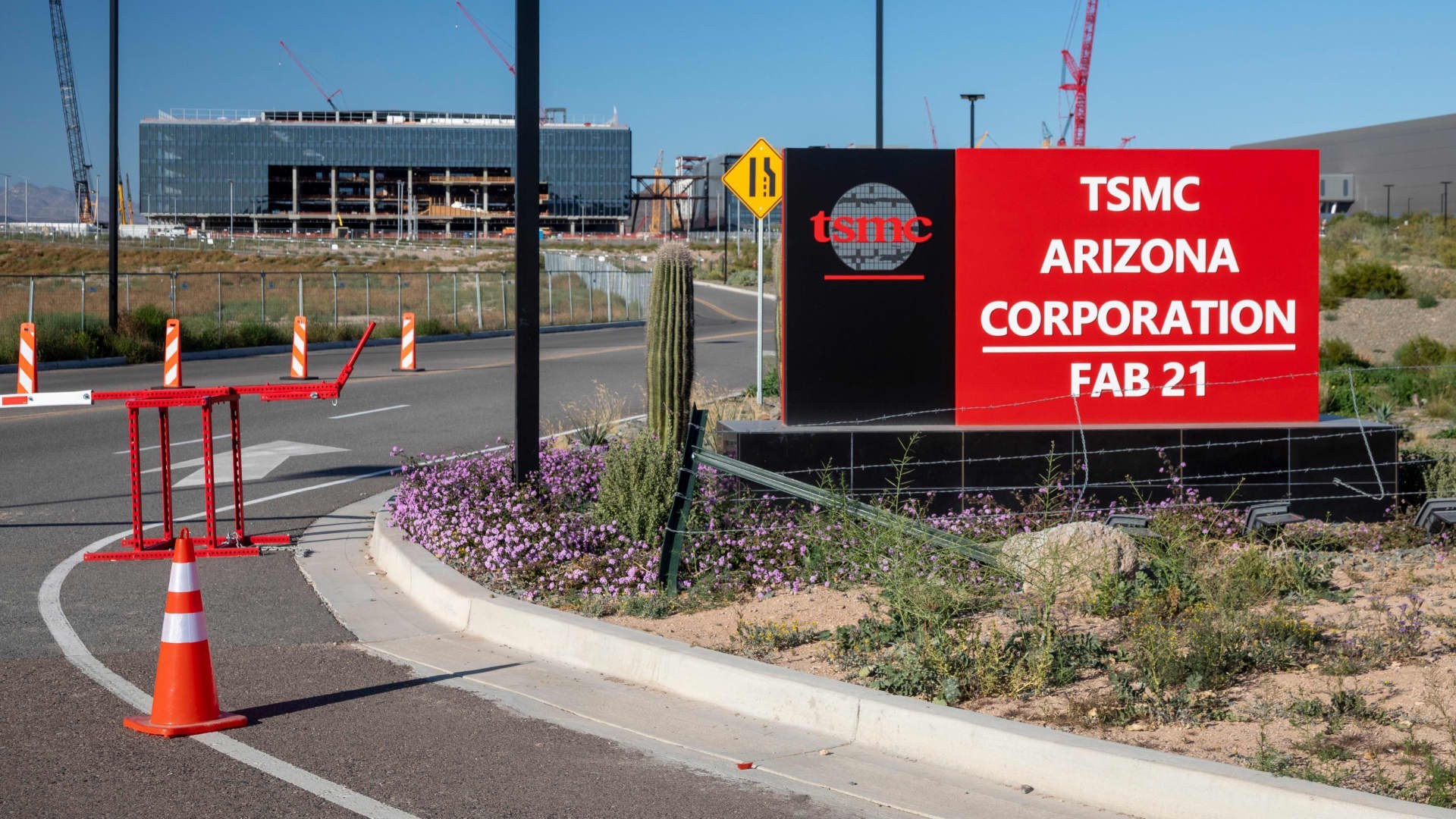
TSMC’s board approved on Nov 10 the creation of an investment company with up to $500 million to put into semiconductor and ecosystem companies, and what matters is the scope rather than the sum. Kevin Zhang, a senior vice president at the company, told Nikkei that the fund will back what he called the next Nvidia and that it will, for the first time, take stakes in TSMC’s own suppliers. What that changes is the relationship between foundry and vendor: procurement has become ownership.
The disclosure is thin by design. TSMC has not named a first investment, set a ceiling on any single cheque, or described how decisions will be made, and the money will be deployed through a newly created investment vehicle rather than from the operating company.
Start with why a foundry would want equity in the firms that sell it tools, materials and equipment. A leading-edge fab is a machine for converting other people’s precision into yield, and the parts of that machine which fail are usually not the parts TSMC builds. A stepper that drifts, a resist that behaves differently at a new layer, a packaging step that cannot hold tolerance — each is a supplier problem that lands on TSMC’s yield.
Ownership buys a different conversation than a purchase order does. A customer who is also a shareholder sees roadmaps earlier, can push a supplier to prioritise a node it would otherwise treat as a small account, and can hold a position through the years a young firm spends losing money before its product qualifies.
The size of the fund sets the ambition. Five hundred million dollars buys influence and optionality, not control, and it will not move a supplier that already has a broad customer base. What it can do is take minority positions in firms whose technology TSMC needs and whose survival it would rather not leave entirely to the open market.
The supplier stake also creates a problem the lawyers will have noticed. A foundry serves competing chip designers under confidentiality, and a foundry that owns part of a toolmaker sits on both sides of the information flowing through that relationship. Customers will ask whether their process data reaches a company TSMC partly owns, and the answer has to be structural rather than reassuring.
Cross-border approval is the next gate. Investment from Taiwan into foreign companies runs through an outbound regime administered with the island’s security interests in mind, and semiconductor assets receive more scrutiny than most. Any stake in a supplier based in a jurisdiction with its own screening rules faces a second review on the other side of the border.
Export controls form a third layer. Capital moving into chip-related firms is now watched as closely as equipment moving across frontiers, because several governments have concluded that financing a capability is one way of transferring it. A fund with a broad ecosystem mandate will find that some of the most attractive targets require the most paperwork.
Then there is the phrase Zhang chose. Backing the next Nvidia sounds like venture ambition, and read another way it is a statement about TSMC’s customer base. Nvidia is a fab customer whose demand justifies leading-edge capacity, and a fund that helps create more such customers is protecting the utilisation of extremely expensive plants.
That logic explains the timing better than any enthusiasm about venture returns. The build-out of AI capacity has made advanced packaging and leading-edge wafer capacity scarce, and scarcity has moved pricing power toward whoever owns the tools. A foundry that wants to keep its bargaining position needs the supplier base to consolidate around it rather than around a competitor.
What the fund cannot fix is concentration. Five hundred million dollars spread across a portfolio produces a handful of positions, and the suppliers that matter most to TSMC are large public companies that do not need the money. The realistic targets are the second tier: firms with one good product and no balance sheet.
There is a version of this where the fund is mostly a signalling device, announcing that TSMC intends to shape its ecosystem and giving business development a reason to call startups. Corporate venture arms at chipmakers have often worked that way, with returns a secondary consideration.
There is another version where it becomes an instrument of supply security, used to keep a critical supplier independent, to fund a second source for a material that currently has one, or to hold a stake that buys a seat when a supplier is sold. Both versions start with the same cheque and diverge on how much authority the investment company is given.
The unanswered questions are the ones that would tell you which version this is. Who sits on the investment committee, whether the fund can take board seats, how conflicts with procurement are adjudicated, and whether TSMC discloses positions as it takes them. None of that has been published, and a fund of this size does not need to publish it.
For the suppliers themselves the offer is real, and so is the asymmetry. A strategic investor who is also the largest customer can accelerate qualification and can equally decide that a roadmap no longer fits. Taking the money means accepting that the most important relationship in the company now has an owner on the other side of the table.
That is the change the $500 million announces, and it is a change in kind rather than scale. TSMC has spent its history buying from its supply chain on terms it set. It has now decided that some of those terms are better negotiated as a shareholder, and the first companies to discover which ones will be the companies it chooses to invest in.



