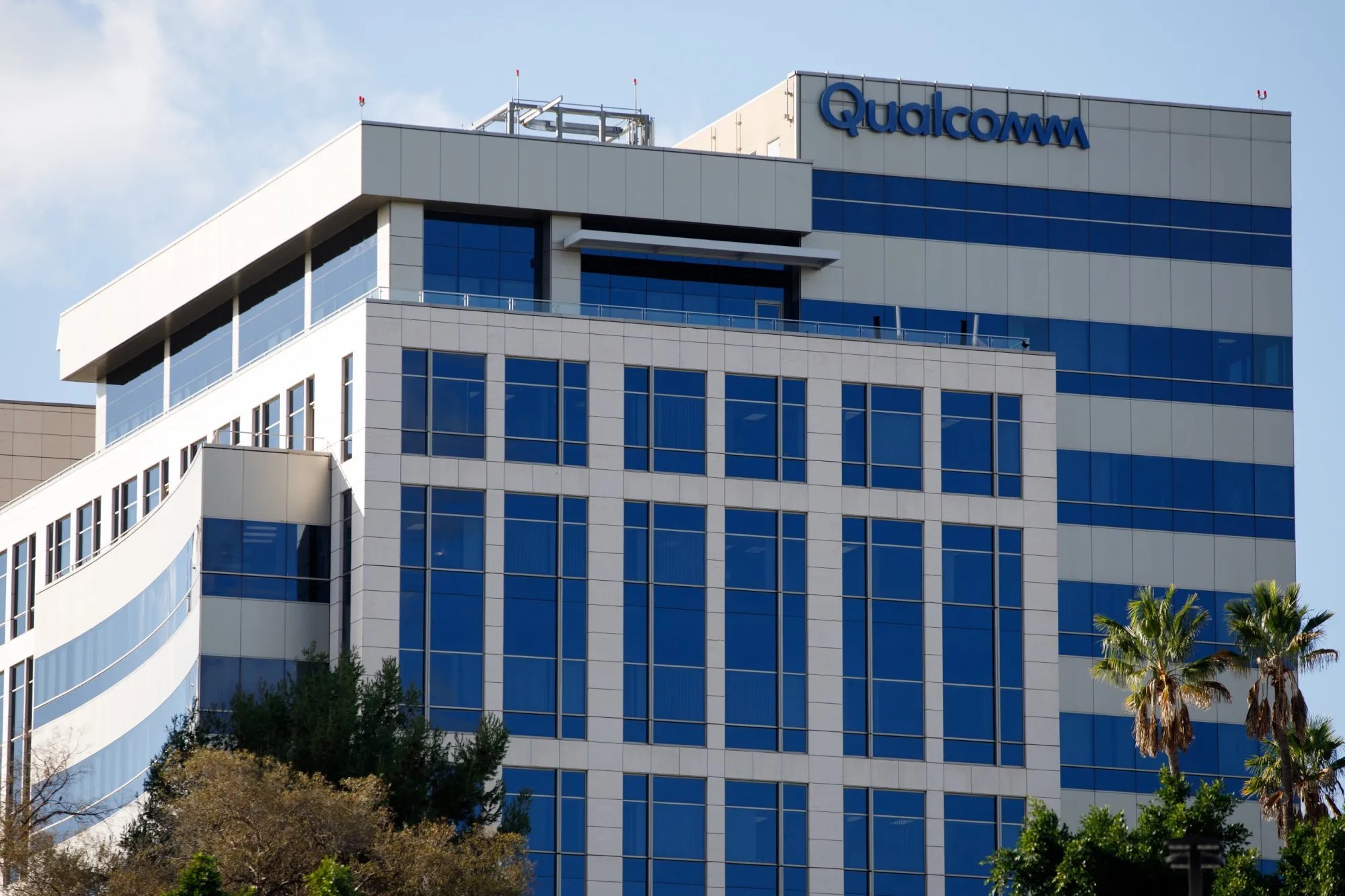
Qualcomm filed state notices this week covering 442 permanent layoffs at its San Diego campus and 75 more in Santa Clara County, for a total of 517 jobs in California. The cuts take effect by mid-January.
The company did not say which teams were affected, and a spokesperson did not respond to a request for comment. The filings follow an announcement in October that Qualcomm would reduce staff worldwide after its annual performance reviews.
The scale is larger than the notices suggest. Stacy Rasgon, an analyst at Bernstein who hosted a closed-door investor meeting with Qualcomm executives this month, said the company intends to cut 7% to 8% of its workforce. Those reductions would put the total well above the California figure, since Qualcomm employs about 57,000 people globally and its home state accounts for only part of that.
Rasgon described the exercise as a reallocation rather than a retreat. The company, he said, is adding resources in data centers and software while trimming elsewhere, a shift he characterized as an attempt to become a broader computing company rather than a supplier of phone modems.
The financial picture behind the decision is mixed. Qualcomm reported in its most recent quarter that fiscal 2026 revenue fell $1.16 billion to $37.2 billion, with margins narrowing. Handsets still produced nearly 65% of revenue, about $24 billion, which is the concentration the company has spent a decade trying to reduce.
Net income for the year rose to $13.63 billion from $5.54 billion, a comparison flattered by one-time items in the earlier period. The operating trend, analysts said, is what matters: a handset market that grows slowly, an automotive business that grows quickly from a small base, and a data center effort that is still mostly a promise.
San Diego is where the promise is most visible and most exposed. Qualcomm’s last published estimate of its local workforce, from 2023, put the number at about 12,000. The city’s technology economy has been tied to the company since the 1980s, and local suppliers, landlords and university programs have grown around its hiring patterns.
The notices are also a reminder of how much of Qualcomm’s identity is still tied to a single product line. Modems and radio systems for phones built the company, paid for its patent portfolio and funded two decades of litigation against handset makers over licensing terms. The engineering groups that maintain that business are large, expensive and located mostly in one city.
Alongside the notices, Qualcomm priced $4 billion of senior notes. The company said the proceeds would be used for general corporate purposes, the standard formulation that leaves room for capital spending, refinancing or buybacks. The bonds were sold into a market that has been receptive to large investment-grade issuers this autumn.
Doing both at once is not contradictory. A company that expects to spend heavily on fabrication capacity, advanced packaging and engineering talent can cut headcount in mature units while raising money against its balance sheet. The two decisions answer different questions: which work is shrinking, and how to pay for the work that is not.
The strategic logic points at two markets. Automotive and industrial customers buy chips that must survive heat, vibration and a fifteen-year service life, and Qualcomm has won design slots with most large carmakers. Data centers are newer territory, where the company is selling inference accelerators against Nvidia and a crowd of startups, and where the customer list is shorter and the qualification cycles longer.
Neither business pays for itself at handset margins. That is the arithmetic executives have been walking investors through: a slower, more capital-intensive transition away from a market where Qualcomm once set the price of admission to smartphones.
Executives have also pointed to margins rather than revenue as the number to watch. Handset chips carry royalty income attached and produce returns that a server business cannot match at the same volume, at least while the company is buying its way into the market. Analysts who cover the stock have been split on how long the transition can run before investors lose patience with the gap.
The workforce reductions also carry a message for the company’s engineering base. Performance-based cuts after annual reviews are a routine instrument in the semiconductor industry, and Qualcomm has used them before, including a round in 2023 that eliminated roughly 1,200 positions in California. What is different now is the direction of the hiring that follows.
Rasgon’s read, that this is re-skilling rather than cost-cutting, will be tested by whether Qualcomm refills the San Diego campus with different job titles over the next two years. Companies that describe reductions this way usually mean it. They also usually underestimate how much institutional knowledge leaves with the people who go.
For San Diego the effects will be gradual and local. Five hundred jobs is a small share of a metropolitan workforce of well over a million, but chip engineers cluster, and a cluster that loses mid-career specialists takes time to rebuild. The notices give the region until January to absorb the first of it.