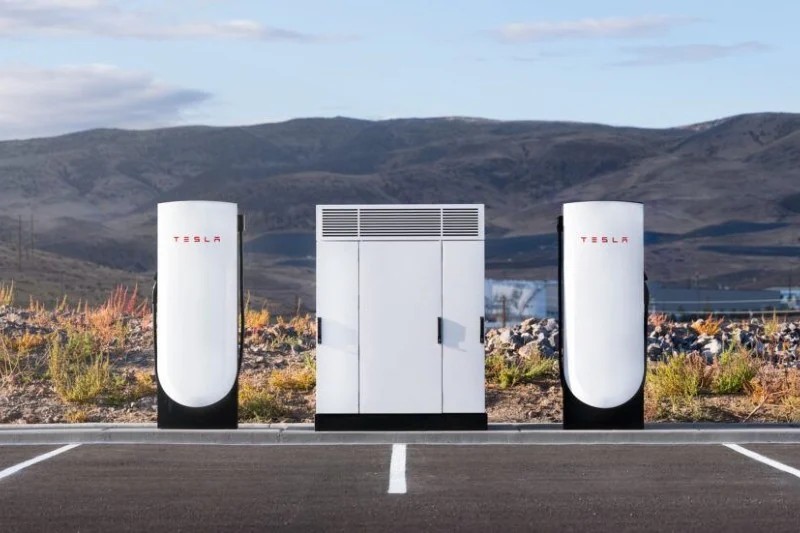
Tesla used a clean-energy trade show this week to show a box that replaces three pieces of equipment utilities have spent four years trying to buy. The company calls it Powercore. It packs a transformer, an inverter and switchgear into a single medium-voltage unit rated at 7.4 megawatts, with conversion efficiency of 98.86%.
The product was introduced on November 17 at RE+, the industry’s largest gathering of storage and grid suppliers. Tesla says it will go on sale in 2027. The target customers are data centers and storage projects that connect directly to the grid rather than behind a customer meter.
The pitch rests on a number that sounds small. At 98.86% efficiency, roughly one part in ninety of the power passing through the unit is lost as heat. For a 7.4-megawatt machine running flat out, that is a few hundred kilowatts of waste that has to be moved out of the enclosure with fans or liquid. Every point of efficiency a supplier can recover is cooling equipment the customer does not install and electricity the customer does not buy twice.
The bigger claim is architectural. A conventional storage or data-center plant wires together a pad-mounted transformer from one vendor, an inverter skid from another and switchgear from a third, then hires an engineering firm to make the three agree. Tesla’s version arrives as one factory-built unit with a single set of terminals. That shortens the on-site work, which is where projects lose months.
Transformers are the reason the pitch lands now. Lead times for large power transformers in the United States have stretched from under a year to several years, according to procurement data published by utilities and trade groups, and the units are custom-built, so a delay at the factory cannot be solved by buying elsewhere. Data-center operators have learned to order electrical equipment before they have secured a building.
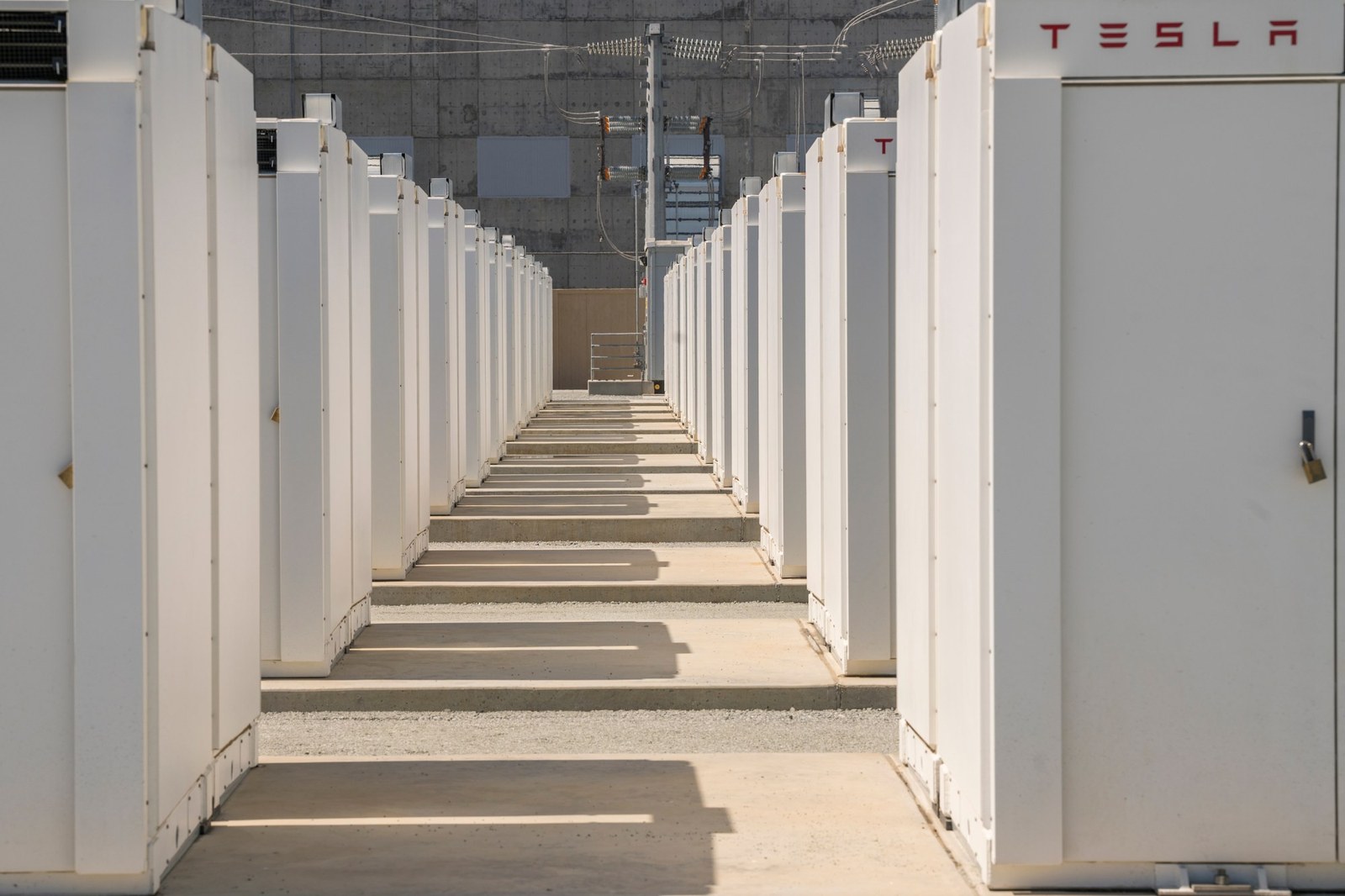
In that market, a company that builds the transformer into its own product is selling time rather than copper. Tesla’s order book for grid-scale storage already gives it a reason to hold the component in inventory, and vertical integration of this kind is easier for a manufacturer that owns its own factories than for an integrator that assembles parts from others.
The competitive target is close to home. Heron, a startup founded by Drew Baglino, who ran Tesla’s powertrain and energy engineering until he left the company in 2024, has been building medium-voltage power electronics for grid storage on much the same argument: fewer boxes, fewer interfaces, less site labor. Mr. Baglino spent eighteen years at Tesla and helped design the products Powercore now competes against.
Tesla’s own manufacturing footprint explains part of the timing. The company has said it will convert the lines that built the Model S and Model X at its Fremont factory to production of Optimus, its humanoid robot, freeing floor space and engineering attention for other hardware. Energy storage has become the more reliable half of the business by margin, even as the car side absorbs price cuts.
None of that makes a 2027 launch easy. Medium-voltage equipment sold to utilities and to large interconnections has to clear standards that consumer hardware never touches: UL listings for the assemblies, IEEE requirements for how the unit behaves when the grid wobbles, and, most slowly, the interconnection studies run by the utility that will accept the power. A single enclosure that fails a fault test sends the whole product back to the lab, not one component.
There is also the question of service. A transformer is the piece of equipment a utility most wants to be able to replace from stock. Consolidating it into a sealed unit shifts that burden to Tesla, and plant operators will want to know how quickly a replacement arrives and who pays for the crane.
Utilities and large buyers are conservative in a specific way. They will accept a new supplier for a component they can test and swap; they resist a new supplier for a component that sits in the middle of their protection scheme. Tesla’s existing grid business has cleared that bar for batteries. Switchgear and transformers are a different conversation, held with different engineers.
Analysts said the product is best read as a bet on where the constraint sits. For a decade the bottleneck in building data centers was chips and then cooling. Electrical equipment is now the item that decides whether a campus opens on schedule, and the suppliers who can shorten that path can charge for it.
The company did not publish pricing, unit dimensions, weight, or the list of utilities that have agreed to test the product. It also did not say whether Powercore will be built in Nevada, where Tesla makes Megapack, or in a new plant. Those details will decide whether the 2027 date holds.
For now Powercore is a demonstration that the argument has moved. A carmaker that once sold batteries into an industry of integrators is now selling the substation itself, and asking utilities to trust a single box where they have always bought three.